



Attention! If during the gearbox repair process at least one of the following parts was replaced: clutch or gearbox housings, differential housing or differential bearings, then it is necessary to select a differential bearing adjusting ring (see "Selecting the differential bearing adjusting ring").
To disassemble and assemble the gearbox and to check its parts on the car, you will need: socket wrenches (heads) "10", "13", "32", wrenches "10" and "17", a large screwdriver, punch, hammer, pliers for removing retaining rings, impact screwdriver.
1. Remove the gearbox from the vehicle (see "Removal and installation the gearbox"). Clean it from dirt and wash the outside.
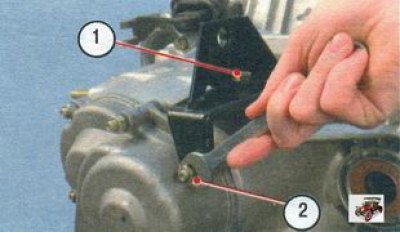
2. Remove bolt 1 (a flat washer is installed under its head), unscrew nut 2 (a spring washer is installed underneath it) fastenings of the clutch cable bracket and remove the bracket.
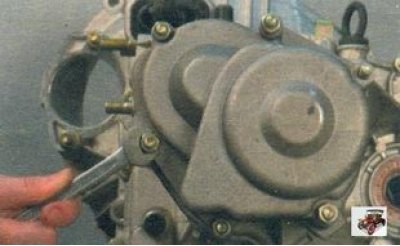
3. Unscrew the remaining five nuts securing the rear gearbox cover.
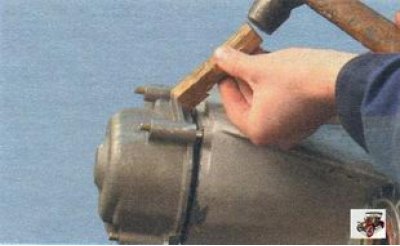
4. Using a wooden spacer or a soft metal drift on the gearbox cover lug, gently tap the hammer to move it along the studs...
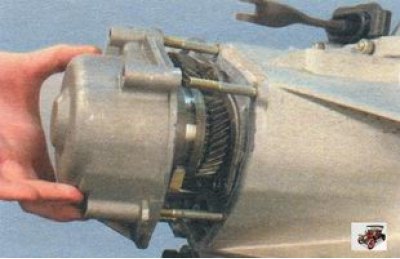
5. ...and remove the rear cover from the gearbox.
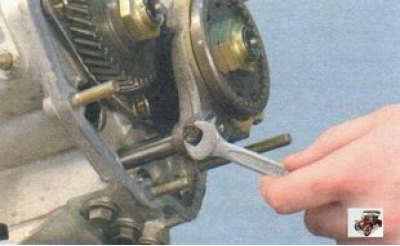
6. Remove the 5th gear fork mounting bolt (a spring washer is installed under the bolt head).
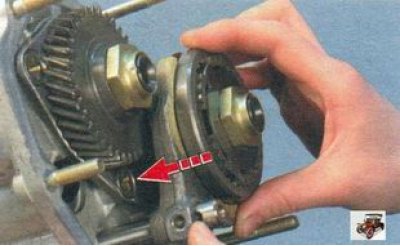
7. Secure the gearbox shafts from turning. To do this, engage V gear by moving the synchronizer clutch together with the fork so that the clutch splines engage with the gear...
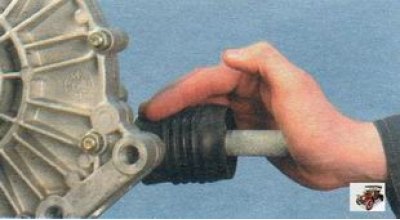
8. ...then engage III or IV gear by moving the gear shift rod.
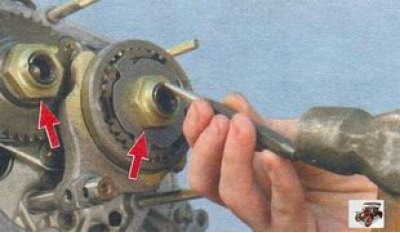
9. Loosen the nuts securing the primary and secondary shafts.
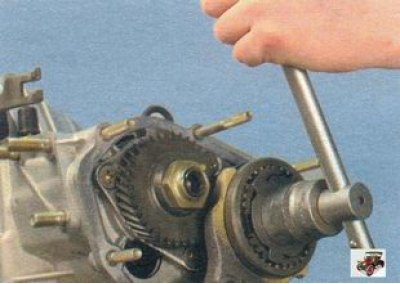
10. Unscrew the nuts securing the primary and secondary shafts. To do this, you need to apply a lot of force, since the nuts are tightened with a high torque.
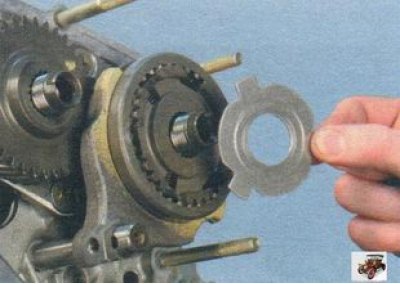
11. Remove the thrust plate from the synchronizer.
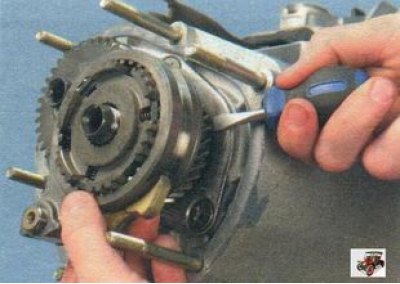
12. Using a screwdriver, move the driven gear of the 5th gear (thereby pressing the synchronizer hub off the shaft), remove the gear from the secondary shaft together with the synchronizer and fork.
Caution! Make sure that the synchronizer sleeve does not come off the hub: the spring-loaded synchronizer locking balls may fall apart.
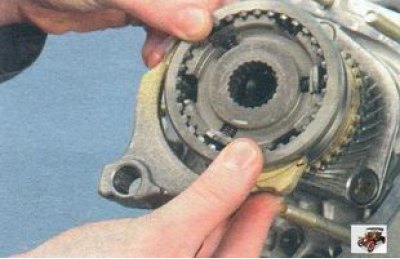
13. Remove the fork from the synchronizer clutch groove.
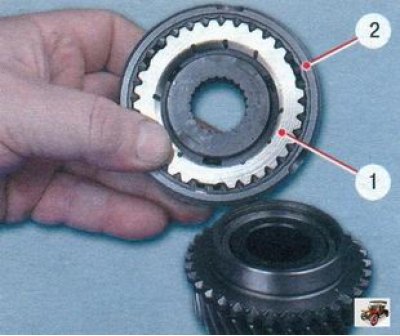
14. Remove the 5th gear from the synchronizer. Mark the locking ring 1 relative to the coupling 2 and remove it. During operation, the teeth of the ring become accustomed to the teeth of the coupling, therefore, during assembly, the ring must be installed in the same position. If you do not intend to disassemble the synchronizer, tie it with wire or rope to prevent it from falling apart.
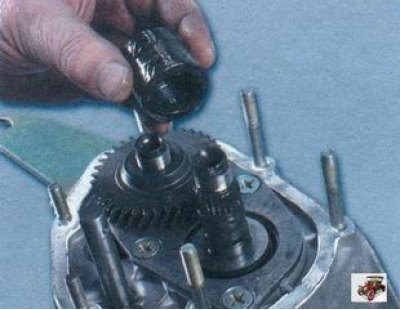
15. Remove the sleeve from the secondary shaft of the gearbox.
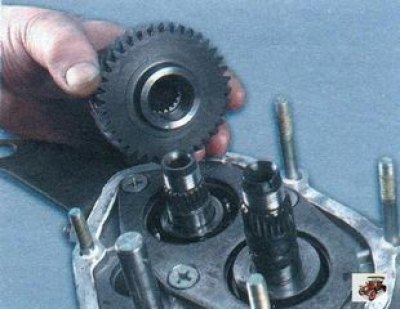
16. Remove the 5th gear pinion from the input shaft. Remember how it was installed.
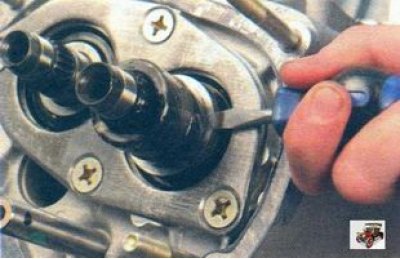
17. Using a screwdriver, remove the thrust washer from the secondary shaft.
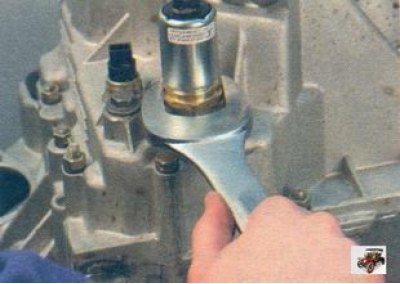
18. Loosen the reverse gear lock solenoid...
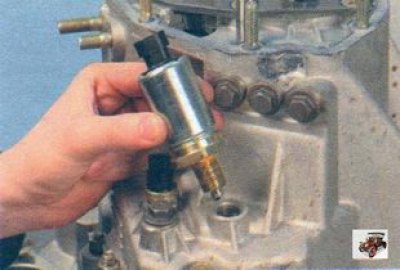
19. ...and unscrew the solenoid from the gearbox housing.
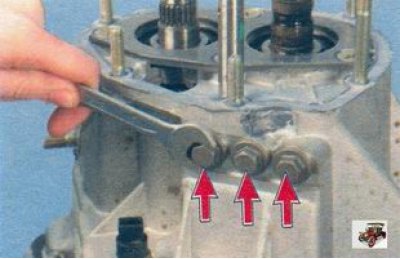
20. Unscrew the three plugs of the fasteners...
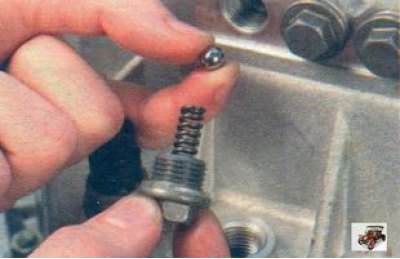
21. ...and carefully remove the retainer balls with springs.
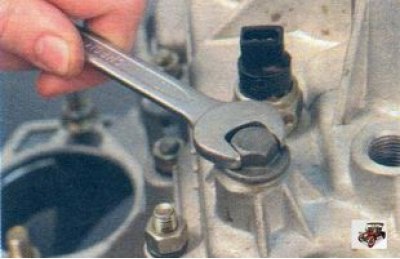
22. After unscrewing the reverse gear lock plug, remove the sealing ring if it remains on the gearbox housing...
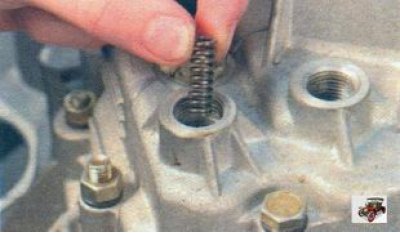
23. ...and then remove the retainer spring.
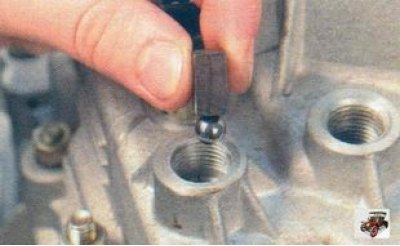
24. Remove the retainer ball. This can be done conveniently by using a small, strong magnet or by tilting the gearbox on its side.
25. Remove the clutch release bearing (see "Replacing the clutch release bearing").
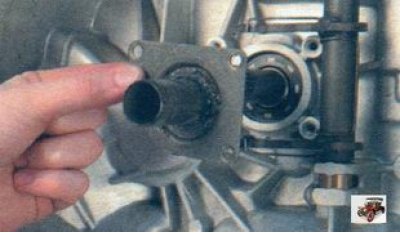
26. Remove the clutch release bearing guide sleeve by unscrewing the three bolts securing it (see "Replacing gearbox seals").
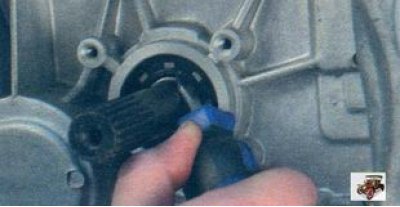
Helpful advice. It is recommended that when disassembling the gearbox, the primary shaft seal be replaced regardless of its condition, since if oil leaks through the seal during operation, replacing it on the vehicle is very labor-intensive.
27. Remove the clutch release fork (see "Replacing the clutch release fork").
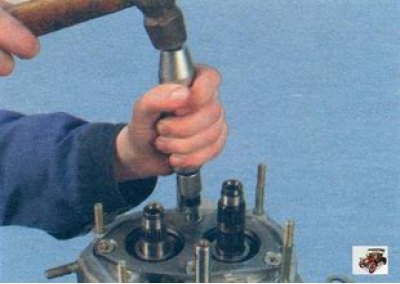
28. Using an impact screwdriver, remove the four screws (spring washers are installed underneath them) bearing plate fastenings...
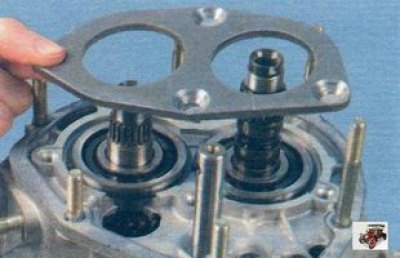
29. ...and remove the gearbox bearing plate.
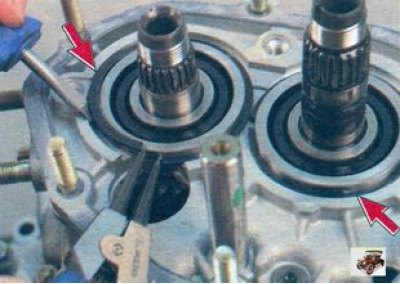
30. Using pliers and a screwdriver, remove the gearbox bearing retaining rings.
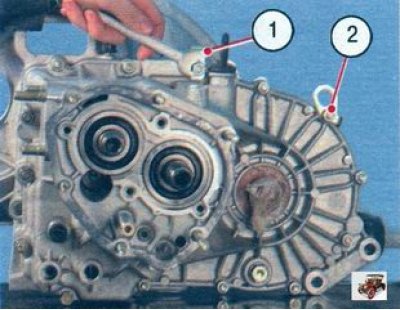
31. Unscrew the twelve nuts and the bolt securing the gearbox housings. Pay attention and remember under which nuts the holder 1 and the eye 2 are installed. Spring washers are installed under the nuts and bolt.
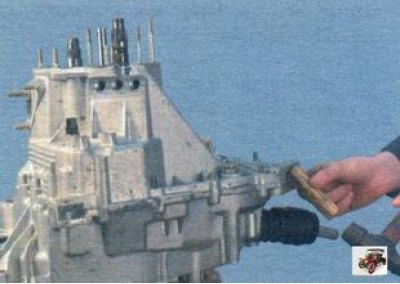
32. Using a wooden spacer or a soft metal punch, press against the edges of three special grooves located along the perimeter of the housings and lightly tap the hammer to separate the gearbox housing from the clutch housing.
The original was published on the portal www.Ladaman.ru
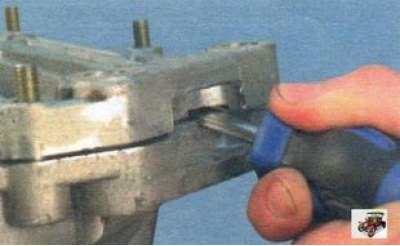
Note: In addition to the method described above, you can separate the gearbox housing from the clutch housing with a screwdriver, inserting it into the slots of special grooves along the perimeter of the housings.
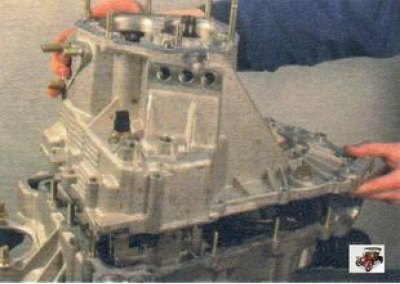
33. Raise the gearbox housing slightly...
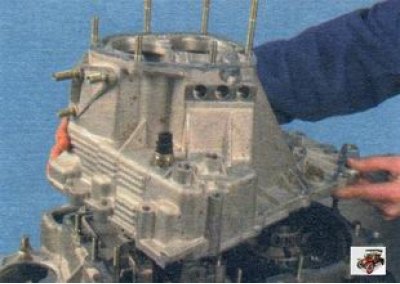
34. ...turn the housing counterclockwise so that the lug inside the housing comes out from under the input shaft gear, and remove the gearbox housing from the clutch housing.
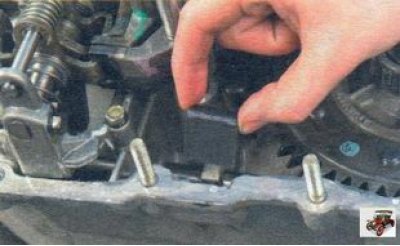
35. Remove the magnet from the clutch housing.
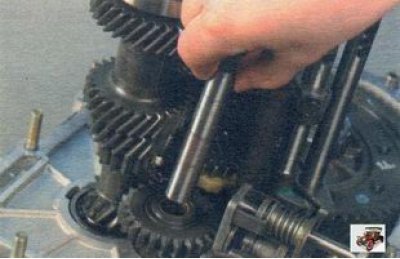
36. Before removing the gear selection mechanism, remove the reverse intermediate gear by removing the intermediate gear shaft...
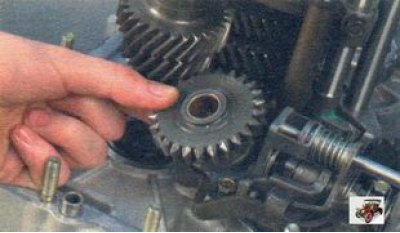
37. ...move the intermediate gear until it stops in the gear selection mechanism, turn it 30-40° and, after removing it from under the shaft gears, remove it.
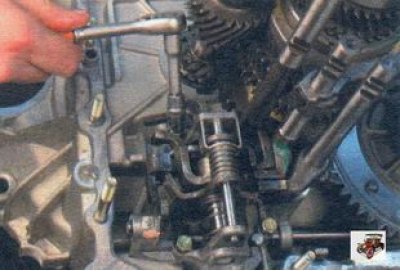
38. Remove the three bolts securing the gear selector mechanism (spring washers are installed under the bolt heads)...
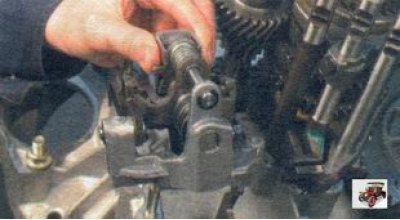
39. ...and remove the gear selector mechanism.
Note: Shows removal of gear selector mechanism for replacement. If there is no need for replacement, the gear selector mechanism only needs to be removed if the gear shift rod needs to be removed (see below). The mechanism does not interfere with the removal of the primary and secondary shafts of the gearbox, as well as the differential, and can be left in place.
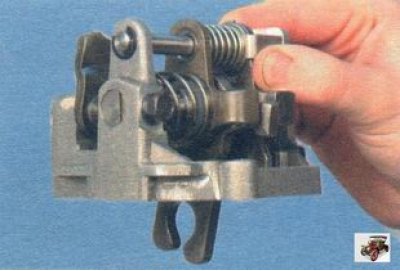
Note: During operation, the gear selection mechanism almost never fails, since its parts operating in transmission oil wear out slowly and evenly. Increased clearances in the mechanism joints also do not lead to its complete failure. Therefore, disassembly of the gear selection mechanism is not shown on the site. In case of replacement, the mechanism is supplied as spare parts in assembly.
Attention! Please note that the gear selection mechanism, although externally similar to the mechanism of the VAZ "tenth" family cars, differs from it in design.
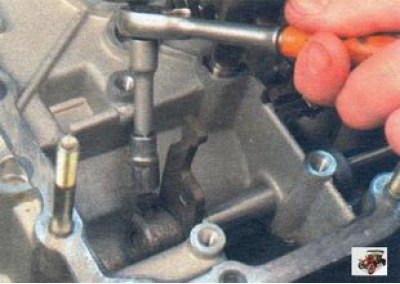
40. Loosen the locking bolt securing the gearshift lever to the rod...
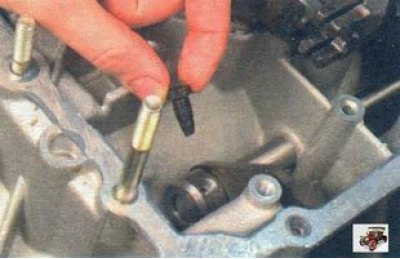
41. ...unscrew the bolt...
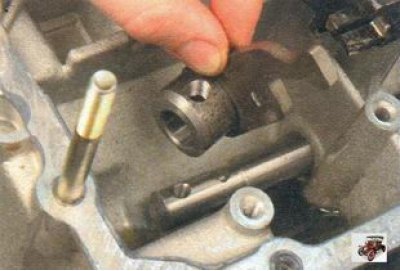
42. ...and, having moved the rod, remove the gear shift lever.
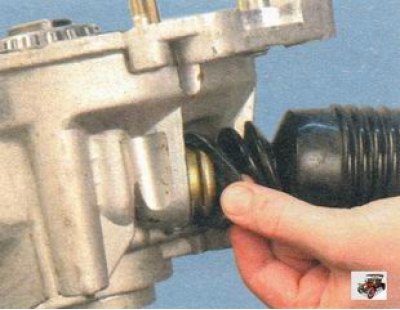
43. Remove the gearshift rod joint boot from the flange of the rod seal...
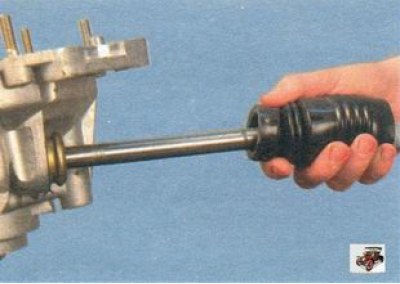
44. ...and remove the gear shift rod from the clutch housing.
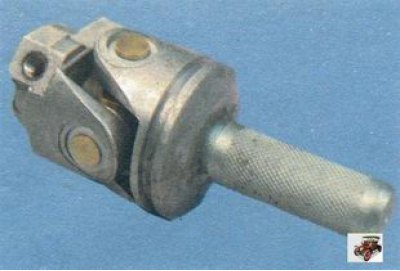
Note: The design of the gearshift rod hinge is non-separable. If play appears in the joints of the hinge, it must be replaced as an assembly. To do this, disconnect the joint from the gearshift rod by unscrewing the locking bolt of its fastening (see "Replacing gearbox seals").
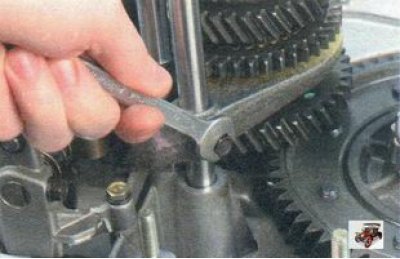
45. For further disassembly of the gearbox (operation shown with gear selection mechanism and reverse intermediate gear installed) unscrew the bolt securing the I-II gear fork to the rod.
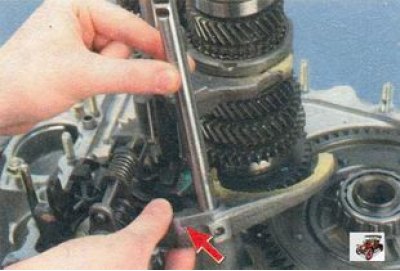
46. Raise the I-II gear shift rod slightly so that it comes out of the support in the clutch housing and turn it counterclockwise so that the gear shift fork head (shown by arrow) has come out of engagement with the gear selection mechanism locking bracket. Remove the rod fork from the synchronizer clutch groove and remove the rod with the fork.
Note: It is not recommended to remove the shift forks from the rods unless necessary, to avoid mixing them up during assembly.
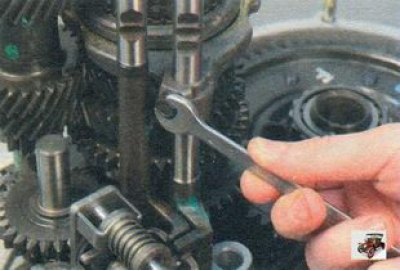
47. Remove the III-IV gear shift fork mounting bolt.
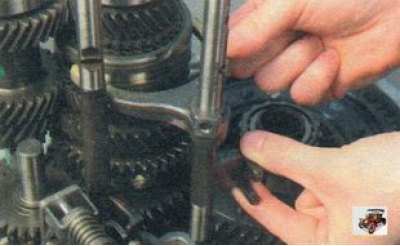
48. Turn the III-IV gear shift rod and disengage the head of its fork from the gear shift lever. Then lift the rod slightly so that it comes out of the support in the clutch housing, and, having removed the rod fork from the groove of the synchronizer clutch, remove the rod with the gear shift fork.
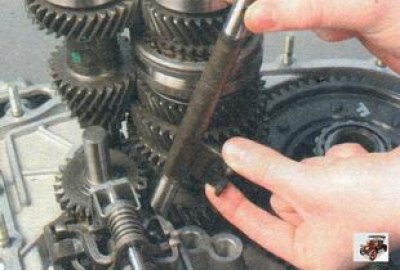
49. Turn the 5th gear engagement rod and disengage its head from the locking bracket. Remove the rod by pulling it out of the support.
50. Remove the reverse intermediate gear (see pp. 36,37).
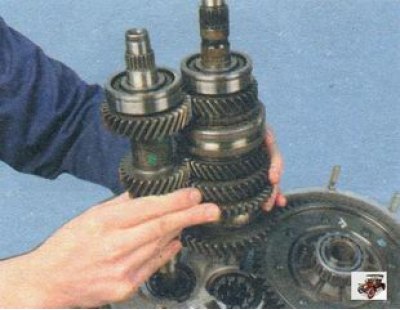
51. While rocking slightly, remove the primary and secondary shafts of the gearbox simultaneously.
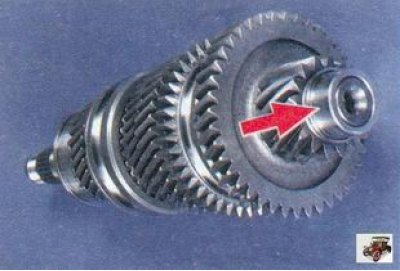
Note: When both transmission shafts are removed, the front bearing inner races remain on the shafts.
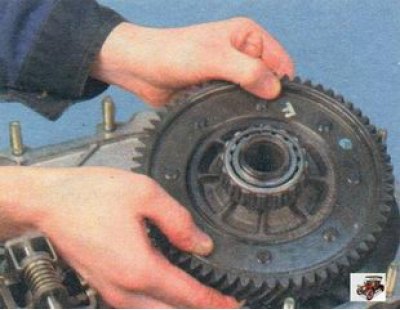
52. Remove the differential from the clutch housing.
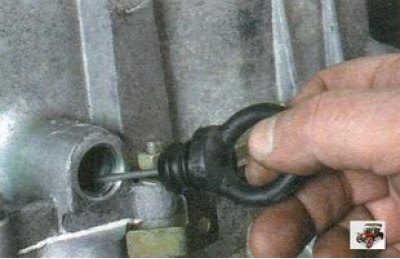
53. Remove the gearbox oil level indicator (dipstick).
54. If necessary, remove the speed sensor (see "Vehicle speed sensor") and unscrew the reverse light switch from the gearbox housing (see "Replacing the reverse light switch").
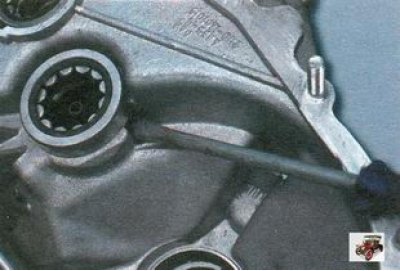
55. A special puller is used to press out the front bearing of the secondary shaft. If it is missing, press out the secondary shaft bearing using a screwdriver.
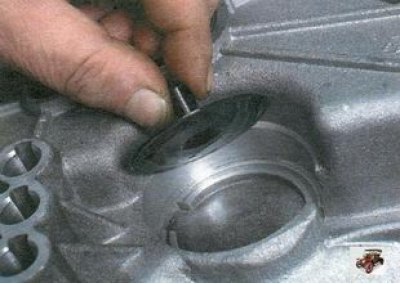
56. Remove the oil pan installed under the secondary shaft bearing.
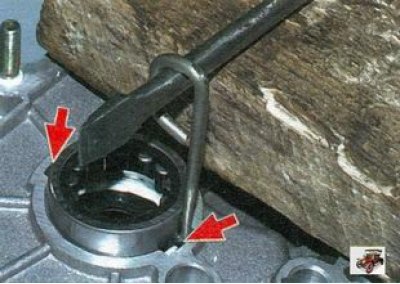
57. There is also a special puller for pressing out the front bearing of the primary shaft. If you don't have one, bend a hook-shaped device out of stiff wire. Insert the tool into one of the two slots in the gearbox housing and hook the hook under the bearing. Then using a screwdriver (putting a wooden block underneath) press the bearing out of the gearbox housing by applying force to the opposite end of the screwdriver with hammer blows and alternately moving the hook in the grooves.
58. Press the new front gearbox shaft bearings into the clutch housing until they stop, using a suitable mandrel.
59. To replace the clutch housing, remove the bearing from it (see "Replacing the clutch release bearing") and the clutch release fork (see "Replacing the clutch release fork"), press out the seals (see "Replacing gearbox seals").
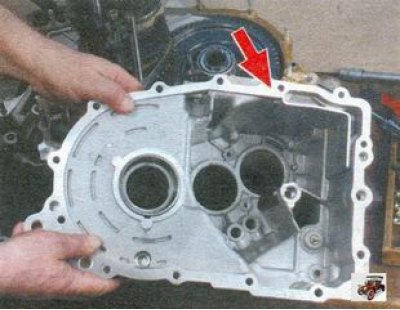
60. Inspect the clutch and gearbox housings, as well as the rear cover. They should not have any cracks or chips. There should be no nicks, scratches, dents, etc. on the mating surfaces. Remove minor damage with sandpaper. In case of severe damage, replace defective parts.
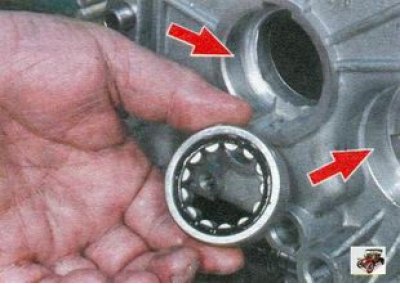
61. Check the bearing seats in the clutch and gearbox housings. These surfaces must not show any signs of wear or damage. Otherwise, replace the clutch and gearbox housings.
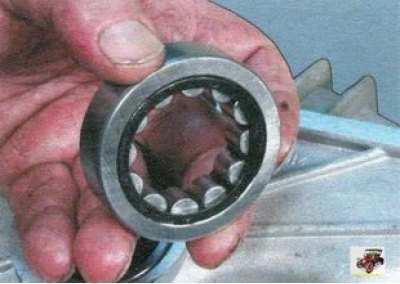
62. If the raceways, separator or rollers are damaged and if play is detected in the bearing, check the bearing by installing it on the shaft (the radial clearance in the bearing should not exceed 0.07 mm), replace it.
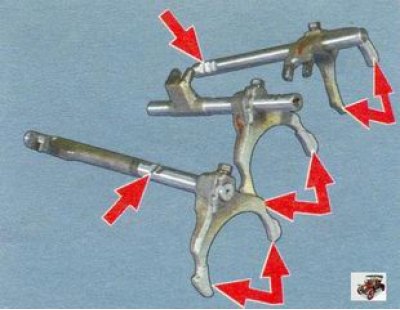
63. Check the condition of the gear shift rods. Replace bent rods, those with burrs, nicks or worn-out dimples for the clamps. Replace the forks if they are bent or their tabs are worn.
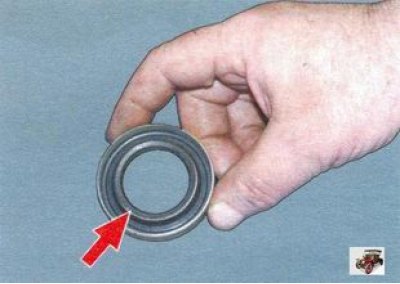
64. Check the axle shaft seals. The axle shaft seals must not be warped or have tears. The working edge of the axle shaft seal must be smooth, without tears, dents or rubber build-up. The oil seal spring must not be broken or stretched. Replace defective axle shaft seals.
65. Check and, if necessary, replace the input shaft and gearshift rod seals.
66. Clean the magnet from wear particles. If the magnet becomes cracked or its magnetic properties become weak, replace the magnet.
67. Carefully clean the mating surfaces of the clutch and gearbox housings, as well as the rear cover, from old sealant.
Assemble the gearbox in the reverse order of disassembly, taking into account the following.
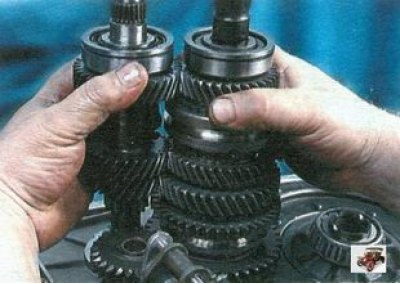
1. Before installing the primary and secondary shafts, engage the teeth of their gears and install them in the clutch housing in this position.
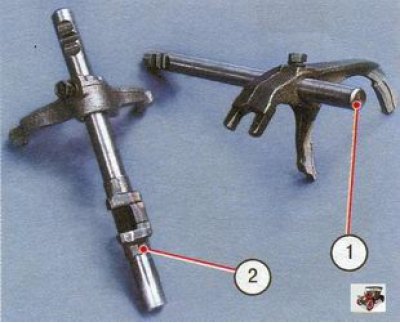
2. Pay attention to how the forks are installed on the gear shift rods:
- 1 - rod with fork for switching I - II gears;
- 2 - rod with fork for switching III - IV gears.
3. Please note that the bolt that secures the gear selector rod hinge is different from the other similar bolts used in the gearbox to secure the forks and gear shift lever. It is longer and cadmium plated (gold color coating). Do not replace this bolt with others. Before screwing in this and other similar bolts, degrease the threaded part of the bolt and apply TB-1324 glue to it, or, if you don't have it, apply anaerobic thread locker.
4. Generously lubricate all rubbing parts with transmission oil.
5. Don't forget to put the magnet back in place.
6. Before installing the gearbox housing onto the clutch housing and the rear cover onto the gearbox housing, apply to their mating surfaces (around the entire perimeter) sealant TB-1215 or KLT-75TM with a continuous roller with a diameter of 2 mm.