



1. Remove the clutch release bearing (see "Replacing the clutch release bearing").
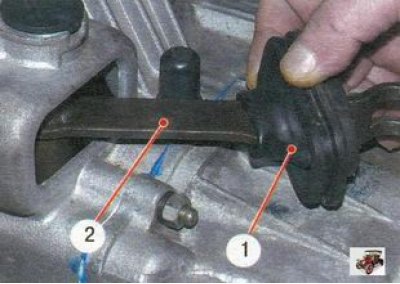
2. Carefully pry up the dust cover 1 of the clutch fork with a screwdriver and remove it from the clutch fork lever 2. Replace a torn or loose clutch fork boot.
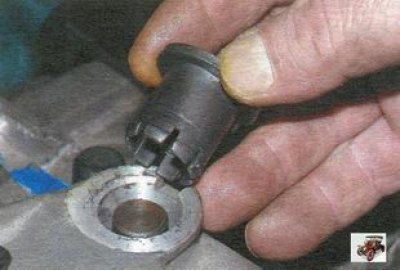
3. Using pliers to squeeze the tabs of the retainer from the inside of the clutch housing and a screwdriver to pry it from the outside, remove the plastic sleeve of the clutch fork axle. Replace the plastic clutch fork axle bushing if it is badly worn or the retainer tabs are damaged.
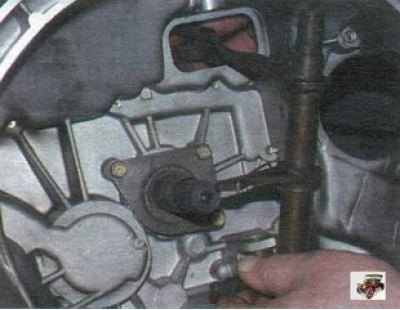
4. Raise the clutch fork, remove its axle from the bushing pressed into the clutch housing, and remove the clutch fork, removing the axle and then the lever from the holes in the clutch housing.
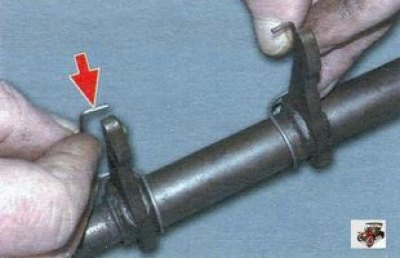
5. Remove the spring retainer from the clutch fork by squeezing its ends. Replace a broken or loose spring retainer.
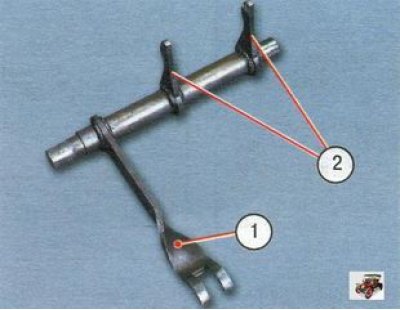
6. Replace the clutch release fork if the lever 1 of the clutch fork is bent or cracked or the legs 2 of the clutch fork are badly worn at the points of contact with the clutch release bearing sleeve.
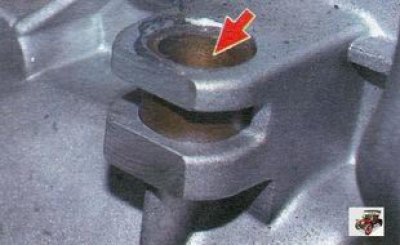
7. Press out the worn metal bushing, then press in the new one until it stops.
8. Before installing the clutch release fork, lubricate the metal and plastic bushings with consistent grease.
9. Install the clutch release fork on the vehicle in the reverse order of removal. Make sure that the protrusion on the plastic sleeve fits into the groove on the clutch housing, and that its petals securely fix the sleeve in the clutch housing from falling out.