



Sequence of execution
1. Prepare the vehicle for work and install it on an inspection ditch or overpass (see "Preparing the car for maintenance and repair").
2. Remove the right front wheel and the right front mudguard (see "Wheel replacement" and "Front fender liner - removal and installation").
3. Using a slotted screwdriver, pry off the protective cover of the tension roller.
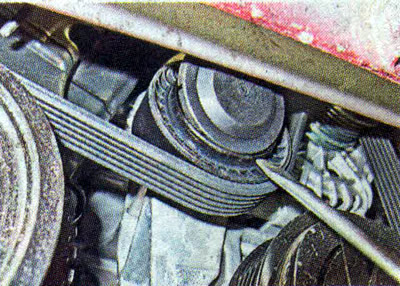
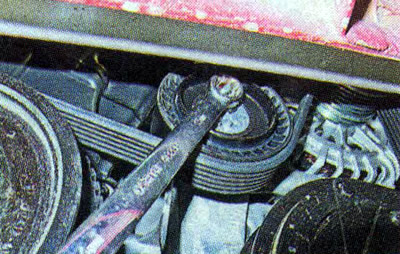
4. Using a 13 mm open-end wrench, loosen the tension roller mounting nut.
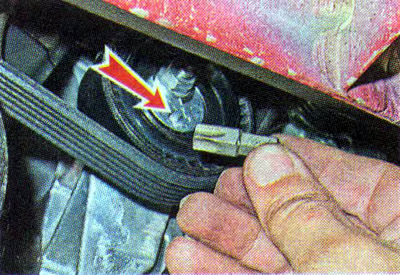
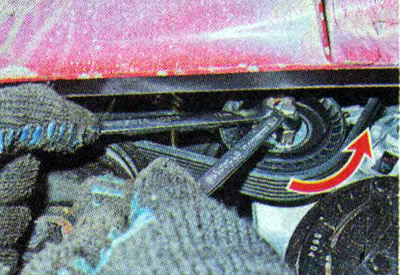
5. Install the TORX T-55 bit into the tension roller hub...
(Article based on information from the website: ladaman.ru)
...and, using another key, turning the roller hub in the direction of the arrow, we loosen the belt tension.
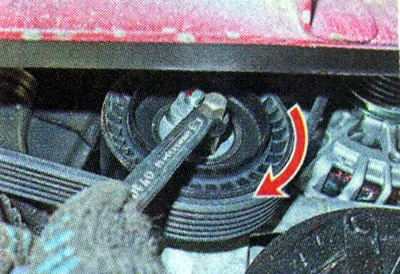
6. Having moved the tension roller away from the belt, remove the belt from the roller, and then from the other pulleys.
Recommendation. After removing the belt, the condition of the tension roller bearing should be checked. If the bearing makes a loud noise or sticks when the roller rotates, or has noticeable play, the roller must be replaced. To replace the tension roller, use a 13 mm wrench to unscrew the mounting nut. We install a new tension roller on the stud and tighten the mounting bolt nut to a torque of 21 Nm.
7. Put the belt on the pulleys in the reverse order, as shown in the photo "Engine accessory drive belt" (see above) in the section "Accessory drive belt - checking".
8. Using a TORX T-55 key, turn the tension roller hub counterclockwise to tighten the belt. Holding it in this position, tighten the mounting nut with a 13 mm wrench.
9. Check the tension of the drive belt (see the note in the section "Auxiliary drive belt - checking"), adjust the tension if necessary.
10. Install the protective cover of the tension roller and other removed parts in the reverse order.