



The volume of the lubrication system is 3.5 l.
Recommendation. For more complete removal of oil, it should be drained from a warm engine.
To complete the work you will need:
- inspection ditch or overpass;
- oil filter remover;
- wide container with a capacity of at least 4 liters.
Removal
1. Prepare the car for work (see "Preparing the car for maintenance and repair").
Note: If the vehicle is equipped with a crankcase guard and it obstructs access to the engine oil hole, remove the guard. For convenience, you can also remove the engine splash guard (see "Engine Mudguard - Removal and Installation").
2. On a car with an automatic transmission, use a 17 mm open-end wrench to loosen the drain plug.
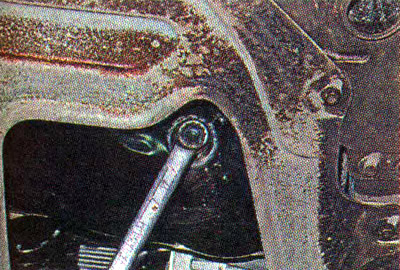
On a car with a manual transmission, use an 8 mm Allen key to loosen the drain plug fastener.
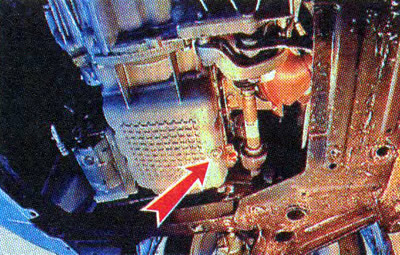
3. Place a container for used oil under the engine.
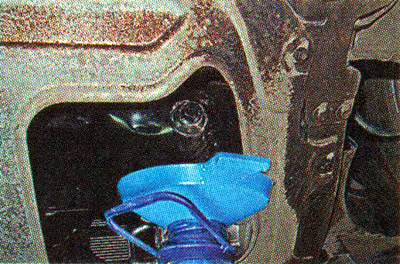
Warning! When performing the following operation, be careful - the oil is hot!
4. Unscrew the drain plug of the engine oil pan and drain the oil from the engine into a container.
5. After waiting for the oil to completely drain from the engine oil pan, tighten the drain plug.
6. Using a puller, loosen the oil filter.
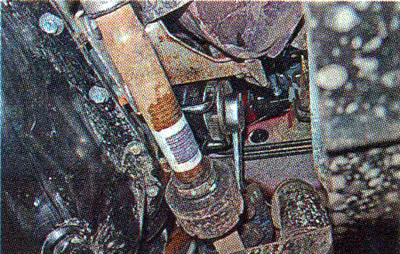
7. Unscrew the oil filter and remove it.
8. Using a clean rag, thoroughly clean the mating surface of the oil filter on the cylinder block.
9. Apply clean engine oil to the rubber sealing ring of the filter and screw the filter into place.

10. Tighten the filter with your hands.
Note: First, screw the filter until its sealing ring touches the mating surface of the cylinder block. Then from this position we tighten the filter by 1/2-3/4 turn.
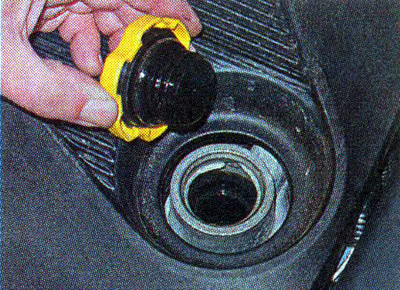
11. Unscrew and remove the oil filler cap.
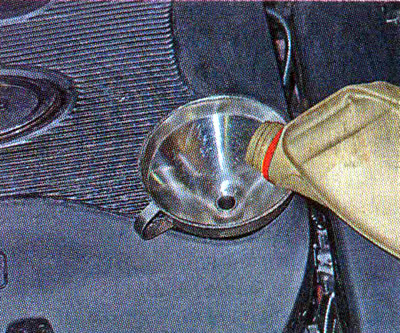
12. Place the funnel into the neck. We pour oil into the engine, monitoring its level using the indicator (see above, "Oil level - check").
13. Tighten the oil filler cap.
14. Start the engine and make sure that the oil pressure warning light has gone out and there are no oil leaks from under the oil filter sealing ring and the drain plug.