



Checking the oil level
It is necessary to check the engine oil level at least before every long trip to avoid engine damage.
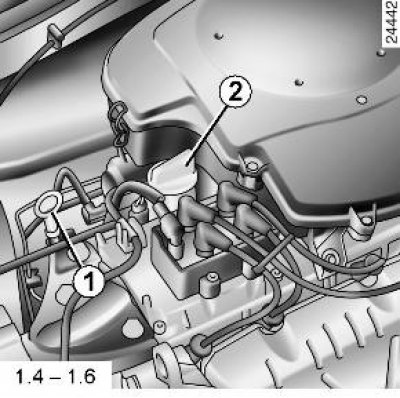
The oil level should be checked on a cool engine. The oil needs time to drain completely into the oil pan - only then can the level be accurately assessed. The car must stand on a level surface. The testing algorithm is simple: pull out the dipstick (1), wipe it with a clean cloth, insert it back into place and quickly remove it.
 |
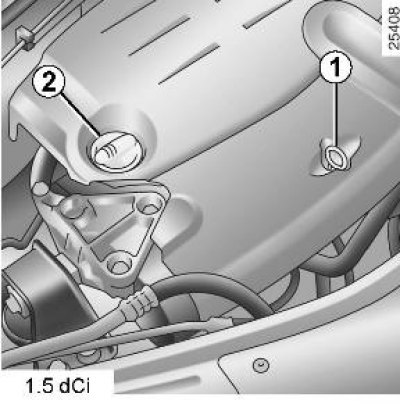 |
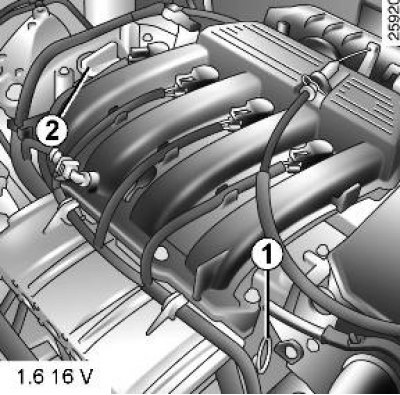
1 - oil dipstick and its location on different modifications of the Lada Largus engine, 2 - filler neck
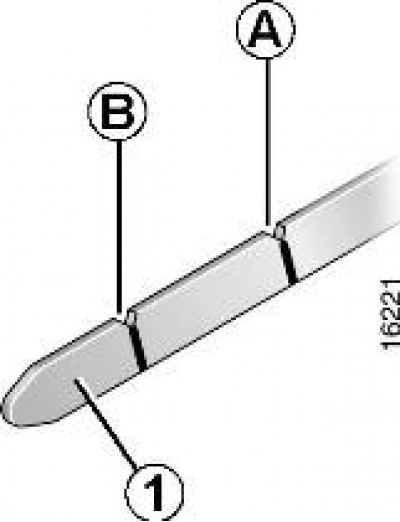
The normal oil level is between the MAX (A) and MIN (B) marks. If it drops below that, expect trouble: the oil pump will start to swallow air, especially when turning and accelerating. The oil pressure will periodically decrease, many parts will operate without lubrication and, accordingly, wear out faster. Moreover, when the oil level is insufficient, its temperature increases, since less liquid has to cope with the task of cooling the engine. Because of this, the oil loses its properties much faster.
Under no circumstances should the maximum filling level A be exceeded: this may result in damage to the engine and catalytic converter.
To top up, usually use the same engine oil that was poured into the car during maintenance. But you can also add other oil whose quality group is not worse than the required one. No modern oil will ruin your engine right away. It's a different matter if you had to add something questionable on the road – in this case, change the oil completely at the first opportunity. When adding oil, do not confuse the filler neck of the engine and, for example, the gearbox - such cases are known. To avoid spilling half a canister, use a funnel (you can buy it at a parts store or make it from the neck of a plastic bottle). For a Lada Largus car, between the risks (labels) MAX and MIN on the dipstick "fits" from 1.5 to 2 liters of oil, depending on the engine model. When adding oil, do not rush: you need to let it drain into the pan. Therefore, take a short break before measuring the level. Overfilling with oil is not as dangerous as underfilling, but it is still best to avoid it.
How often to change oil
The oil must be changed every 15,000 km
How much oil to add when changing
The average volume of oil added during an oil change, including the oil filter, depends on the engine model:
- k7M engine: 3.3 liters
- k4M engine (1.6 16V): 4.8 liters
- vAZ-11189, 21129 engines: 4.1 liters
What oil to fill
Motor oils with API quality class: SL; SM and viscosity level SAE: 5W30; 5W40; 5W50; 0W30; 0W40
Oil and filter change
The replacement is shown using a 1.6 (16V) engine as an example. The work is carried out on a warm, non-running engine.
Remove the engine protection. To do this:
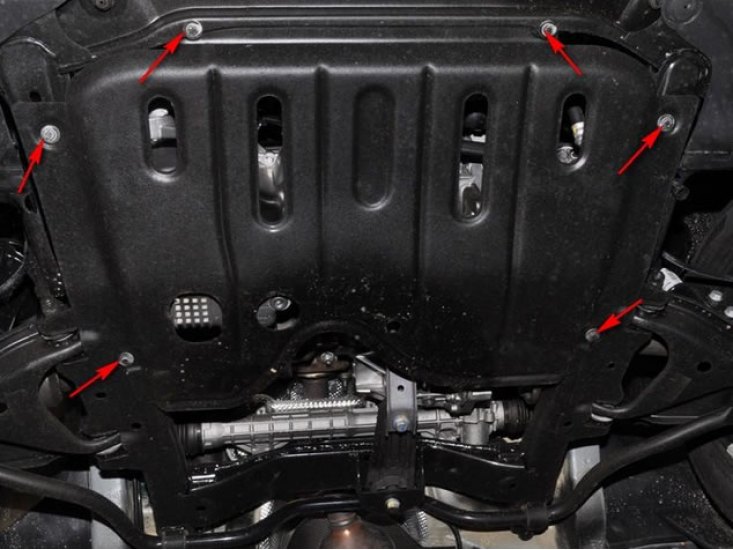
From underneath the car, using a 10 mm socket, unscrew the six bolts securing the powertrain guard and remove the guard.
Open the hood and unscrew the oil filler cap.
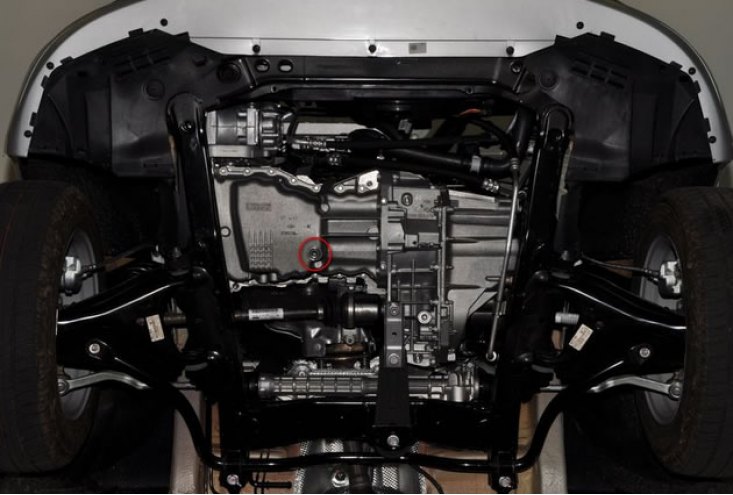
Clean dirt from the bottom of the oil pan around the drain plug.
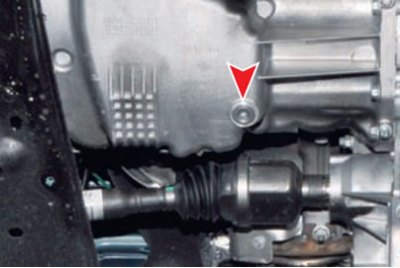
Using an 8 mm square wrench, loosen the drain plug…
Place a container with a capacity of at least 5 liters underneath, unscrew the plug completely, and drain the old oil.

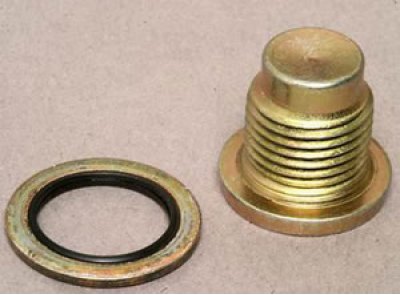
Please note that there is a rubber sealing washer installed under the plug. If it is badly damaged, replace it. If there is no such washer, install a regular copper one (hole diameter 18 mm).
Wait until all the residue drains off (about 10 minutes). Screw the plug back into place and tighten it.
Unscrew the oil filter by turning it counterclockwise.
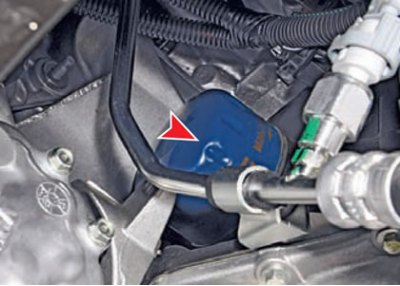
Wipe the seat with a rag to remove dirt and oil stains. Apply a thin layer of oil to the rubber seal of the new filter and screw it into place by hand. Do not use any tools to tighten.
Fill in new oil through the filler neck (the amount of oil depends on the engine - see above).
Start the engine, make sure that the oil pressure indicator light is not on, let it run for 1-2 minutes and turn it off.
Make sure there is no oil leakage from the drain plug or from the oil filter. Check the level and, if necessary, bring it up to standard.
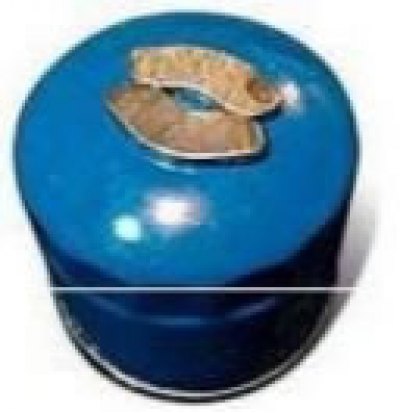
Advice: Often, many car owners replace the drain bolt in the engine sump with a bolt with a magnetic tip, because not all iron particles are caught by the oil filter. I offer to help him in this difficult matter. Magnets should be installed on the outside of the filter housing, preferably neodymium ones - they are relatively inexpensive. You can even get them for free if you disassemble an old computer hard drive: it contains two powerful magnets. For those who doubt the effectiveness of this modification, I advise you to cut open the oil filter after the next oil change and look inside.
About oil change intervals and quality
Regular oil changes in your engine are the key to its long-term health. However, any maintenance schedules are made for average operating conditions, and in real life the engine does not always operate in comfortable conditions - take, for example, traffic jams. Therefore, most car manufacturers recommend reducing the oil change interval by half under severe operating conditions. They are echoed by oil producers, based on their own research experience. Finally, this opinion is supported by the results of the examinations that our journal has been conducting for many years.
Severe conditions include long-term operation of the vehicle at low temperatures, which is associated with frequent cold starts and long engine warm-ups. Or, conversely, in hot weather, when there is an increased thermal load on the lubricant. This also includes
maximum power and load modes, such as high-speed driving or towing a trailer. But perhaps the most destructive mode for oil is traffic jams. This is movement at low speed and prolonged idling.
Premature aging of the human body is called Werner's syndrome. Something similar happens to motor oil under heavy operating conditions. Aged oil cannot operate at full capacity, and therefore the engine life is reduced.
When testing motor oils, a lot of parameters are taken into account, which are used to judge the rate of its aging. The main rejection characteristics are excessive changes in kinematic viscosity, as well as acid and base numbers. Additional parameters include wear product content in the oil, flash point change, high- and low-temperature engine deposits. Let's analyze what happens to all these values, for example, in conditions of frequent traffic jams.
Kinematic viscosity is the most important parameter determining the performance of the oil. The quality of lubrication of friction units, wear rate, friction losses, and, indirectly, consumption due to burning and overheating of engine parts depend on it. Under normal operating conditions, viscosity changes according to the classic scenario: first it drops slightly, and then increases, remaining for a long time within relatively safe limits. But with prolonged idle mode and frequent cold starts, it quickly goes beyond the permissible values. At first, the viscosity drops significantly, and then increases sharply, which clearly indicates premature aging of the oil.
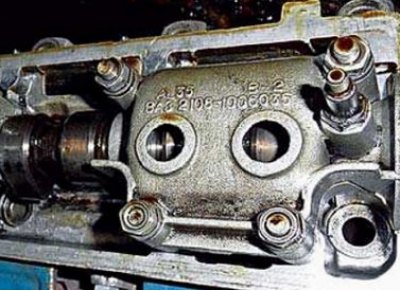
The tendency of the oil to form low-temperature deposits is determined by the change in the mass of the control weight elements - engine parts installed in the valve cover (oil separator mesh) and in the oil pan (oil filter intake mushroom).
The drop in viscosity at the first stage is associated with an increase in the passage of exhaust gases into the crankcase (the inevitable effect of idle mode), and along with them, unburned fuel mixing with the oil. This leads to a decrease in the bearing capacity of the oil film and lubricating properties, which is especially dangerous for plain bearings (liners). In addition, fuel that gets into the oil significantly reduces the flash point of the oil and increases its evaporation. When the engine reaches operating temperature, the fuel begins to evaporate, and along with it the oil - its burnout increases.
Long-term interaction of oil with excess crankcase gases causes its accelerated oxidation (increase in acid number) and a sharp increase in viscosity, which causes carbon monoxide to increase again. As a result, a vicious circle is created: the less oil remains in the pan, the faster it ages. At the same time, it becomes thicker, which means that the thickness of the layer left by the rings in the cylinder increases, and the carbon monoxide increases even more actively.
After some time, after a significant decrease in the alkaline number (characterizes the cleaning ability of the oil) a rapid increase in acidity begins, which is accompanied by an increase in oil viscosity. Coupled with the activation of detergent additives, this leads to an increase in the volume of deposits in the engine. High temperature varnish build-ups are the most dangerous. They form on the side surfaces of the pistons, coking the rings, and also on the valve guides. Low temperature deposits (tar-like) settle in the oil pan, on the walls of the engine crankcase and in the area of the camshafts. They also accumulate in oil channels and can even clog them, which will lead to oil starvation.
Aged oil has extremely low protective properties, and wear of engine parts increases sharply. And another vicious circle is formed: wear products accumulate in the oil (abrasive particles), which further reduce the service life of engine components. In addition, there is an increase in the toxicity of exhaust gases and increased fuel consumption.
Numerous studies show that modern synthetic oils are capable of withstanding service intervals of 15,000 km in the urban cycle. However, no one hides the fact that the oil ages significantly. Therefore, experts agree that in metropolitan conditions, the oil change interval must be reduced to extend the life of the engine.
Distance and products
The recommendation to change the oil one and a half to two times more often raises a lot of questions.
Assessing the severity of operating conditions of a particular vehicle with a particular engine model is an individual matter. However, there are a couple of practical tips.
The generally accepted sign of "traffic jam" operation is an average speed of less than 30 km/h. When this is reached, the ideal oil change interval is 7500 km. There are other approaches. For example, Castrol specialists recommend a proportional reduction in the interval: at an average speed of 30 km/h - 15,000 km; at 25 km/h - 12500 km and so on. This is a good calculator for owners of out-of-warranty cars. And for cars under warranty and very responsible owners, it is easier to reduce the interval to 7,500 km.
You can also experiment with the viscosity of the oil if the car manufacturer offers a fork.
As an example, let's consider the specification of the Volkswagen concern VW 50200. The specified requirements cover viscosity classes SAE 0W-30; 0W-40; 5W-30; 5W-40.
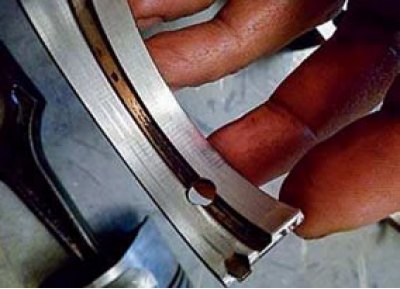
The protective characteristics of the oil are determined by the change in the mass of the control parts (crankshaft liners and piston rings), changes in the size of parts, the content of wear products in the engine oil sample taken after testing.
[Main material on the website: LADAman]
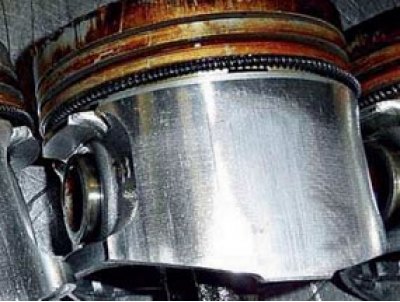
The tendency of the oil to form high-temperature deposits is determined by a visual assessment of the level of contamination of the side surfaces of the pistons.
In this case, the "thirties" should be considered as a starting point. It is on oils with the lowest permissible high-temperature viscosity class that the engine's performance characteristics are measured and tested.
According to Castrol, the transition to more viscous products (0W-40 and 5W-40) will lead to a slight increase in fuel consumption (within 1-2%), and therefore to a decrease in engine efficiency. However, in some circumstances such a transition is more than justified. Using a thicker oil can somewhat reduce the amount of oil carried into the combustion chamber. Based on research experience, when switching from 5W-30 viscosity oils to 0W-40 oils, the reduction in fluid consumption for burnout can reach 40-50 mg/1000 km for an engine with an average design consumption of 70-80 mg/1000 km for the family.
If the engine is constantly operated under maximum load conditions, then due to the increased oil temperature, its viscosity decreases, which can lead to increased wear of parts. The use of "forties" will allow you to stay within the manufacturer's established lower limit of high-temperature viscosity and protect the health of the engine.
Thicker oils are also preferable in conditions of frequent short trips, which provoke an abundant breakthrough of unburned fuel into the engine crankcase, which leads to dilution of the oil.
The universal choice in our example is (for Volkswagen specification) will be 0W-40 oil. In addition to the important advantages of more viscous products described above, the engine starts more confidently in cold weather. In addition, for the production of "zeroes" (0W-30,0W-40) as a rule, base oils of higher quality groups are used than for the "fives" (5W-30, 5W-40), and this contributes to increasing their thermal and antioxidant stability and overall resource as a whole.