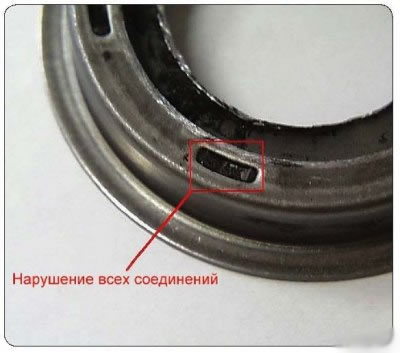
Probable Cause: Foreign body ingress, which may also cause belt displacement. The presence of marks on the flat side of the belt is additional evidence of the presence of a foreign body.
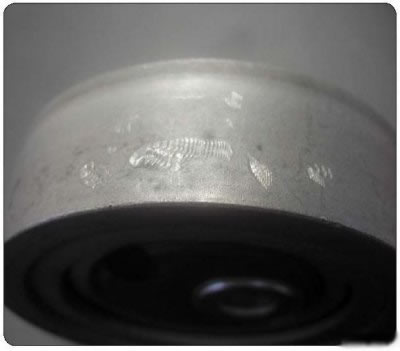
External manifestation of malfunction/breakdown/problem: Noise when rotating the intermediate roller.
Possible Cause: Belt misalignment on pulley or belt tension too high. When the radial clearance in the bearing increases, the inner ring comes into contact with the roller, which causes noise.
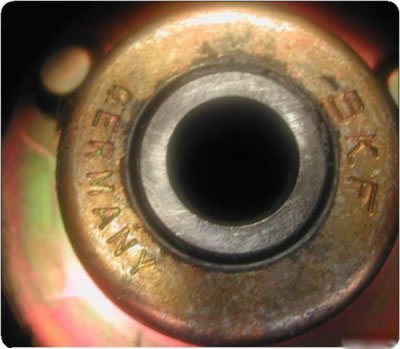
External manifestation of malfunction/breakdown/problem: Breakdown of the belt tension indicator.
Possible Cause: Failure of the pointer due to improper belt tension. Incorrect tensioner mounting bolt torque or tensioner installation on a very hot or cold engine resulting in incorrect adjustment.
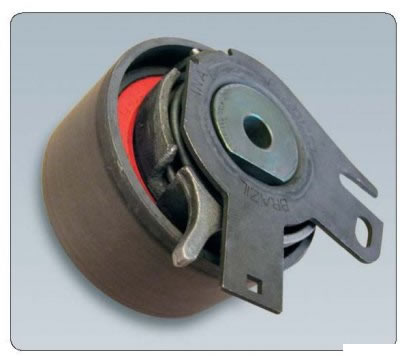
External manifestation of malfunction/breakdown/problem: Melting of the plastic roller.
Possible cause: Melting of the plastic part of the roller caused by operation in high temperatures. Overheating of the roller could have occurred due to bearing failure.
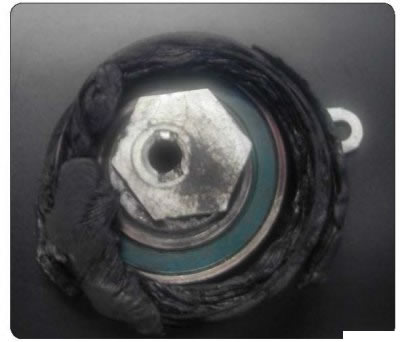
External manifestation of malfunction/breakdown/problem: Traces of wear from rotation in the eccentric area.
Probable cause: The presence of wear marks on the mounting surface of the bracket indicates that the roller mounting bolts are not tightened properly.
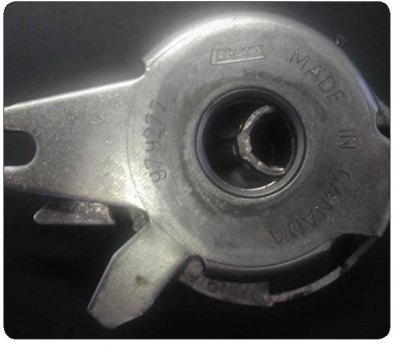
External manifestation of malfunction/breakdown/problem: Displacement (skew) of the roller.
Possible Cause: Belt marks on the roller indicate that the belt and roller were not properly aligned during installation.
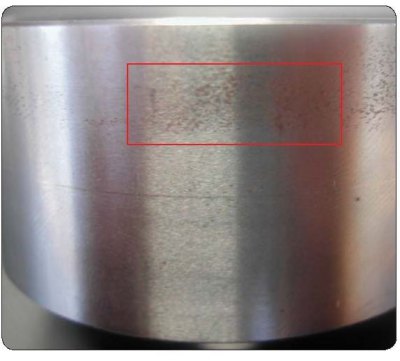
External manifestation of malfunction/breakdown/problem: Damage to the tensioner cover.
Probable Cause: Incorrect installation of the tensioner caused the tension indicator to contact the limiter, resulting in damage to the tensioner housing.
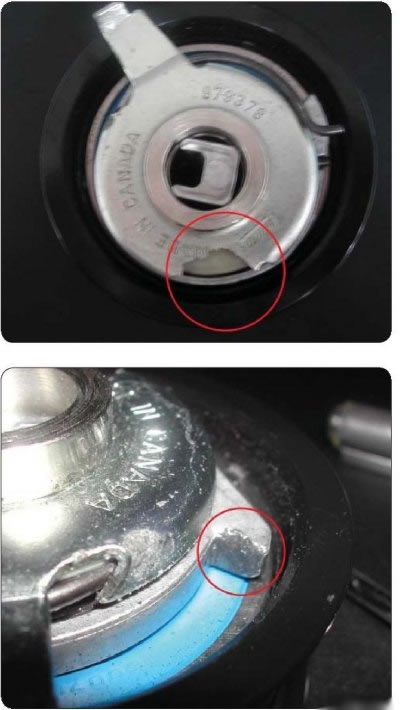
External manifestation of malfunction/breakdown/problem: Bearing seizure.
Probable cause: Incorrect installation of the tensioner on the engine resulted in the bearing becoming jammed between the mounting bracket and the flange of the support part due to their deformation from contact with the installation pin.
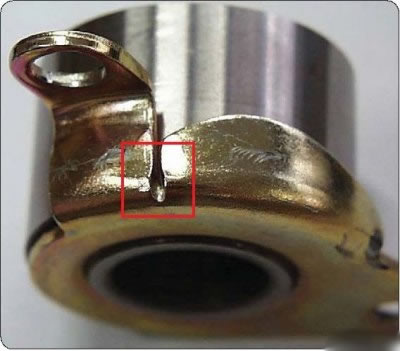
External manifestation of malfunction/breakdown/problem: Breakage of the metal disc of the tension indicator.
Probable Cause: There are four possible causes for this type of damage: Incorrect installation of the tensioner; installing tensioner on very hot or cold engine; incorrect tightening torque value of the tensioner mounting bolt; incorrect gear shifting by the car owner. The presence of a contact spot on the tensioner limiter indicates incorrect installation.
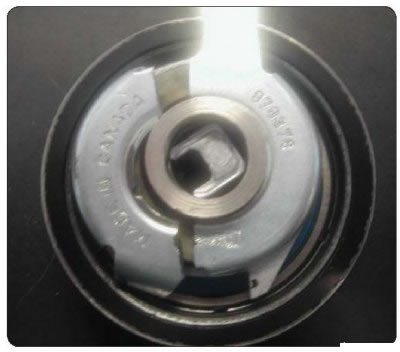
External manifestation of malfunction/breakdown/problem: Breakdown of the limiter.
Probable Cause: Excessive belt tension, most likely due to installation of the kit on a hot engine. In this case, the tension indicator lever is located next to the limiter. As a result of the hammer impact, the limiter broke. It is also possible that a foreign body has entered the timing drive system, causing increased load on the bearing and subsequent failure of the limiter.
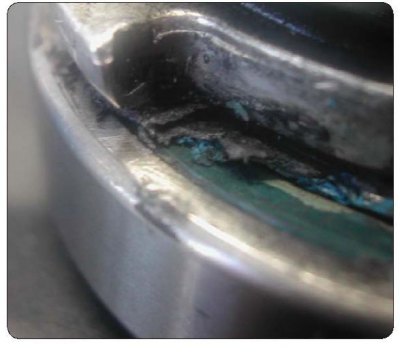
External manifestation of malfunction/breakdown/problem: Tensioner failure: dents on the broken off part.
Probable Cause: Dents on the tensioner surface in the breakout area indicate the use of improper tools and impact during installation, which caused part of it to break off.
When installing and adjusting the tensioner, it is necessary to use the proper tool and follow the vehicle maintenance instructions.
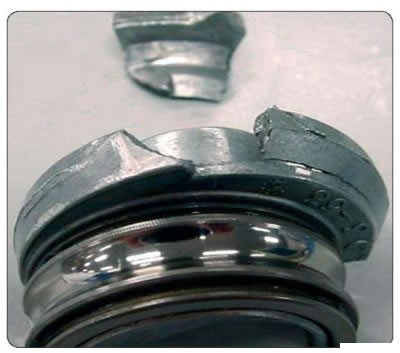
External manifestation of malfunction/breakdown/problem: Presence of oil on the belt and gum on the guide roller.
Possible Cause: The roller seal is contaminated with belt residue stuck to it. The source of the bearing damage is not the roller, but the belt, as evidenced by the damaged outer (flat) side of the belt. The cause of the damage is gasoline or oil leakage that corrodes rubber components such as the roller seal and belt. Damage may also be caused by: a foreign object, incorrect belt tension or non-parallelism.
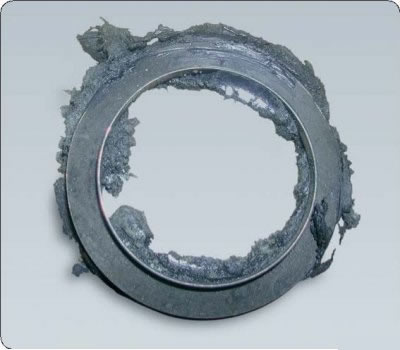
External manifestation of malfunction/breakdown/problem: Bearing seizure; tensioner corrosion.
Probable cause: Tensioner corrosion has spread to the bearing, causing it to jam and the belt to slip on the roller.
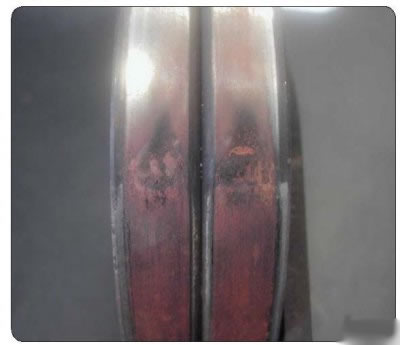
External manifestation of malfunction/breakdown/problem: Dimples on the end of the working surface of the roller.
Probable cause: Damage caused by screwdriver during installation. The roller should not be installed after it has fallen on the floor. Sometimes a mechanic will try to repair damage caused by a dropped roller using a hammer or screwdriver. In this way, firstly, it is impossible to repair the internal damage to the roller, and secondly, using a hammer in this case can lead to damage to other components of the system.
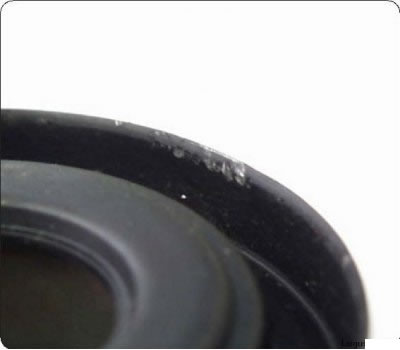
External manifestation of malfunction/breakdown/problem: Turning of the guide roller.
Probable cause: Presence of traces of friction on the tensioner support surface. Tensioner failure is caused by excessive belt tension or by the aluminum pointer hitting the limiter.

External manifestation of malfunction/breakdown/problem: Belt wear from contact with the tensioner roller; displacement of the halves of the roller pulley.
Probable cause: Failure of the tensioner, in particular the roller, is caused by excessive tension of the timing belt or inaccuracy of its position relative to the roller. Wear on the flat side of the belt indicates over-tensioning, while damage to one edge of the belt indicates imprecise positioning.
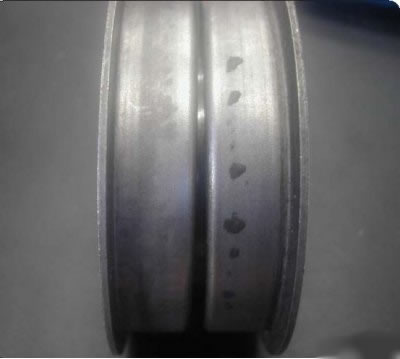
External manifestation of malfunction/breakdown/problem: Deformation of the retainer of the roller support part.
Probable Cause: There are four possible causes for this type of damage: incorrect tightening torque of the mounting bolt, the retainer was not installed in the groove during installation, incorrect belt tension, or installation of the tension roller on a hot engine. In the latter case, it is extremely difficult to correctly adjust the belt tension, since the drive system components are made of different materials and have correspondingly different coefficients of thermal expansion. The tension roller support retainer must be securely installed in the groove when installing the roller
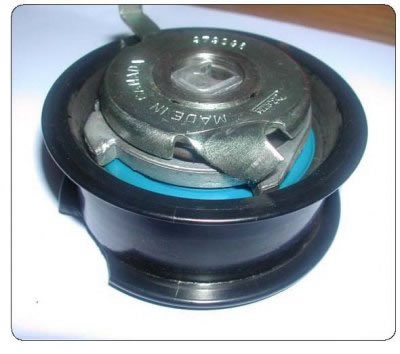
External manifestation of malfunction/breakdown/problem: Weak belt tension.
Probable cause: Damage to the eccentric by the threaded part of the mounting bolt. Incorrect tightening of the tensioner roller mounting bolt resulted in damage to the eccentric, resulting in a weakening of the belt tension.
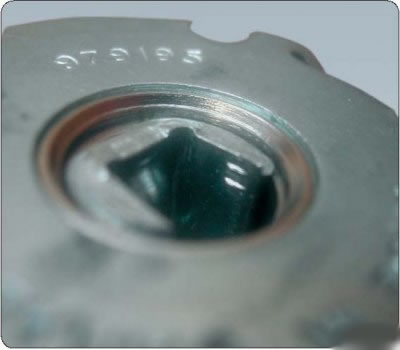
External manifestation of malfunction/breakdown/problem: Presence of belt fibers on the roller.
Probable Cause: Incorrect roller alignment or damage to the camshaft and/or crankshaft gear.
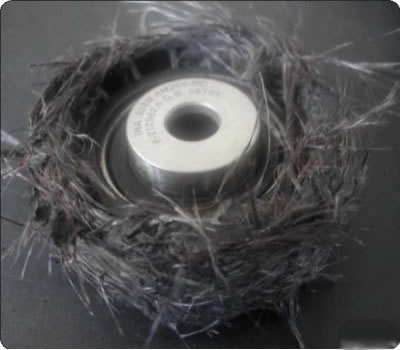
External manifestation of malfunction/breakdown/problem: Traces on the roller cover from contact with the belt.
Possible cause: Inaccurate mutual position of the roller belt.
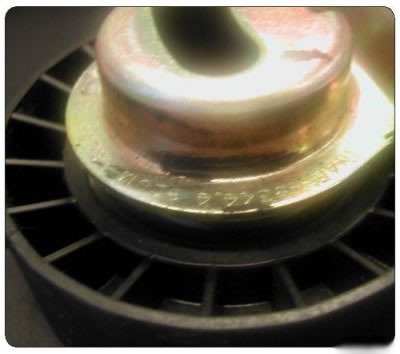
External manifestation of malfunction/breakdown/problem: Belt displacement.
Possible cause: Incorrect adjustment of the relative position of the rollers and belt, or damage to the camshaft and/or crankshaft gear.
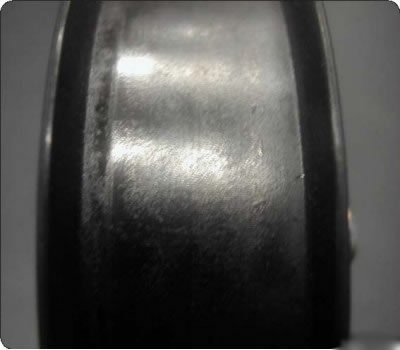
External manifestation of malfunction/breakdown/problem: Damage to the roller.
Possible Cause: Excessive belt tension causes the drive system components to become misaligned, causing the retainers to fail and, as a result, the two parts of the tensioner roller to separate.