



The engine will not start
Problems with starting the engine on a Lada Kalina can be divided into two main groups depending on the degree of engine heating.
The engine is cold
At least 6 hours have passed since the engine stopped at an outside air temperature of +20°C and at least 3 hours at -20°C; the oil temperature in the engine crankcase coincides with the ambient temperature.
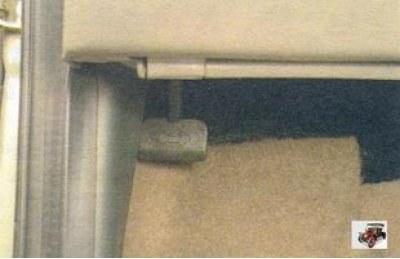
1. Pull the hood release handle towards you and open the hood.
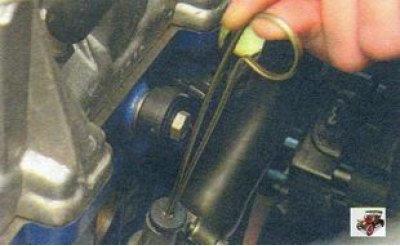
2. Use the dipstick to measure the engine oil level. The engine oil level should be between the "MAX" and "MIN" marks.
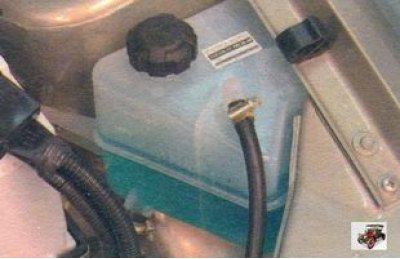
3. Check the coolant level. The coolant level should be as shown in the photo.
4. Carefully inspect the engine and underhood space. Pay attention to leaks of gasoline, oil, brake fluid and coolant. Make sure the electrical wiring is intact.
5. Without closing the hood (in case of rain or snowfall, close the hood), get behind the wheel. Check the fit of the high-voltage wires in the ignition coil sockets and on the spark plugs. Before starting the engine, turn on the ignition by turning the key in the ignition switch to position "I". This will turn on the electric fuel pump for 2 seconds.
6. Turn the ignition key and start the engine of the Lada Kalina.
If the engine on the Lada Kalina does not start, there are three main reasons:
- the engine starting system does not work;
- the ignition system does not work;
- the engine power supply system is not working.
Engine warm or hot
The oil temperature in the engine crankcase is higher than the ambient temperature. To start the engine, turn on the starter without touching the gas pedal. The engine management system will automatically set the fuel supply and ignition parameters necessary for starting.
If the engine on the Lada Kalina does not start, there are three main reasons:
- the engine starting system does not work;
- the ignition system does not work;
- the engine power supply system is not working.
Malfunctions in the starting system
Malfunctions in the engine starting system manifest themselves in abnormal operation of the starter. There are five main starter faults that can be identified.
1. The starter does not turn on. The reason is a violation of contact connections, a break or short circuit in the starter circuits, or a malfunction of the starter traction relay.
2. When the starter is turned on, multiple clicks are heard. The reason is a faulty holding winding of the traction relay, the battery is very discharged, and the contact connections in the starter circuit are loose.
3. The starter engages, but its anchor either does not rotate or rotates slowly. The reason is a discharged battery, broken contact connections, burnt contacts of the starter traction relay, dirty collector or worn brushes, interturn or short circuit in the starter windings.
4. The starter is engaged, its anchor rotates, but the flywheel remains stationary. The reason is a loose starter mount to the clutch housing, damage to the flywheel or drive gear teeth, slipping of the drive freewheel clutch, breakage of the lever, drive ring or starter drive buffer spring.
5. The starter does not turn off after the engine starts. The reason is a malfunction of the starter freewheel clutch, sintering of the traction relay contacts. In case of such a malfunction, stop the engine immediately!
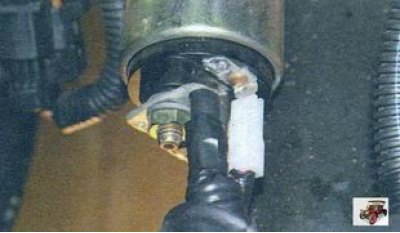
The above faults require qualified intervention at a car service center or upon arrival at the garage (see "Electrical equipment"). You can only check the battery discharge level in advance using a voltmeter (for example, as part of an autotester) and tightening the contact connections in the starter circuit.
Checking the ignition system
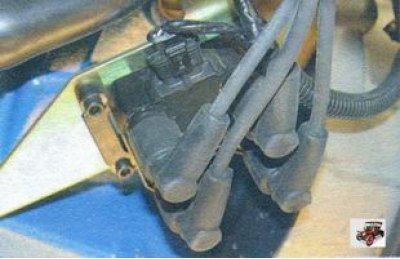
1. With the ignition off, check the integrity and fit of the high-voltage wires in the ignition coil sockets.
2. Check the serviceability of the ignition coil (see "Checking the ignition coil and high-voltage wires").
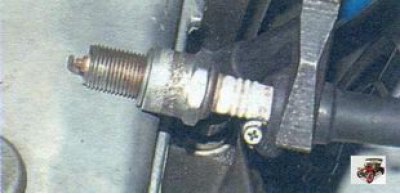
3. If the low voltage circuit of the ignition coil is normal, check for spark at the spark plugs. Remove the high tension wire from any spark plug. Insert a spare spark plug into the wire tip and press its metal part to the "ground" of the Lada Kalina. Turn the engine crankshaft with the starter.
4. If there is no spark, replace the high-voltage wires with new ones. You can try to install not new, but tested high-voltage wires, "from a working machine".
5. If after replacing the high-voltage wires the spark does not appear, replace the ignition coil (see "Removal and installation the ignition coil"). If there is a spark, but the engine on the Lada Kalina does not start, replace the spark plugs with new ones. You can also try to install used but tested spark plugs, "from a working car", in advance.
6. If after this the engine on the Lada Kalina does not start, check the serviceability of the engine management system (see "Fuel injection system faults").
Checking the engine fuel system
The main indicator of the serviceability of the engine fuel system on a Lada Kalina is the fuel pressure in the fuel rail. But first, we recommend checking the condition of the air filter (see "Replacing the air filter element"), since this work is simple and will not take much time. After you have ensured that the air filter is clean, check the reliability of the electrical contacts in the wiring harness pads of the injection system units responsible for fuel supply (electric fuel pump, injectors).
If all the checked elements are in good condition, check the pressure in the fuel system (see "Checking the fuel pressure in the fuel system").
The following are possible reasons for the decrease in pressure:
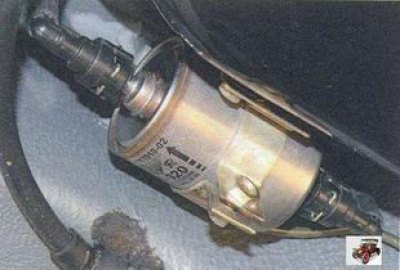
- clogged fuel filter;
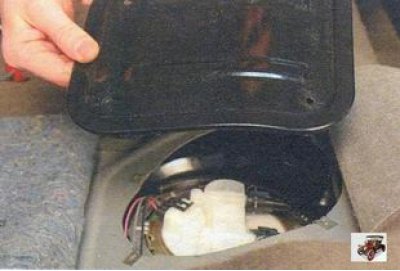
- faulty fuel pump. The fuel pump module has a built-in fuel pressure regulator, so the cause of the drop in fuel pressure, in addition to a malfunction of the pump itself, may be a malfunction of the fuel pressure regulator. In both cases, the fuel pump must be removed from the Lada Kalina for repair.
You will find methods for troubleshooting these problems in the section "Engine" (cm. "Power supply system").