



If the fuel pressure is insufficient, the following malfunctions may occur:
- unstable engine operation;
- engine stop at idle;
- increased or decreased idle speed of the crankshaft;
- insufficient vehicle responsiveness (the engine does not develop full power);
- jerks and dips in engine operation when the vehicle is moving.
To begin with, we recommend checking the reliability of the electrical contacts in the connectors of the wiring harnesses of the injection system units responsible for fuel supply (electric fuel pump, injectors).
The fuel pressure in the fuel system can only be checked using a pressure gauge with a hose for connection to the fuel rail.
1. Turn on the ignition on the car and listen - you should hear the sound of the electric fuel pump operating for a few seconds. If the sound of the electric fuel pump is not heard, check the electrical power circuit of the pump.
2. Unscrew the protective cap of the fuel pressure control nipple at the end of the fuel rail. Please note that the cap has a sealing ring. If the ring is torn or has lost elasticity, replace the ring or cap.
3. Reduce the pressure in the engine fuel system (see "Reduced fuel pressure in the engine fuel system").
4. Using the metal protective cap of the tire valve, unscrew the valve core (the same as in the tire)...
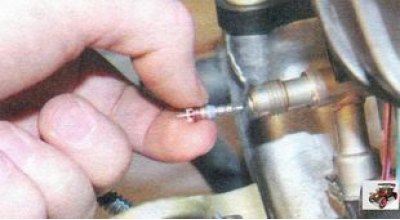
5. ...and remove it from the fitting.
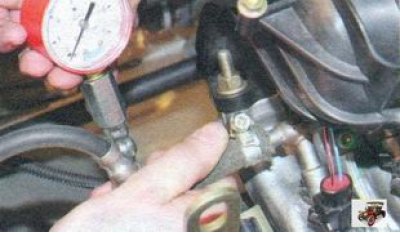
6. Connect a hose with a pressure gauge to the fitting (you can use a tire pressure gauge). Secure the hose to the fitting with a clamp. Start the car engine and check the pressure using the pressure gauge. It should be 380-400 kPa (3.8-4.0 kgf/cm²).
7. Stop the engine and reduce the pressure in the engine fuel system (see "Reduced fuel pressure in the engine fuel system").
8. Disconnect the pressure gauge from the pressure control nipple, screw the valve into the nipple and install the protective cap on the nipple.