



Attention! Important conditions for the correctness of the readings when checking the compression in the cylinders are the serviceability of the starter and its electrical circuits, as well as the full charge of the battery.
On a car, the compression in the cylinders is checked with a special device - a compression gauge, which can now be freely sold in large auto parts stores and in the automotive market.
1. Before measuring compression in the cylinders, check and, if necessary, adjust the clearances in the valve mechanism (see «Valve clearance adjustment»).
2. Start the engine on the car and warm it up to operating temperature.
3. Reduce the pressure in the supply system (see «Reduced fuel pressure in the engine power system»). After reducing the pressure in the engine power supply system, do not install the fuel pump fuse in place to turn off the fuel pump.
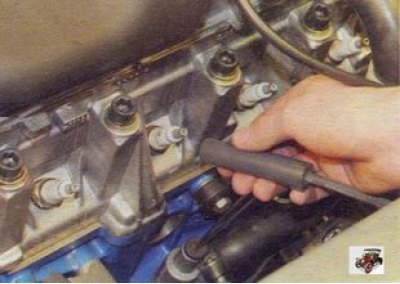
4. Remove the tips of the high-voltage wires from the spark plugs...
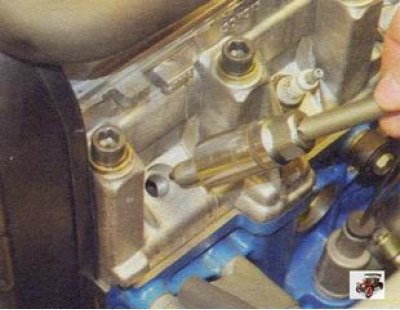
5.... and remove all spark plugs from the engine.
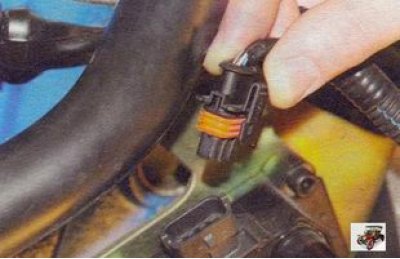
6. Disconnect the low voltage wire harness connector from the ignition coil, thereby disabling the ignition system on the vehicle.
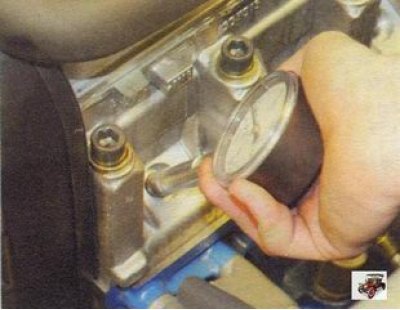
7. Screw the compression gauge into the spark plug hole of the cylinder being checked.
8. Fully depress the accelerator pedal to fully open the throttle.
9. Turn the key in the ignition lock and turn on the starter and turn the engine crankshaft with it until the pressure in the cylinder stops increasing. This corresponds to about four compression strokes. To obtain correct compression gauge readings, the crankshaft must rotate at 180-200 rpm or higher, but no more than 350 rpm.
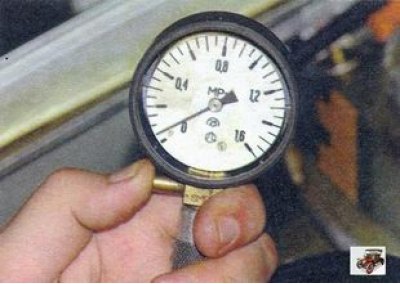
10. Having recorded the readings of the compression gauge, set its arrow to zero by pressing the air release valve.
11. Repeat compression measurement 7-10 for other cylinders. Compression should not be lower than 1.0 MPa and should not differ in different cylinders by more than 0.1 MPa. Low compression in individual cylinders can result from loose valves in the seats, damaged cylinder head gaskets, broken or burnt piston rings. Low compression in all cylinders indicates worn piston rings.
12. To find out the causes of insufficient compression, pour about 20 cm3 into the cylinder with reduced compression. clean engine oil and re-measure compression. If the readings of the compression gauge have increased, the most likely malfunction of the piston rings. If the compression value remains unchanged, it means that the valve plates do not fit snugly against the seats or the cylinder head gasket is damaged.