



When the engine is running, the main source of current - the generator - supplies electric current to all consumers, including the ignition system, and charges the battery.
If the red low battery indicator light is on on the instrument panel, it means that the current is not flowing from the generator to the vehicle's electrical system and the battery's energy reserve is being used up. It is not allowed to operate the vehicle with the battery discharge warning light on, as sometimes the reason for the battery charge light coming on may be a short circuit in the wiring, leading to a fire in the engine compartment. Stop the car, turn off the engine and determine what malfunction caused the battery charging lamp to light up. If the cause of the malfunction is not a short circuit, and the battery was fully charged, you can drive to the garage without the generator, but it is better to try to fix the malfunction on the spot.
Checking electrical equipment on a car
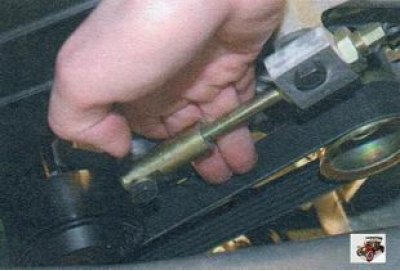
1. Check if the alternator drive belt is broken. If the belt breaks, replace it and adjust its tension (see "Checking the alternator drive belt tension and replacing it").
2. If the belt is intact, check and, if necessary, adjust its tension (see "Checking the alternator drive belt tension and replacing it").
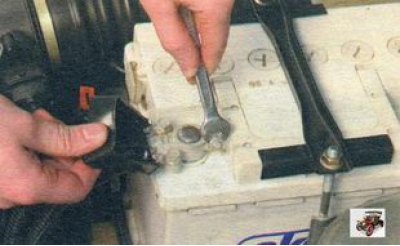
3. If the battery charging indicator light still lights up after tensioning the alternator belt, check the wires connected to the positive terminal of the battery...
(Original text on the website www.LadaMan.ru)
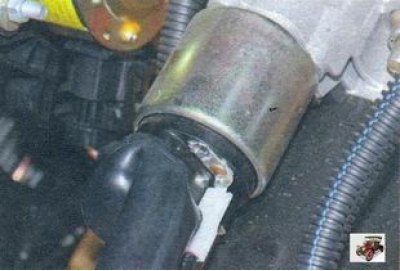
4. ...to the starter...
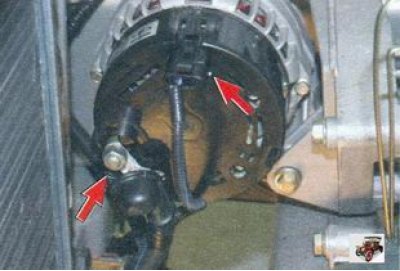
5. ...and to the generator. Wires may be broken, snapped inside the insulation, or have oxidized or unreliable contacts. Fix the problem and start the engine. If charging current appears, you can continue driving.
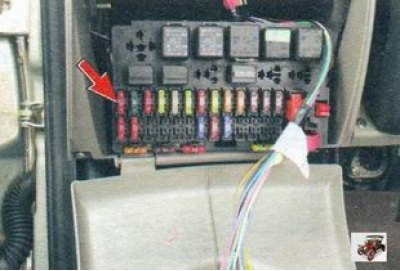
6. If the alternator belt is tensioned properly, check to see if fuse F1 in the fuse/relay box has blown. If the fuse is blown, replace it, start the engine and check if the battery charging light goes out. If the battery charging light on the instrument panel goes out, you can continue driving.
Caution: Do not install fuses with a higher rated current. This may result in damage to electrical equipment and even fire.
If, after taking these measures, the battery charging indicator light continues to light while the engine is running, then the cause of the malfunction may lie in the generator itself. There may be several reasons, it is better to eliminate them in specialized car repair shops or a garage, and you can only hope that the energy reserve in the battery is enough to get to them.
Checking the voltage regulator
To check the voltage regulator you will need: flat- and Phillips-head screwdrivers, a 12 mm wrench (two), a DC voltmeter, and a megohmmeter.
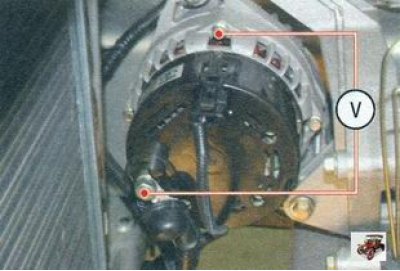
1. Remove the rubber boot and connect the "+" wire to the "B+" terminal of the generator, and the "-" wire to the generator body.
2. Start the engine and turn on the headlights.
3. After 15 minutes of engine operation at medium speed, measure the voltage; it should be within 14.4-15.1 V. If undercharging or overcharging of the battery is observed, (voltage is not within specified limits), replace the voltage regulator.