



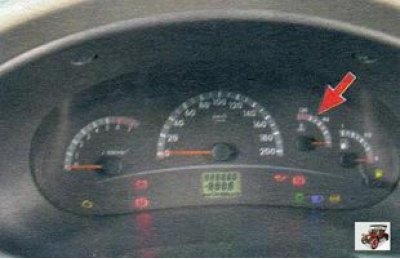
The instrument cluster of any car contains a coolant temperature gauge. If the engine overheats, the coolant temperature gauge needle approaches the red zone.
Checking the cooling system
At the first signs of overheating, if the temperature gauge needle has moved into the red zone, but no clouds of steam are escaping from under the hood, turn on the maximum cabin heating mode (see "Heating and ventilation of the passenger compartment"). This is necessary in order to reduce the temperature of the coolant in the engine cooling system.
Turn on the hazard warning lights, depress the clutch pedal and, using the car's momentum, try to carefully move to the edge of the roadway and stop as far to the right as possible at the side of the road, and if possible, outside the roadway. Let the engine run for a couple of minutes at normal idle speed with the heater on full blast.
Attention! Do not stop the engine immediately! The only condition is to maintain the tightness of the cooling system. If a hose bursts or comes off, or another leak occurs, in addition to the liquid being released from under the expansion tank cap, the engine will have to be stopped immediately! After an overheated engine is stopped, local overheating of the coolant begins in the places where it contacts the most heat-stressed engine parts, and vapor locks form. This phenomenon is called heat stroke.
1. Turn off the engine.
2. Open the hood of the car and inspect the underhood space. Determine where the steam is coming from. When inspecting the engine, pay attention to the presence of coolant in the expansion tank, the integrity of the rubber hoses, radiator, and thermostat.
3. Look under the dashboard on the front passenger side to see if there is a leak or traces of coolant flowing out of the heater radiator.
If a coolant leak is detected, the burst hose can be temporarily repaired with tape.
A leak in a radiator, thermostat or heater is quite difficult to fix on the spot, so in such a situation it is necessary to add water to the cooling system and carefully monitor the temperature gauge while driving, periodically replenishing the level in the cooling system.
Attention! Long-term use of water instead of antifreeze leads to scale formation in the engine cooling system, deterioration of its cooling and, as a result, reduction of service life.
4. If there is no coolant leak, check the fuse and relay for the fan motor, see "Electronic Engine Management System (fuel injection systems)".
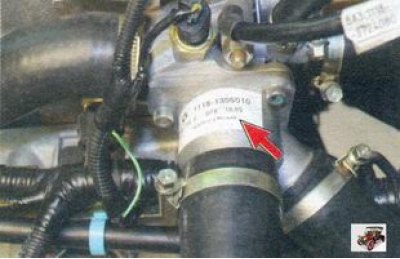
5. In a car, the engine may overheat if the thermostat, which regulates the flow of coolant in the cooling system through or past the radiator, fails (to speed up the warming up of a cold engine). To check the thermostat, you need to check the temperature of the lower hose connecting the thermostat to the radiator on a warm engine. If the lower radiator hose is cold, the thermostat is faulty and there is no circulation through the radiator.
6. Very often the cause of overheating of an engine, the cooling system of which is equipped with an electric fan, is the failure of the fan. Start the engine, monitor the temperature and notice whether the cooling fan turns on when the engine overheats. If it does not turn on, the fuse may be blown, the switch relay may be faulty, or the motor may be burned out.
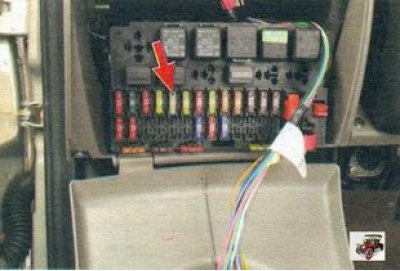
7. Replace fuse F5 in the fuse/relay box. If the fan still does not work after replacing the fuse, check the cooling system fan motor by taking two additional wires and supplying power to the motor directly from the battery. The wires must be securely fastened and insulated.
8. If the cooling system fan motor starts to work, the wiring or the cooling system fan relay is faulty; if not, the wiring or the electric motor itself is also faulty. The relay and electric motor cannot be repaired, replace them as an assembly (see section. "Electrical equipment").
Once a year, flush the radiator cells with a high-pressure water jet (at a special car wash), directing the stream first towards the oncoming air flow, and then in its direction to remove dirt, stuck insects and road debris from the radiator surface. This way you can partially restore the radiator's efficiency.