



- inspection ditch or overpass;
- fuel transfer hose.
Note: You can do without an assistant. In this case, a height-adjustable support or stand is required. If possible, use up as much fuel as possible from the tank before performing work.
Removal
1. Prepare the car for work (see "Preparing the car for maintenance and repair").
2. Relieve the fuel pressure (see "Fuel Line - Pressure Relief").
Warning! After releasing the pressure, a small amount of fuel remains in the fuel line.
3. Using a Phillips screwdriver, loosen the clamp securing the fuel tank hose to the filler pipe and disconnect the hose from the pipe.
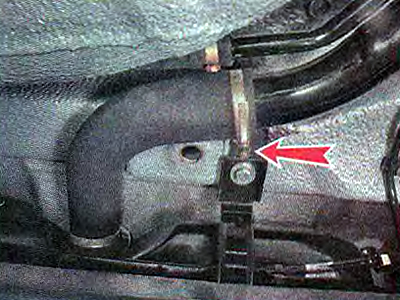
4. Using a hose, pump out the maximum possible amount of fuel from the tank.
5. Press the spring lock to disconnect the tank ventilation hose tip from the branch pipe.
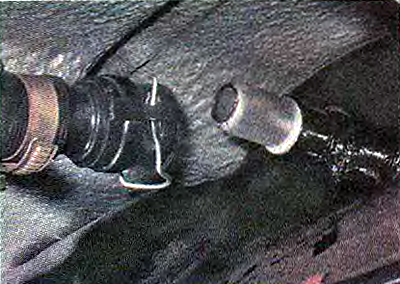
6. By squeezing the spring clamps, disconnect the separator tube tip from the adsorber tube.
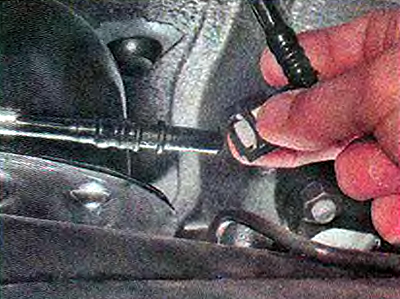
7. Using a 10 mm socket wrench, unscrew the three nuts securing the fuel tank protective screen.
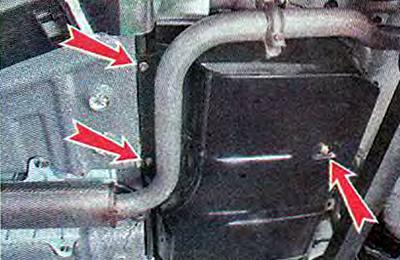
8. Remove the protective screen.
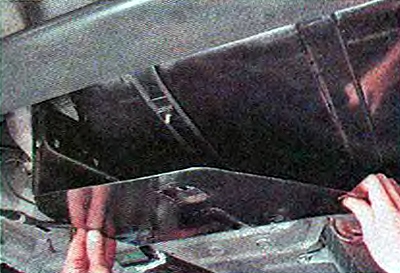
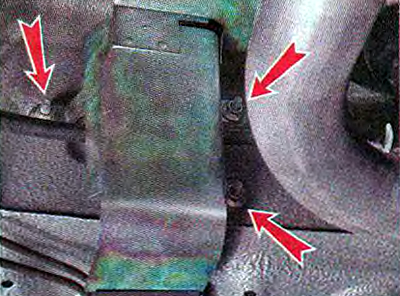
9. Using a 10 mm socket wrench, unscrew the three nuts securing the protective casing of the fuel system pipes.
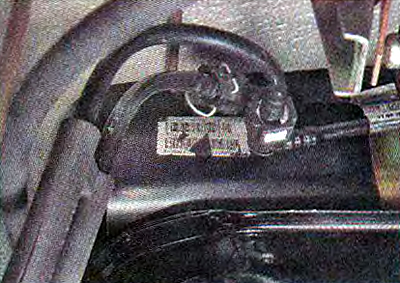
10. By squeezing the clamp, we disconnect the fuel line tubes and the purge tube of the adsorber.
11. Install an adjustable support under the tank (or an assistant holds the tank from below).
12. Using a 13 mm socket wrench, unscrew the two bolts securing the fuel tank clamps.
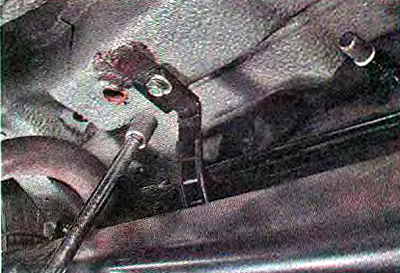
13. Remove the fuel tank assembly with the adsorber and fuel filter.
Installation
We install the fuel tank in the reverse order.
Recommendation. If you fail to start the engine after two or three attempts, try bleeding the air from the fuel rail through the diagnostic connector valve (see "Checking the technical condition of the power supply system").