



Comment. Valve stem seals can be replaced without removing the cylinder head from the cylinder block. To dry out the valves, a compressor and an adapter with a hose for forcing air into the cylinder through the spark plug hole are required. It is possible to loosen the valve without using compressed air if the piston is in the highest position (TDC), but it is difficult to install crackers. This will require an assistant to lift the valve with tweezers and hold it in the upper position during the installation of crackers. Therefore, it is more convenient to perform work on the removed cylinder head.
To complete the work you will need:
- compressor (developed pressure not less than 2 bar) with hose;
- adapter for a hose with a thread for a candle hole;
- cracker;
- tweezers;
- oil seal remover;
- mandrel for pressing caps.
Removing
1. Turn the crankshaft to the TDC position of the compression stroke of the first cylinder and remove the camshafts (see «Camshafts - removal and installation») and fix the crankshaft in this position by engaging the highest gear in the gearbox.
2. Medical syringe (pear or clean rag) remove the remaining oil from the niches of the cylinder head.
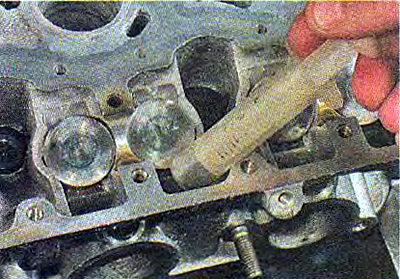
3. We remove the hydraulic pushers from the mounting holes in the head (see «Hydropushers - removal and installation»).
4. We wrap the adapter into the candle hole, connect the hose from the compressor to it and supply compressed air.
Advice. When drying out, it is possible to accidentally damage the walls of the mounting holes of the hydraulic pushers. To prevent this from happening, cut a strip from a plastic bottle and, turning it into a ring, install it in the seat hole of the hydraulic pusher of the valve being disassembled.
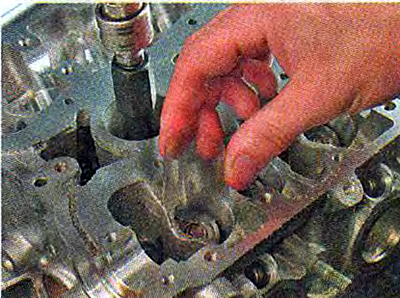
5. Install the cracker bracket on the cylinder head.
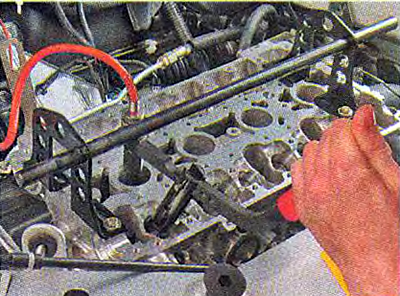
6. We start the grip of the cracker under the head of the bolt, and set the emphasis on the spring plate.
Warning! When performing the following operation, do not scratch the walls of the hydraulic pusher mounting hole with a cracker!
7. By pressing on the handle of the cracker, we compress the valve spring.
8. Holding the spring compressed, use tweezers to remove two valve crackers.
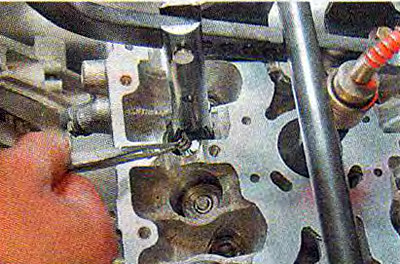
9. Slowly release the spring and remove the cracker.
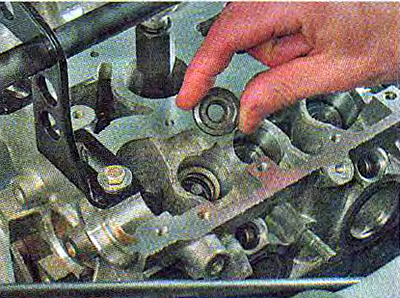
10. Remove the spring plate with tweezers...
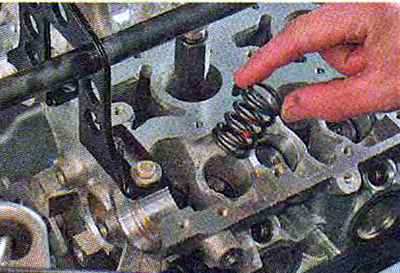
...and remove the spring.
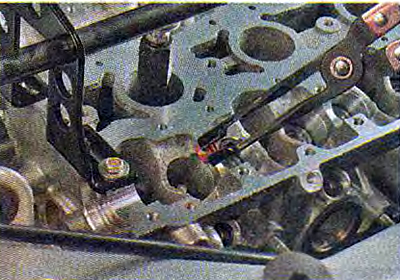
11. Install the grip of the puller on the valve stem seal. Press the cap off the valve guide.
Installation
1. We apply clean engine oil to the working edge of the new valve stem seal and valve stem.
2. In order not to damage the working edge of the cap, we put a plastic guide mandrel on the valve stem (usually included with new caps) so that it closes the grooves on the rod.
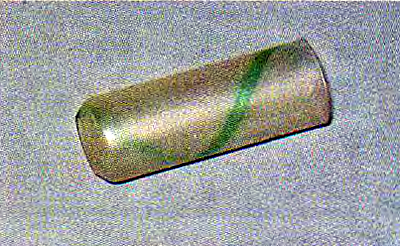
3. We put the valve stem cap on the valve stem and remove the guide mandrel.
Comment. In the absence of a mandrel, the cap should be put on very carefully so as not to damage it on the sharp edges of the valve stem grooves.
4. With light hammer blows through the mandrel, press the cap onto the valve guide.
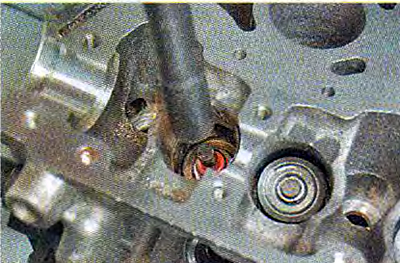
Advice. A socket wrench with a deep 12 mm hex head or a 11 mm hex head can be used to press on the cap.
5. Install the spring, spring plate and crackers in the reverse order of removal.
6. Similarly, we replace the valve stem seals of the remaining valves of the first and fourth cylinders (their pistons are at TDC), after which we turn the engine crankshaft 180°and replace the valve caps of the second and third cylinders.
7. Install the parts in the reverse order of removal.