



To complete the work you will need:
- special key for brake pipe fittings;
- reliable car stand.
Removal
1. Prepare the car for work (see "Preparing the car for maintenance and repair").
2. Remove the wheel (see "Wheel - replacement").
3. If the vehicle is equipped with brake pad wear sensors, disconnect the sensor wire tip from the wiring harness connector.
4. Remove the brake hose from the bracket on the suspension strut.
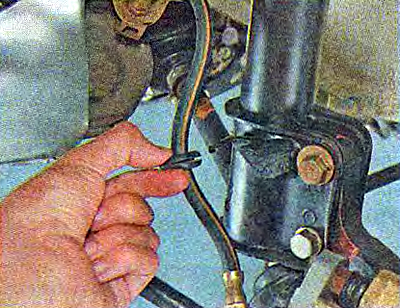
5. Clean the brake hose tips from dirt and treat the brake pipe fitting with penetrating lubricant.
Warning: When performing the following operation, make sure that the tube does not rotate with the nipple when unscrewing it. If the tube is "stuck" in the fitting, replace it.
6. While holding the upper end of the brake hose from turning with a 15 mm open-end wrench, use a special wrench to unscrew the brake pipe nipple.
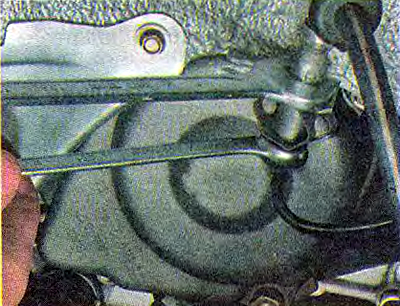
7. To prevent brake fluid from leaking out of the system, place a protective cap on the end of the tube for bleeding the working brake cylinder.
8. Using a 15 mm open-end wrench, unscrew the lower end of the brake hose.
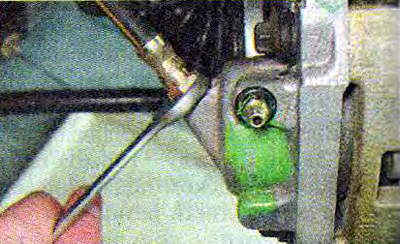
The connection of the hose to the working cylinder is sealed with a copper ring, which cannot be reused.
Installation
1. Place a new sealing ring on the lower end of the hose, screw the end into the hole in the brake cylinder body and tighten.
2. Screw the brake pipe nipple into the upper end of the brake hose and tighten it, preventing the hose from twisting. We can determine that the brake hose is not twisted by the colored stripe applied to it.
3. Install the hose into the suspension strut bracket.
Bleed the brake system (see "Hydraulic brake drive - bleeding") and make sure that the connections of the tips of the new brake hose are tight.