



Brake pads must be replaced simultaneously on the brake mechanisms of the right and left wheels.
Warning: Never replace brake pads on only one side of the vehicle. This can lead to uneven braking of the wheels, causing the vehicle to pull to the side and even skidding during emergency braking.
Recommendation. When replacing brake pads, be sure to check the thickness and condition of the brake disc (see "Brake system - checking technical condition").
Sequence of execution
1. Prepare the car for work (see "Preparing the car for maintenance and repair").
Warning! When the brake pistons are pressed into the cylinders, the brake fluid level in the reservoir will increase, so pump out some of the brake fluid from the reservoir. After replacing the brake pads, check and, if necessary, top up the brake fluid level (see "Checking the brake fluid level"),
2. Remove the cover of the main brake cylinder reservoir and use a rubber bulb or medical syringe to pump out some of the fluid (see "Hydraulic brake drive - bleeding"),
3. Remove the front wheel (see "Wheel replacement").
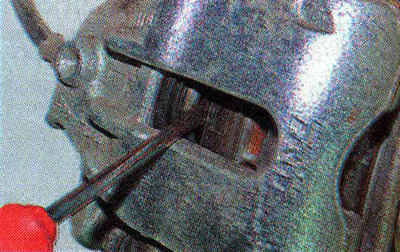
4. Using a screwdriver as a lever, push the piston into the brake cylinder.
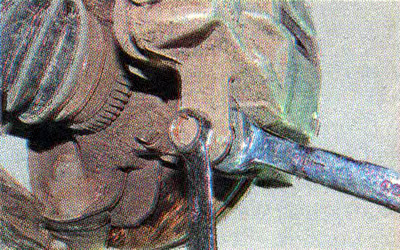
5. Using a 14 mm socket wrench, unscrew and remove the lower bolt holding the caliper in the brake pad guide.
6. Raise the caliper by turning it on the upper guide pin.
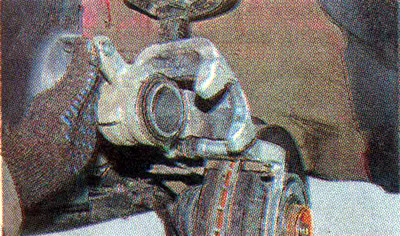
Warning: Do not press the brake pedal with the caliper removed.
7. Fix it (we tie up) caliper so as not to put stress on the brake hose.
8. Press the outer brake pad away from the disc...
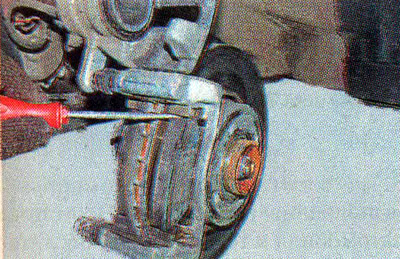
...and we take it off.
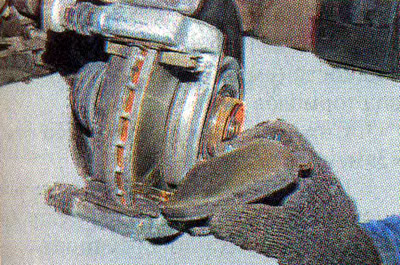
9. Remove the inner shoe in the same way.
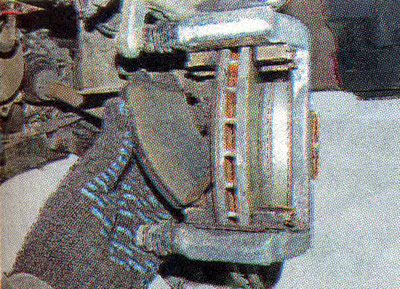
10. Visually check the condition of the friction linings of the brake pads.
Note: The condition and performance of the brake mechanism can be assessed by the condition and nature of the wear of the friction linings of the brake shoes.
Uniform wear of the friction linings of both pads, the surface of the brake disc is smooth, without damage - the brake mechanism is in good working order.
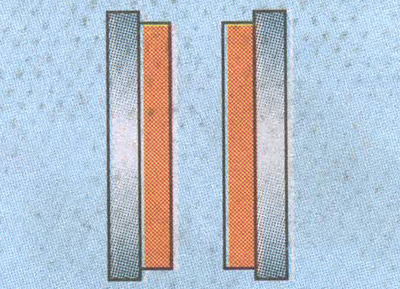
The friction linings are completely worn out; depending on the design of the pads, the rivet heads may protrude - the pads have been used beyond the permissible limit.
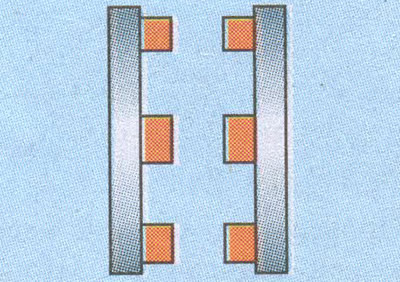
It is necessary to check the condition of the brake disc, and also to conduct regular checks of the technical condition of the brake system more often (see "Brake system - checking technical condition"). Complete wear of the friction linings leads to damage to the brake mechanism!
The friction lining of one of the pads is more worn out - the piston or caliper guide pins have jammed, or the pad has jammed in the caliper guide.
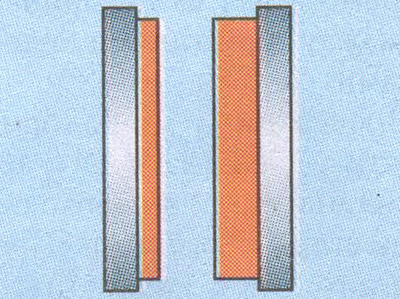
It is necessary to clean the caliper pad guides from dirt and rust with a wire brush, wash the caliper parts with brake cleaner, check the mobility of the brake cylinder piston and the condition of the guide pins (see "Front Brake Caliper - Removal, Repair and Installation"),
Uneven wear of the friction linings of both pads - jamming of one of the caliper guide pins.
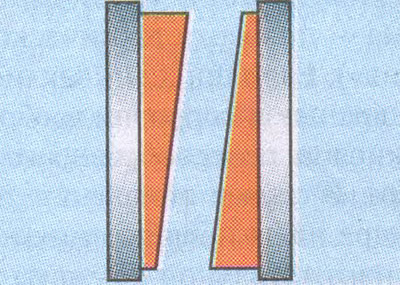
In this case, it is necessary to check the condition of the caliper guide pins and replace their grease (see "Front Brake Caliper - Removal, Repair and Installation").
Grooves across the entire surface of the friction lining - the brake disc is worn out.
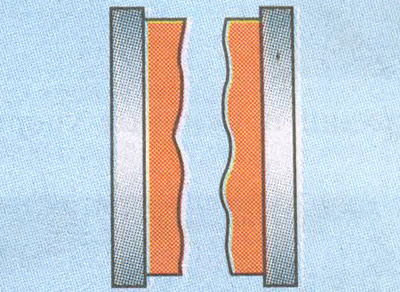
The condition of the brake disc should be checked and replaced if necessary (see "Front brake discs - replacement").
Cracks in friction linings, chipped edges - overheating of brakes. mechanisms may be due to the piston of the caliper cylinder seizing.
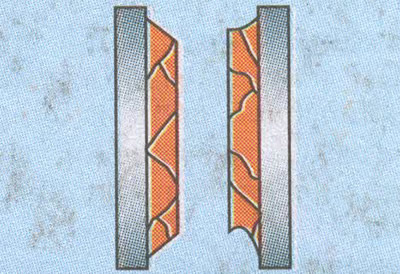
It is necessary to check the mobility of the brake cylinder pistons (see "Brake system - checking technical condition"), if the piston is stuck - repair the caliper (see "Front Brake Caliper - Removal, Repair and Installation").
Uneven wear of the friction linings of both pads (step) - incorrect installation of the brake pads.
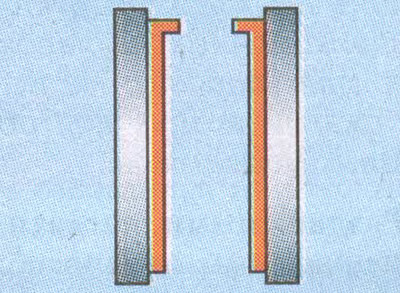
It is necessary to check the condition of the brake discs (see "Brake system - checking technical condition").
11. Using a screwdriver, pry...
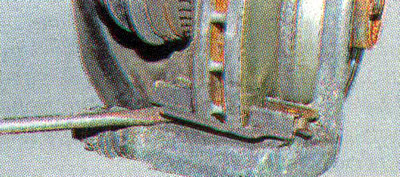
...we remove the bottom one.
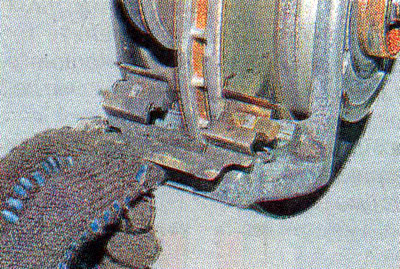
...and the upper spring stops of the pads.
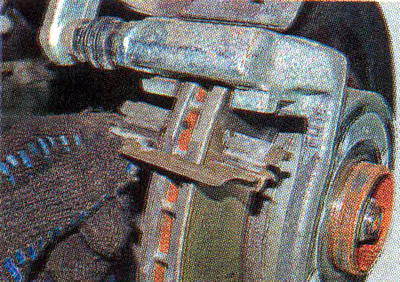
12. Treat the brake pad guide and the working surface of the brake disc with a special brake cleaner. We use a metal brush to clean them from dirt and rust and remove wear products from the friction linings.
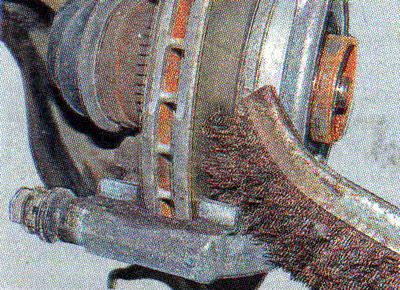
Warning! Avoid inhaling friction lining wear products, it is harmful to health. Do not use compressed air to blow out brakes.
13. Using sliding pliers or a special device, press the piston into the caliper cylinder.
Recommendation. Before pressing the piston into the caliper cylinder, make sure there are no traces of corrosion on the piston (including under the sealing cuff). The presence of traces of corrosion indicates the need to replace the piston or the entire front brake caliper assembly.
14. Apply a special high-temperature lubricant to the areas where the pads contact the guide.
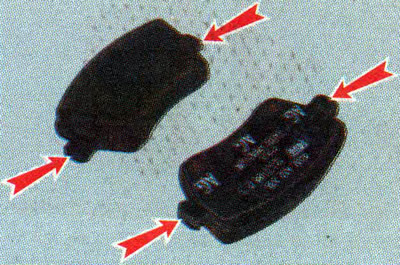
Recommendation. When replacing brake pads, be sure to check the thickness of the brake disc. If its wear is close to the limit, the discs should also be replaced along with the pads.
15. Check the condition of the front brake disc (see "Checking the front brake mechanism"), If a fault is detected, replace both front brake discs (see "Front brake discs - replacement").
16. Treat the brake disc with brake cleaner.
17. Install the brake pads in the reverse order. Tighten the guide pins to a torque of 36 Nm.
18. Similarly, we replace the front brake pads on the other side of the car.
19. Press the brake pedal several times to automatically adjust the gaps between the brake pads and discs.
20. Check the brake fluid level in the master cylinder reservoir and, if necessary, top it up to normal (see "Checking the brake fluid level").