



The pads must be replaced in the following cases:
- the thickness of the friction linings is less than the permissible value;
- the surface of the linings is oily;
- the friction lining is not firmly connected to the base;
- the overlays have deep grooves and chips.
You will need: 13 and 17 mm wrenches, a flat-blade screwdriver, a chisel, and a hammer.
1. Disconnect the wire from the negative terminal of the battery.
2. Apply the parking brake and place chocks under the rear wheels.
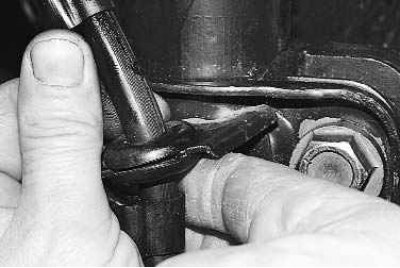
3. Remove the front wheel, clean the brake mechanism from dirt and remove the rubber seal together with the hose from the bracket.
4. If the brake fluid level in the master cylinder reservoir is at or near the "MAX" mark, pump out some of the fluid from the reservoir. Otherwise, it will spill over the edge when installing new pads.
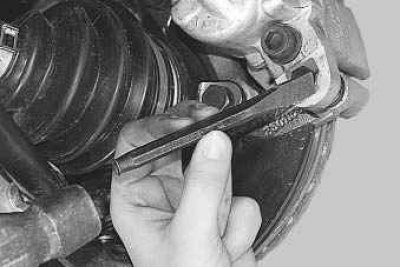
5. Bend back the corner of the lock washer of the lower bolt with a screwdriver or knock off the corner with a chisel.
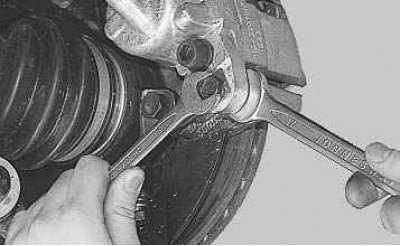
6. Using a 13 mm wrench, unscrew the lower bolt securing the bracket housing, holding the guide pin by the hexagon with a 17 mm wrench.
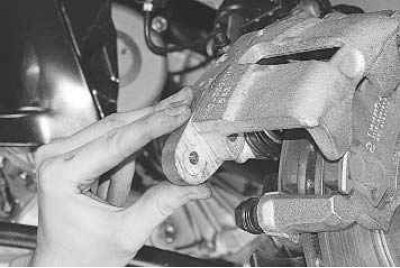
7. Rotate the caliper body upwards around the axis of the upper guide pin and remove the brake pads.
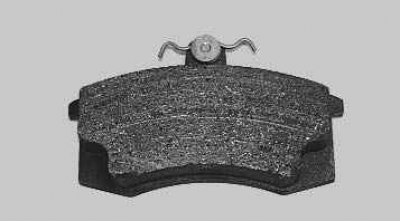
Note: The surface of the friction linings should not be oily, and there should be no deep scratches or chips on it. The pad must be firmly connected to the base of the shoe.
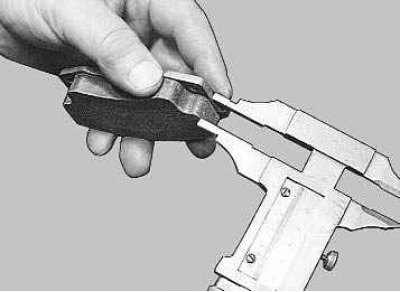
8. Check the thickness and condition of the brake pad friction linings.
9. Clean the brake parts, especially the brake pad seats, from dirt and rust. Do this carefully so as not to damage the protective cover of the cylinder.
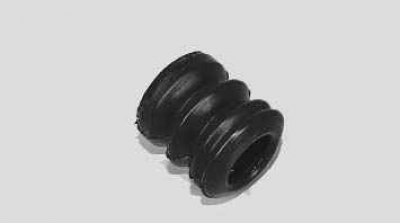
Note: Every time you replace the brake pads, be sure to check the condition of the protective rubber boots of the guide pin and the movement of the caliper relative to the brake pad guide. If movement is difficult, lubricate the caliper guide pins with grease. To do this, remove the guide pin…
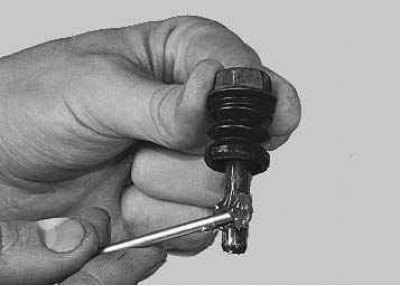
Note:... lubricate it with UNIOL-1 grease and place the grease into the inner cavity of the cover. Install the pin into the shoe guide in the reverse order of removal. If signs of rubber aging appear, replace the guide pin protective covers.
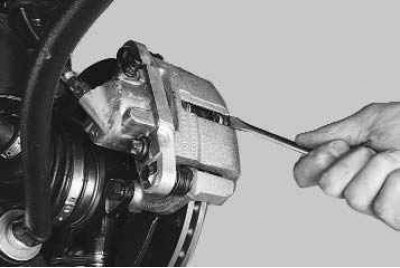
10. When installing new pads, press the piston into the cylinder. To do this, install the worn brake pads in place and lower the caliper housing. Using a screwdriver or a mounting blade, press the outer shoe and lean on the caliper to carefully press the piston into the cylinder.
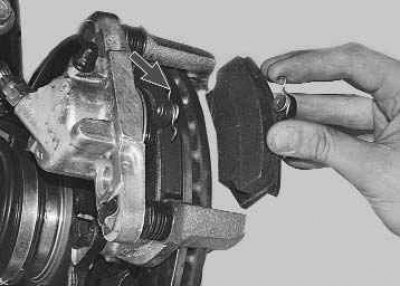
11. Install new brake pads. The pressure springs must be installed parallel to the top edge of the pads (the brake caliper has been removed for clarity).
12. Turn the bracket body down and screw in the lower mounting bolt, holding the guide pin by the hexagon with a wrench.
13. Bend the tab of the lock washer. Install the wheel and lower the car to the ground, then press the brake pedal several times to set the piston to the working position. Check the brake fluid level in the reservoir and top it up to normal if necessary.
Note: After replacing worn brake pads with new ones, do not rush to drive on busy highways. It is possible that during the first intensive braking you will be unpleasantly surprised by the low efficiency of the brakes, although the brake pads are branded. Brake discs also wear out, and new pads only touch them with their edges, providing virtually no braking. Choose a quiet street or a driveway without cars and brake gently several times to allow the pads to rub in and fit over their entire surface. At the same time, evaluate the effectiveness of the brakes. Try not to brake abruptly for at least the first hundred kilometers. When unburnished pads become very hot, the top layer of their linings burns, and the brakes will not be maximally effective for a long time.