



1. Remove the appropriate wheel.
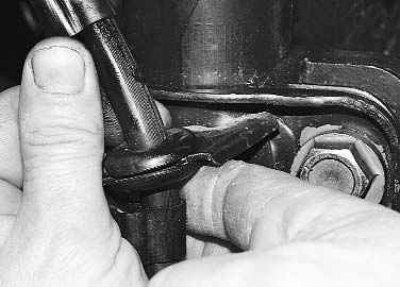
2. Remove the brake hose seal from the bracket on the suspension strut.
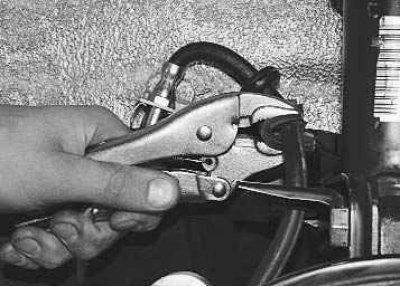
Note: To prevent excessive leakage of brake fluid from the brake hose when disconnecting it from the slave cylinder, squeeze the brake hose with pliers that lock in a compressed position, placing a piece of rubber under the jaws.
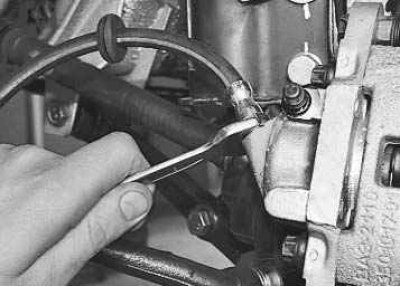
3. Using a 15 mm wrench, loosen the hose tip on the slave cylinder.
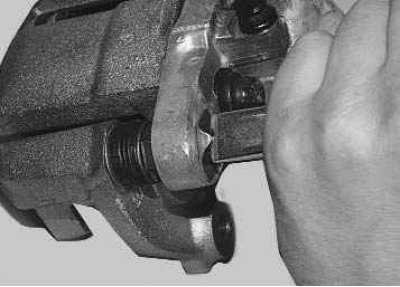
4. Bend back the tabs of the lock washers...
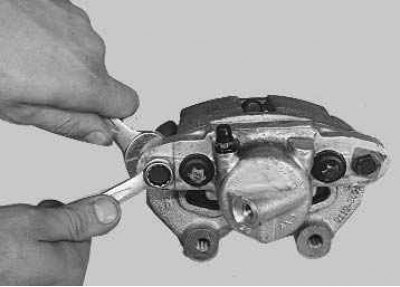
5. ...with a 13 mm wrench, unscrew the two caliper mounting bolts, holding the guide pins by the hexagons with a second 17 mm wrench...
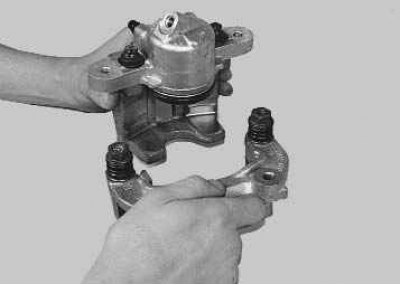
6. ...and remove the caliper assembly with the working cylinder.
Note: For clarity, the removal of the working cylinder assembly with the caliper is shown on the removed brake mechanism. The working cylinder can be removed even when the brake mechanism is installed on the vehicle.
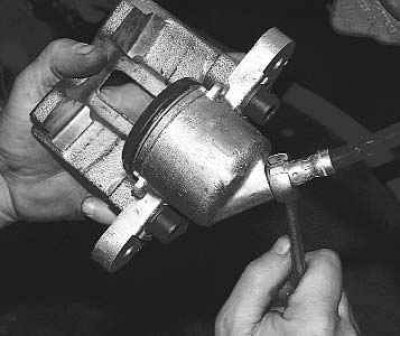
7. Using a 15 mm wrench, hold the hose tip by the hexagon and unscrew the working cylinder from the tip. Be careful, brake fluid will leak from the hose.
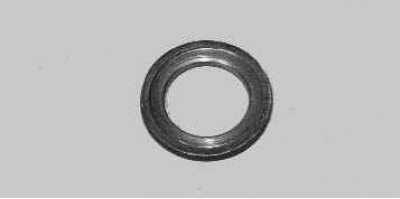
Note: Please note that the tip has a copper sealing ring. Replace the ring during assembly.
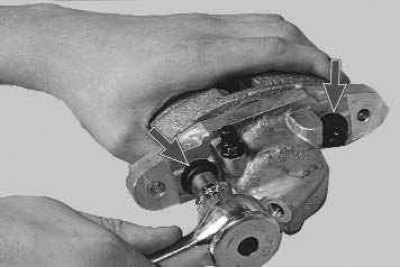
8. Using a TORX E14 key, unscrew the two bolts securing the cylinder to the caliper.
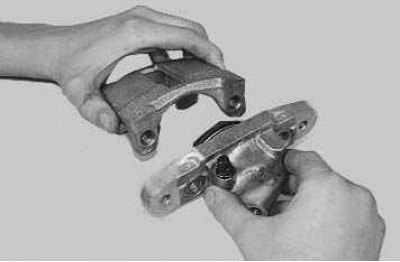
9. Remove the wheel cylinder from the caliper.
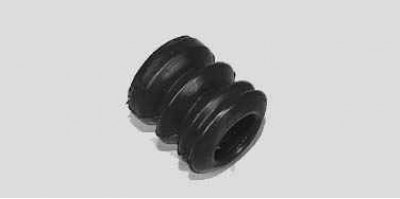
10. Check the condition of the guide pin protective covers. If signs of rubber aging appear, replace the protective covers.
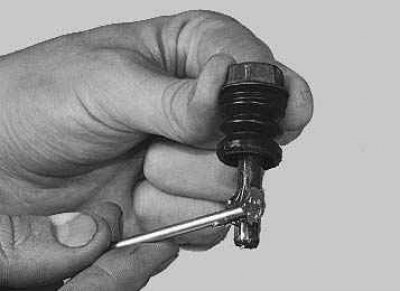
11. Lubricate the guide pins with UNIOL-1 grease.
12. Install the slave cylinder in the reverse order of removal.
13. Bleed the hydraulic drive and check the efficiency of the brake system (see "Bleeding the hydraulic brake system").