



To perform the work you will need a special key for 11 mm brake system fittings.
Replacing the front brake hose
1. Prepare the car for work (see "Preparing the car for maintenance and repair").
2. Remove the front wheel (see "Wheel replacement").
3. Using a 13 mm wrench for pipe fittings, unscrew the fitting that attaches the tube to the hose.
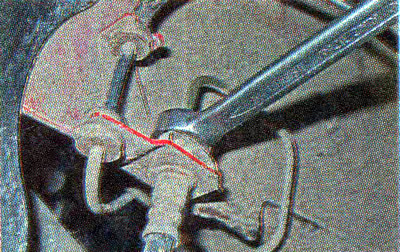
4. Move the tube slightly and remove the pressure plate.
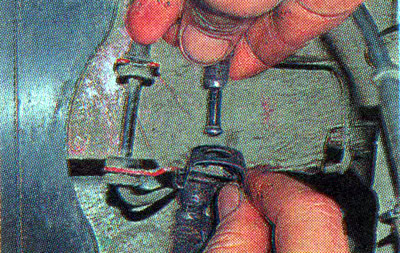
5. Remove the hose tip from the support bracket.
6. Using a 14 mm wrench for the pipe fastening fittings, unscrew the hose tip and remove the brake hose.
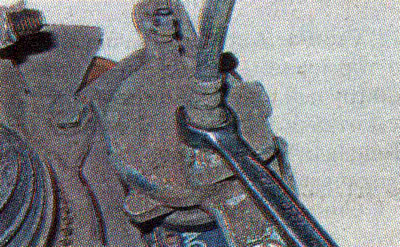
7. Install the front brake hose in reverse order. Tighten the brake hose tip to 17 Nm. When securing the brake hose to the bracket, make sure that the hose is not twisted. Tighten the brake pipe nipple to a torque of 14 Nm.
8. Install the wheel.
9. Similarly, replace the brake hose on the other side of the car.
10. Add new brake fluid to the master cylinder reservoir and bleed the brake system (see "Hydraulic brake drive - bleeding").
Replacing rear brake hoses
1. Prepare the vehicle for work and install it on an inspection ditch or overpass (see "Preparing the car for maintenance and repair").
2. Clean the brake hose tips from dirt at the points where the brake pipes are attached and treat them with penetrating lubricant.
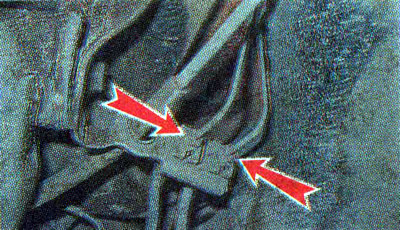
3. Using a 13 mm wrench for pipe fittings, unscrew the fittings securing the tubes to the rear end of the hose.
4. Using the same wrench, unscrew the tube fitting from the front end of the hose.
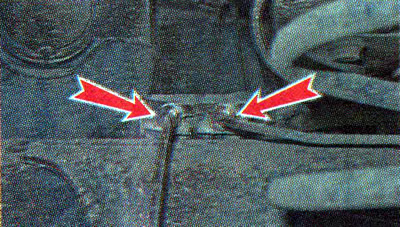
5. Remove the spring plates and remove the hose tips from the bracket (see above) and remove the hose.
6. Install the brake hose in reverse order. Tighten the brake pipe fittings to a torque of 14 Nm.
7. Replace the second brake hose in the same way.
8. Add new brake fluid to the master cylinder reservoir and bleed the brake system (see "Hydraulic brake drive - bleeding").