



1. Remove the camshaft from the engine from the vehicle (see "Replacing valve stem seals").
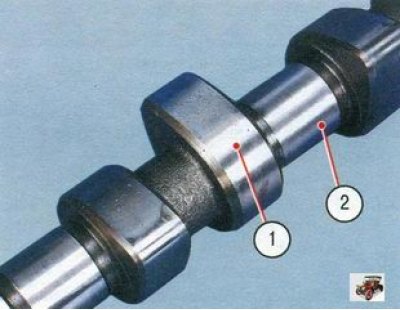
2. Inspect the camshaft. On the working surfaces of journals 2, no burrs, nicks, scratches, or aluminum drag from the bearing seats in the housings and block head are allowed. On the working surfaces of cams 1, wear exceeding 0.5 mm, scoring and wear of cams in the form of faceting are not allowed. Replace the camshaft if any defects are found.
3. In auto repair shops equipped with special tools and devices, you can check the radial runout of the camshaft journals (it should not exceed 0.02 mm).
4. Measure the diameters of the camshaft bearing journals. They should be 24.915-24.931 mm.
5. Inspect the housings and supports in the camshaft bearing head. Cracks on the housings are not allowed. No marks, scratches, burrs or excessive wear are allowed on the working surfaces of the journal supports.
6. Install the housings on the cylinder head and tighten the bolts to the recommended torque (see appendix 1). Measure the inner diameters of the camshaft housing supports. They should be 25,000-25,025 mm.
7. Calculate the gaps between the camshaft journals and supports based on the difference in size. For new parts, the gaps should be 0.069-0.11 mm. If after operation the gaps exceed 0.2 mm, replace the camshaft. If, after replacing the camshaft, the clearances exceed the maximum permissible value, replace the cylinder head assembly with the camshaft bearing housings.
8. Install the camshaft and all removed parts on the vehicle in the reverse order of removal.