



1. Engage 1st gear and place chocks under the front wheels.
2. Check that the parking brake lever is pushed all the way down (the car is disinhibited).
3. Remove the wheel and clean the brake mechanism from dirt.
4. If the brake fluid level in the master cylinder reservoir is at the mark «MAX» or approaches it, pump some of the brake fluid out of the brake reservoir, otherwise it may splash out when replacing the rear brake pads.
5. Remove the brake drum (see «Removal and installation of a brake drum of a back wheel»).
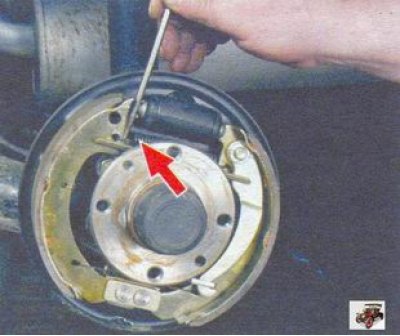
6. Use a beard or pliers to remove the upper return spring of the rear brake shoe.
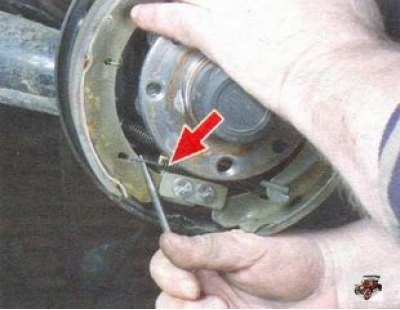
7. Similarly remove the bottom coupling spring of a back brake pad.
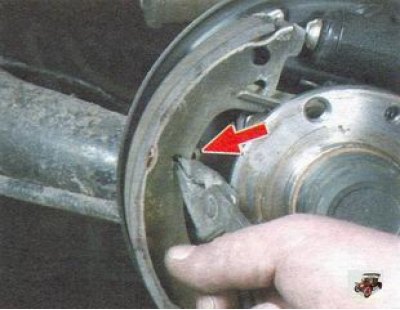
8. Remove the front shoe guide spring and then the front brake shoe.
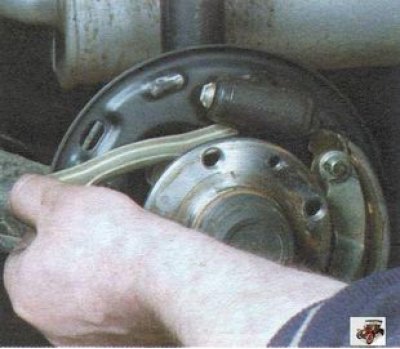
9. Remove expander bar.
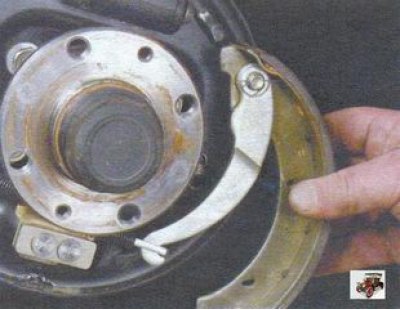
10. Remove the rear brake shoe guide spring and then the rear brake shoe by disconnecting the actuating lever from the parking brake cable end.
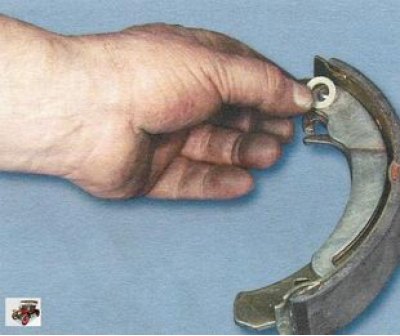
11. Remove the cotter pin and remove the support washer from the pin of the drive lever of the rear brake shoe.
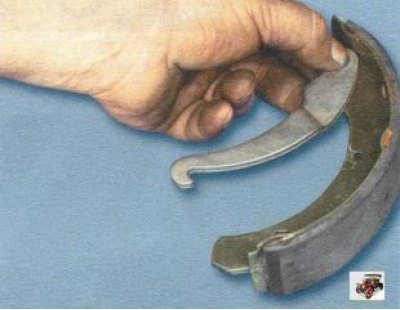
12. Press down on your finger and remove the drive lever from the brake shoe. Remove your finger from the brake shoe.
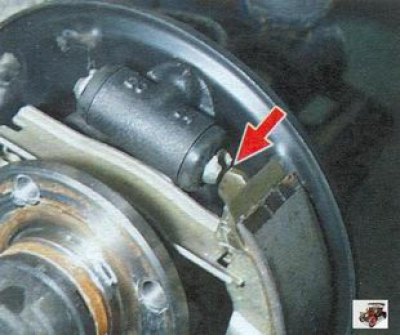
13. Install new rear brake pads on the vehicle in the reverse order of removal. When installing, insert the upper ends of the brake shoes into the grooves of the piston.
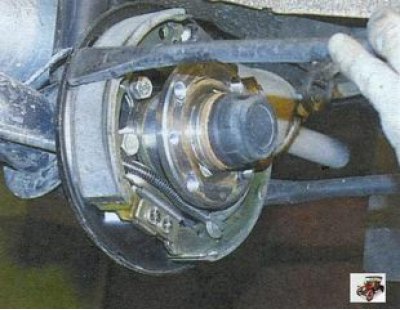
14. Bring the brake pads together with two pry bars to move the pistons towards the center of the brake cylinder. Install the rear brake drum in the reverse order of removal. With the vehicle on the ground, depress the brake pedal two or three times to bring the brake pads to the brake drum.