



- multimeter (in voltmeter and ohmmeter mode);
- pieces of wire.
Examination
1. Prepare the car for work (see "Preparing the car for maintenance and repair").
2. Remove the decorative engine cover (see "Engine trim panel - removal and installation").
3. Release the wiring harness connector retainer and disconnect the connector from the throttle position sensor.
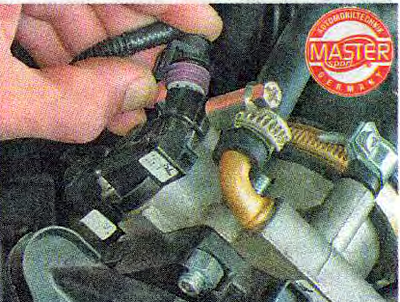
4. Connect the negative probe of the voltmeter to the engine ground.
5. Turn on the ignition and connect the positive probe of the voltmeter to terminal A of the wiring harness connector (the terminal numbers are marked on the socket) and measure the supply voltage.
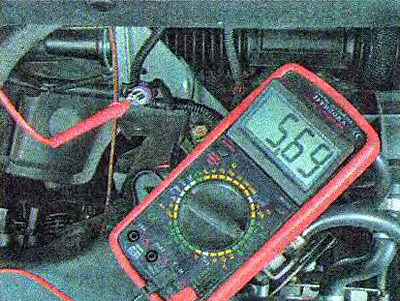
Note: The supply voltage at terminal A of the connector should be about 5 V. If the voltage does not reach the connector or is less than 5 V, then the power supply circuit is faulty or the ECU is faulty.
Warning! After completing the voltage measurement, turn off the ignition.
Removal
1. Using a Phillips screwdriver, unscrew the two screws securing the idle speed control to the throttle body.
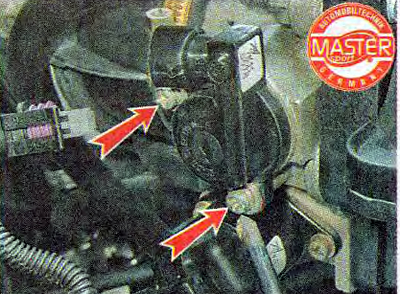
2. Remove the throttle position sensor from the throttle shaft. The connection between the sensor and the throttle body is sealed with a foam ring.
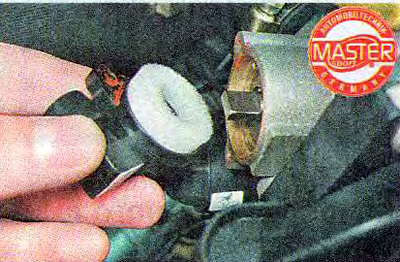
Advice: You can verify that the throttle position sensor is faulty by replacing it with a known good one.
Installation
1. Place the sensor on the throttle actuator shaft.
Warning: A correctly installed sensor should have its terminals pointing towards the engine compartment bulkhead.
2. Holding the sensor in a position in which the holes for the mounting screws are aligned with the threaded holes in the throttle body, turn the throttle drive sector until it stops.
Warning: If this cannot be done without rotating the sensor housing, the sensor is not installed correctly. The sensor should be removed from the throttle shaft and installed in a different position.
3. After making sure that the sensor is installed correctly, tighten the screws that secure it and connect the wiring harness connector.