



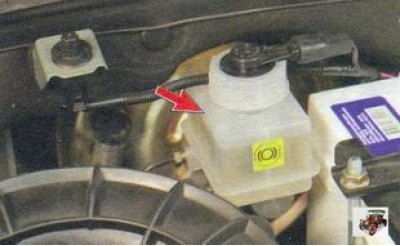
The brake reservoir is installed on the main brake cylinder on the left side of the engine compartment near the bulkhead.
Attention! Be careful when handling brake fluid as it is toxic. It is unacceptable to get brake fluid on wires, plastic or painted body parts, so always use clean rags when filling brake fluid.
If brake fluid comes into contact with these parts, wipe them off immediately.
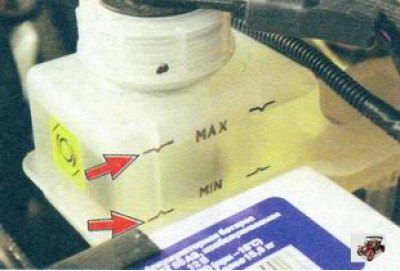
1. Check the brake fluid level in the brake reservoir. When the plug is removed, it should be between the marks «MIN» And «MAX», printed on the body of the tank. With the plug installed, the brake fluid level should be at the lower edge of the filler neck, as the brake fluid is displaced by the float of the level sensor.
Attention! Gradually lowering the brake fluid level in the absence of leaks most likely indicates the need to replace the brake pads.
2. Turn away a stopper of a brake reservoir and put it on a pure rag. Be careful: brake fluid may drip from the float.
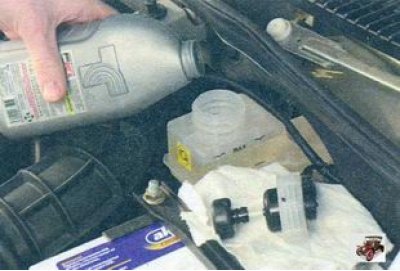
3. Add brake fluid to the mark «MAX». Close the brake reservoir cap.
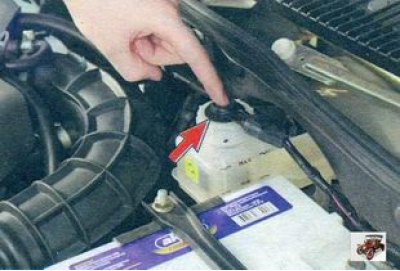
4. Check up operation of the gauge of level of a brake liquid. Turn on the ignition, then press the button on the brake reservoir cap. The low brake fluid level warning light should come on on the instrument panel. If the low brake fluid level lamp does not light up, contact a car service for specialists: most likely, the sensor is faulty.