



Note: Brake fluid type is DOT-3 or DOT-4.
We recommend checking the level before each trip and adding fluid to the tank if necessary. If you have to top up the brake fluid in the reservoir quite often, correct the problem immediately (see section. "Brake system") or contact the dealer service station specialists.
When replacing the brake fluid in the system, remember or write down the brand of fluid that was added so that you can use the same brand when topping up.
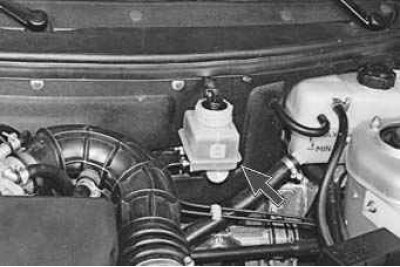
The reservoir is installed on the main brake cylinder in front of the engine compartment trim (to the right of the expansion tank).
Warning: Take precautions when working with brake fluid: it is toxic.
Note: In order to avoid unexpected expenses in the future for repairing the brake system, or even the entire vehicle, replace the brake fluid with fresh fluid in a timely manner. Brake fluid is very hygroscopic and absorbs moisture from the atmosphere, which, in addition to causing corrosion of brake system parts, lowers the boiling point of the fluid itself, which can lead to brake failure during frequent, intensive braking.
Note: Do not reuse the fluid drained from the system!
Note: If brake fluid gets on wires, plastic or painted body parts, it can cause damage, so always use clean rags when pouring. If brake fluid gets on these parts, immediately wash off the fluid with water and wipe the surface with a clean cloth.
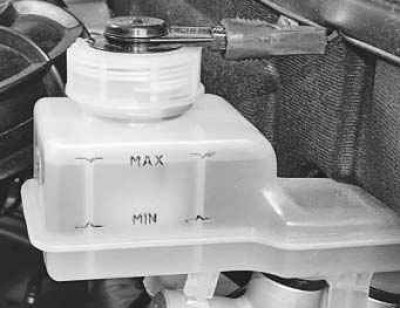
1. Check the brake fluid level in the reservoir. It should be between the "MIN" and "MAX" marks on the tank body.
Note: The fluid level in the reservoir is monitored by a float sensor. If the level drops below the "MIN" mark, the brake system emergency warning light comes on in the instrument cluster.
Caution: A gradual decrease in the brake fluid level without leaks most likely indicates the need to replace the brake pads. Check the condition of the brake pads (see "Checking the degree of wear of brake pads, discs and drums"). Failure to replace brake pads in a timely manner leads to costly repairs (replacement of brake discs, drums, calipers)!
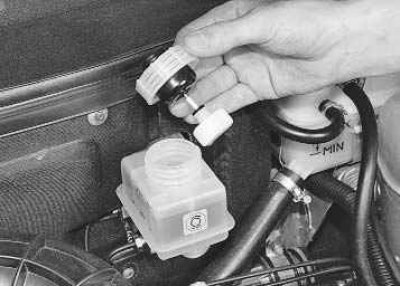
2. If the fluid level is below the "MIN" mark, unscrew the reservoir cap with the brake fluid emergency warning light sensor mounted in it and place it on a clean cloth.
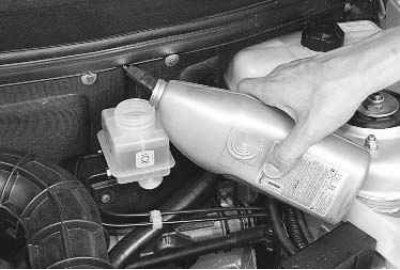
3. Add brake fluid to the "MAX" mark. Replace the plug.
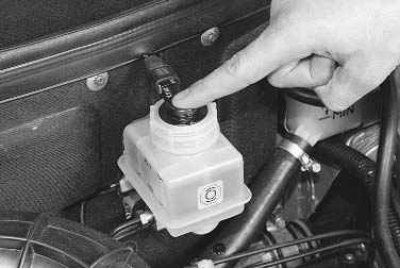
4. Check the operation of the brake system emergency warning light sensor. Turn on the ignition, then press the button in the tank cap. The indicator light in the instrument cluster should come on. If the lamp does not light, contact a specialist, as the sensor is most likely faulty.