



Recommendations:
- The brand of coolant recommended by the vehicle manufacturer is listed in Appendix 2. Check with the dealer/seller of the vehicle about the brand of coolant poured into your vehicle.
- Do not mix liquids of different colors and different manufacturers. If you do not know the brand of the liquid you have filled in and the liquid needs to be added, replace all the liquid in the cooling system.
- Use only products from proven manufacturers. Remember that using low-quality coolant leads to expensive engine repairs!
- Before starting work, place the vehicle on a flat, horizontal surface.
Warning: Check the coolant level only when the engine is cold. Coolant is toxic, so take precautions when handling it.
Attention! Do not pour liquid into the tank above the "MAX" mark, as its volume will increase when the engine is running.
Attention! When starting the engine, the expansion tank cap must be closed.
Note: Monitor the coolant level constantly. Its sharp decrease or increase should be a signal for an immediate check of the engine cooling system.
Note: If the freshly poured antifreeze suddenly and unexpectedly quickly changed color to reddish-brown, it means you were sold a fake, to which they "forgot" to add corrosion inhibitors. Replace the fluid as quickly as possible before it has time to corrode the aluminum parts of the cooling system
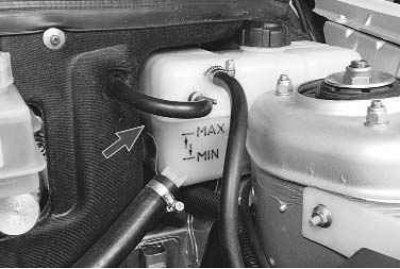
The expansion tank is located on the left side of the engine compartment in a niche of the engine compartment trim.
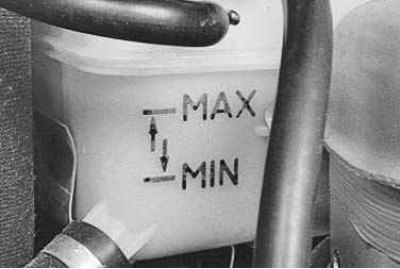
1. The coolant level must be between the "MIN" and "MAX" marks on the wall of the expansion tank. If the level is significantly lower…
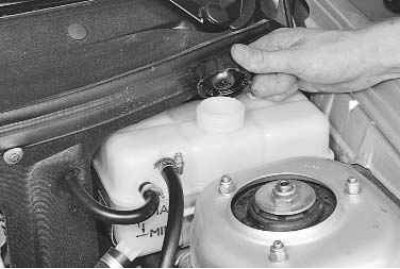
2. …unscrew the expansion tank cap…
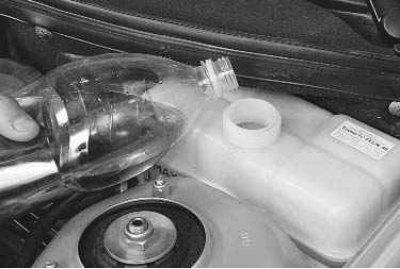
[The original was published on the portal: ladaman.ru]
3. …and add coolant to the required level.
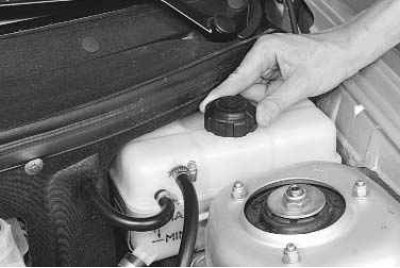
4. Screw on the expansion tank cap.
Attention! Close the expansion tank cap tightly. When the engine is running, the expansion tank is under pressure, so coolant may leak from under a loosely screwed cap.