



To check the fluid level, place the car on a horizontal surface. We carry out the check on a cold engine.
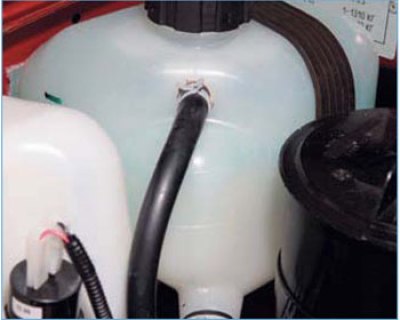
On the side wall of the tank there are MAX and MIN marks, between which the fluid level should be on a cold engine.
When the engine is warmed up to operating temperature, the coolant level in the tank may be slightly above the MAX mark.
If the level is at the MIN mark or below, add the fluid recommended by the manufacturer to the tank.
When the engine is warm, the liquid in the cooling system is under excess pressure. To avoid burns, do not remove the expansion tank cap until the engine has cooled to a safe temperature.
If it is necessary to add fluid to the system on a warm engine, stop it. After waiting about ten minutes, cover the expansion tank cap with a rag and slowly unscrew it a quarter turn, releasing excess pressure in the engine cooling system.
We unscrew the expansion tank cap...
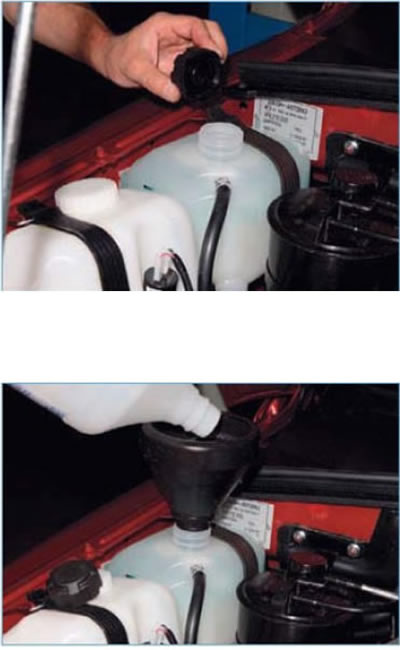
and add coolant to the tank, slightly below the MAX mark.
Remove coolant leaks with a rag. We tighten the cap of the expansion tank.
If the fluid level in the expansion tank is constantly decreasing, then there is most likely a leak in the cooling system. In this case, it is necessary to check the tightness of the cooling system and eliminate the malfunction (see "Cooling system").
The original was published on the portal www.LadaMan.ru
Lada X-Ray. Replacing the coolant
The coolant should be replaced every 60 thousand km. If the engine is hot, it is necessary to allow it to cool down and then release excess pressure in the cooling system by unscrewing the expansion tank cap (see "Checking the level and adding coolant").
Place a wide container with a capacity of at least 8.5 liters under the drain hole located at the bottom of the left radiator tank. To reduce the intensity of fluid drainage at the initial moment, the expansion tank cap should be tightly screwed on.
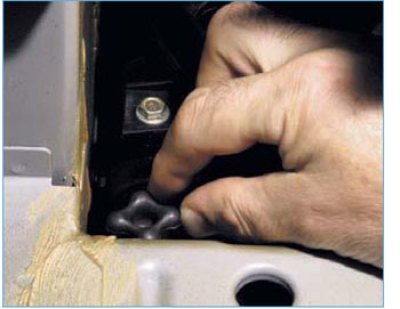
Using your hand, unscrew the radiator drain plug.
...and drain the coolant from the radiator into a container provided.
The drain plug is sealed with a rubber ring. We replace a ring that is torn, cracked or has lost elasticity. We unscrew the cap of the expansion tank.
To drain the coolant from the engine cooling jacket, place a container under the drain hole located on the left side of the cylinder block next to the ignition module.
Using a 13 mm socket with an extension, unscrew the drain plug of the cylinder block...
...and drain the liquid from the engine.
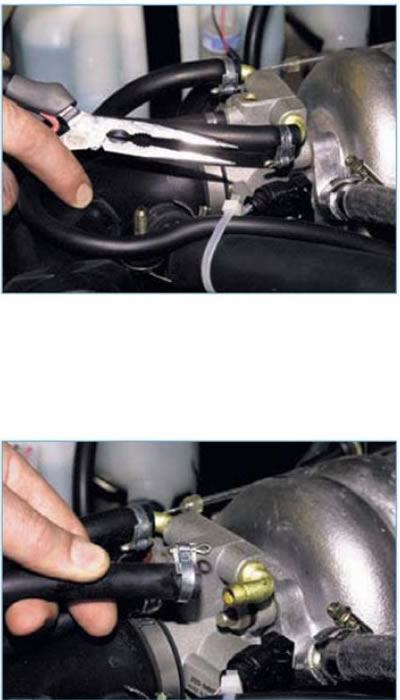
...use pliers to loosen the clamp securing the coolant supply hose to the throttle assembly...
...and remove the hose from the branch pipe.
We pour liquid into the engine cooling system through the expansion tank. Let's start the engine. We wait until liquid starts flowing from the coolant supply hose to the throttle assembly.
After this, we install the hose in place and secure it with a clamp. We tighten the cap of the expansion tank. When the engine warms up, the outlet (lower) radiator hose should be cold for a while and then quickly heat up, which will indicate that the fluid has begun to circulate in a large circle. After waiting for the cooling system fan to turn on, stop the engine. After the engine has cooled down, check the coolant level in the tank and top it up to normal (it should be between the MIN and MAX marks).