



If you experience play or noise while driving while rocking a suspended wheel, the rear hub bearing may be faulty.
To press in the hub bearing, use the appropriate size mandrels from the kit.
To replace the rear hub bearing on a car, you will need: a thin chisel, a 30 mm socket wrench (head), pliers for removing locking rings, a puller for pressing out the bearing, a universal puller.
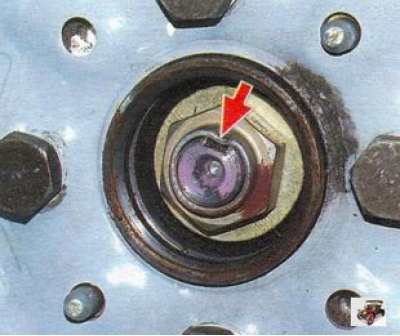
1. Remove the protective cap and loosen the hub nut.
2. Loosen the wheel mounting bolts and hub nuts. The hub nut is tightened with a high torque, so it is recommended to use, for example, a piece of pipe as a lever.
3. Put the car in first gear and place chocks under the front wheels. Raise and secure the rear of the vehicle on supports.
4. Remove the appropriate wheel, brake drum and brake shoes from the vehicle (see section. "Brake system").
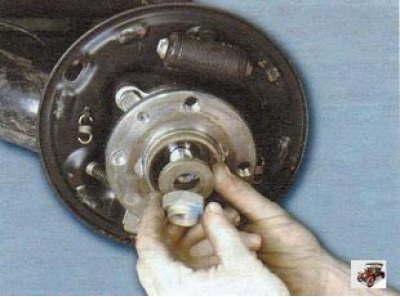
5. Completely unscrew the rear hub nut and remove the thrust washer.
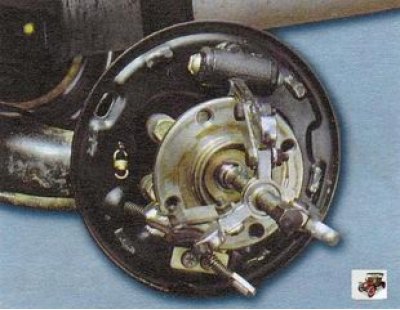
6. Install the puller and press the rear hub off the axle.
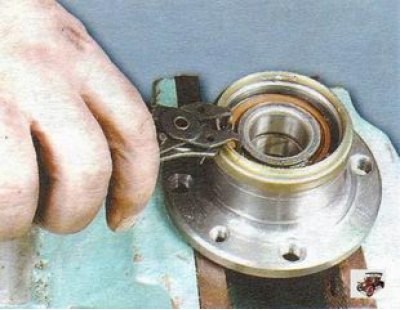
7. Clamp the hub in a vice and remove the retaining ring from it.
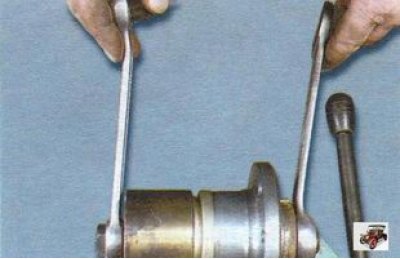
8. Using a puller, press the bearing out of the rear hub, clean the inside of the hub, press in a new bearing and install the retaining ring.
9. Press the rear hub onto the axle using a suitable mandrel, applying force to the inner bearing race. Then install the brake shoes, brake drum and wheel.
10. Finally tighten the rear hub nut in the same way as the wheel bolts, with the vehicle on the ground (replace the rear hub nut with a new one or a nut from another wheel so that the old, crushed parts of the nut flange do not fall into the groove on the outer CV joint tailpiece when punching).
11. After final tightening of the hub nut, lock it and install the protective cap.