



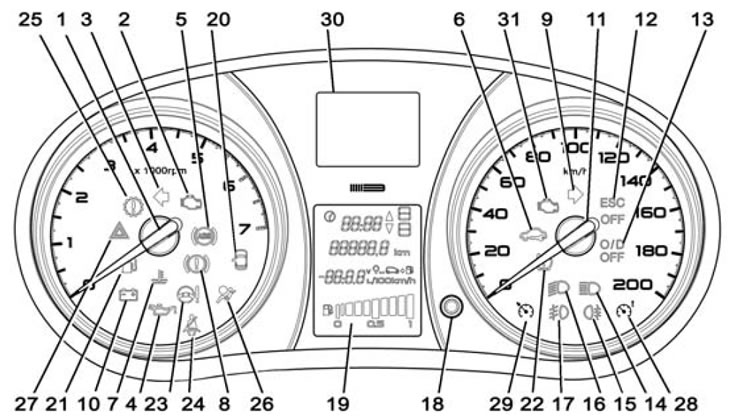
Figure 29a. Instrument cluster with navigation
1 - tachometer. Shows the engine crankshaft speed (x1000 min⁻¹). The tachometer needle being in the red scale zone warns of increased engine speed. To prevent engine damage, the maximum engine speed is limited by the engine's electronic control system software.
2 - "Engine" indicator. Lights up yellow when the ignition is turned on and goes out after the engine starts. When the engine is running, the indicator light does not mean that the engine should be stopped immediately - the controller has backup modes that allow the engine to operate in conditions close to normal. However, the cause of the malfunction must be eliminated by a certified PSSS as quickly as possible.
3 - left turn signal indicator. Lights up with a green flashing light when the left turn signal is turned on.
4 - oil pressure alarm. Lights up red when the ignition is turned on and goes out after the engine starts.
When the engine is running, a lit indicator and an intermittent buzzer signal indicate insufficient pressure in the engine lubrication system.
Attention! If the oil pressure warning light comes on while the engine is running, stop driving as soon as possible in compliance with traffic regulations, turn off the engine and contact a certified SSNS to fix the problem, as insufficient pressure in the lubrication system will lead to engine failure.
5 - Anti-lock braking system indicator (in a variant design). Lights up yellow when the ignition is turned on and goes out when the ABS self-test mode is complete (about 3 seconds).
Attention! In all other cases, the indicator light indicates a malfunction, the elimination of which must be carried out only at a certified PSNS.
6 - immobilizer indicator. Lights up yellow and displays the status of the immobilizer and the vehicle security mode (see section "Immobilizer").
7 - coolant temperature indicator. When the ignition is turned on, the red light automatically lights up for 2 seconds to confirm that the alarm is working properly. If the indicator does not light up or if it turns on intermittently, it indicates that the electrical circuit needs to be checked.
Operating a vehicle with a faulty alarm is prohibited. When the operating temperature of the coolant is exceeded (more than 115°C), the red light comes on continuously, and in addition, the buzzer sounds a short intermittent sound signal. Do not allow the engine to operate in overheating mode.
Warning! Do not operate a vehicle with an overheated engine. The vehicle must be taken to a certified service center to determine and eliminate the cause of engine overheating.
8 - "Brake failure" indicator. Lights up red when the ignition is turned on for about 2 seconds and goes out when the ABS system self-test mode is complete (in a variant design). The flashing mode of the indicator indicates that the parking brake is engaged. A constantly lit indicator indicates a low brake fluid level in the brake hydraulic reservoir or a failure of the electronic brake force distribution function of the ABS system (in this case it is switched on together with the ABS indicator).
When the engine is running, the activation of the indicator is duplicated by a short intermittent sound signal from the buzzer.
Warning! Do not operate the vehicle with the indicator constantly lit. In this case, you need to contact a certified PSSS.
9 - right turn signal indicator. Lights up with a green flashing light when the right turn signals are turned on.
10 - low battery indicator. Lights up red when the ignition is turned on and goes out after the engine starts.
When the engine is running, the indicator light and the buzzer sound intermittently indicate a malfunction of the vehicle's electrical system and indicate a fault in the battery charging system, weak tension or a break in the alternator drive belt, or a fault in the alternator itself.
Attention! In this case, you must contact a certified PSSS.
11 - speedometer. Shows the vehicle speed (km/h).
12 - ESC (in a variant design). Electronic stability control (ESC) indicator. Lights up yellow when the ignition is turned on for about 2 seconds and goes out when the ABS-ESC self-test mode is complete. When the vehicle is moving, it lights up and flashes 2-3 times per second if the electronic stability control or traction control function is activated. The ESC OFF indicator lights up yellow when the electronic stability control and traction control functions are forced off, and goes out when the functions are turned on.
Attention! In all other cases, the indicator light indicates a malfunction, the elimination of which must be carried out only at a certified PSNS.
13 - O/D OFF (in a variant design). The "OverDrive" indicator prohibits shifting to a higher gear in an automatic transmission (see the section "Features of driving a car with an automatic transmission"). Lights up yellow.
14 - high beam indicator. Lights up blue when the high beam headlights are turned on.
15 - rear fog light indicator. Lights up yellow when the rear fog lights are turned on.
16 - low beam headlight indicator. Lights up green when the low beam headlights are turned on.
17 - Front fog light indicator (in a variant design). Lights up green when the front fog lights are turned on.
18 - button for switching mileage counters, resetting the daily mileage counter and turning on the time correction mode.
Switching between mileage counters is done by pressing the button once and briefly. To reset the daily mileage counter, press and hold the button for more than 2 seconds in the daily mileage indication mode.
Setting the clock
Switching to the clock setting mode is done by pressing and holding the button on the front panel of the instrument cluster for more than 2 seconds when the total mileage is displayed. Time correction is performed using the ▲ buttons (minute correction) and ▼ (clock correction) on the right steering column switch. To exit the correction mode, press the button on the front panel of the instrument cluster or do not press the buttons on the steering column switch for more than 5 seconds.
Attention! Rotation of the button is not allowed!
19 - liquid crystal indicator (see section "Liquid crystal display").
20 - open door alarm. Lights up red if the driver's door is open or (in a variant design) any of the passenger doors of a vehicle.
21 - fuel reserve indicator. Lights up yellow when refueling is required to avoid engine interruptions.
The fuel reserve indicator lights up when two or fewer segments of the fuel level indicator on the liquid crystal display are illuminated. The activation of the light indicator is accompanied by an intermittent sound signal from the buzzer.
Simultaneous flashing of the indicator and "empty" contours of the fuel gauge segments indicates a malfunction of the fuel level sensor circuit.
22 - Tire pressure emergency warning light (in a variant design). Lights up yellow when tire pressure drops.
23 - Electric power steering indicator. Lights up yellow when the ignition is turned on and goes out after the engine starts.
Attention! In all other cases, the indicator light indicates a malfunction, the elimination of which must be carried out only at a certified PSNS.
24 - Seat belt warning light (in a variant design). Lights up red when the ignition is turned on if the seat belts are not fastened.
When the vehicle is moving at a speed of more than 10 km/h, the activation of the light indicator is immediately duplicated by an intermittent sound signal from the buzzer; at speeds up to 10 km/h, the sound signal will turn on after 60 seconds of non-stop movement.
Warning! When driving a car, always wear a seat belt and do not transport passengers who are not wearing a seat belt!
25 - Transmission malfunction indicator (in a variant design).
26 - Airbag indicator (in a variant design). Lights up yellow each time the ignition is turned on and goes out when the airbag system self-test mode is complete (in 3 seconds). If the indicator does not light up in self-test mode when the ignition is turned on, this indicates a malfunction of the system. In this case, you must contact a certified PSSS as soon as possible.
Attention! In all other cases, the indicator light indicates a malfunction, the elimination of which must be carried out only at a certified PSNS.
27 - hazard warning light. Lights up with a red flashing light when the hazard warning switch is pressed.
28 - Speed limiter (see description below).
29 - Cruise control (see description below).
30 - additional liquid crystal indicator (see description below).
31 - reserve.
The instrument cluster has a self-test mode. To enable the self-test mode, press the mileage counter switch button, then turn on the ignition without releasing the button (without starting the engine).
After turning on the ignition, the arrows of the indicating instruments (tachometer and speedometer) will begin to move from zero to maximum (4 times), while all segments will light up on the liquid crystal display (LCD), and all alarms controlled by the instrument cluster microcontroller will turn on.
For the variant version of the instrument cluster with an on-board computer without displaying the outside temperature:
- overDrive indicator, ABS, transmission malfunction, tire malfunction, open doors.
For the variant version of the instrument cluster with an on-board computer and outside temperature display:
- high beam, low beam, ESC, ESC OFF.
If you press the mileage counter switch button in self-test mode, the LCD will display the instrument cluster software number on the top line of the LCD and the instrument cluster number on the middle line. The self-test mode will end 25 seconds after it starts or when a speed or engine crankshaft speed signal appears.
Turn on/off the gear shift sound prompt (in a variant design).
On / off of the sound alarm is performed by pressing "BC-Reset" or "OK" (in a variant design) on the steering column switch. The LCD of the instrument cluster in the on-board computer line displays the status indicator of the audio prompt for gear shifting.
Information displayed on the LCD:
- "GSI 0" - gear shift sound prompt is off;
- "GSI I" - gear shift sound prompt is on.
When supply voltage is applied to terminal 30 and then to terminal 15, the gear shift indicator sound should be in the off state ("GSI 0").