



Sequence of execution
1. Prepare the car for work (see "Preparing the car for maintenance and repair").
2. Through the grilles in the bumper cover we inspect the condition of the condenser (air conditioner radiator) if necessary, clean it from dirt and insects (see "Air conditioning system - maintenance").
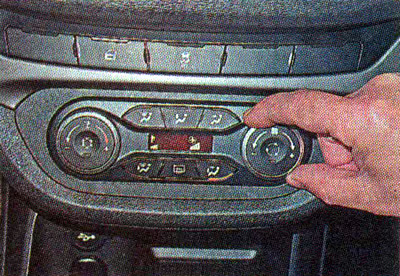
3. Using the electric fan speed control knob, alternately turn on the four speeds of the electric fan. We check the operation of the electric fan and the change in its rotation speed based on the intensity of the air flow from the deflectors.
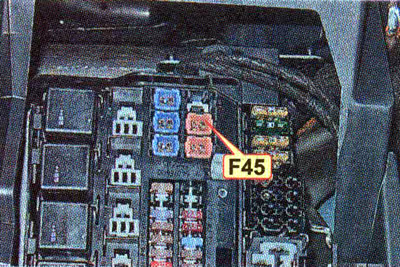
Recommendation. If the electric fan does not work, check fuse F45 (30 A), located in the fuse box in the car's interior. If the electric fan does not work at one of the speeds, it is necessary to find out the reason (see "Checking and repairing electrical circuits"). If all fan speeds are working, but the air flow intensity is low, then the air intake grille and the air conditioning filter are clogged.
4. Turn the air conditioning system electric fan switch handle to maximum operating speed. By pressing the air flow distribution mode selection buttons one by one, we monitor the change in the air flow direction.

Recommendation. If the flow distribution does not change, then most likely the electric drive of the dampers or the control unit is faulty.
5. Start the engine. We warm up the engine to operating temperature and make sure that both the inlet and outlet pipes of the air conditioning system heater radiator are heated and have approximately the same temperature.
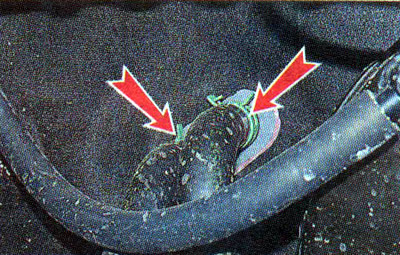
Recommendation. If this is not the case, the cause may be: an air lock in the cooling system, low coolant level in the cooling system, or a clogged heater core. You can release air from the system through a special valve (see "Checking the technical condition of the cooling system"),
6. Turn the control unit temperature regulator clockwise to the red zone until it stops and make sure that the temperature of the air coming out of the instrument panel deflectors begins to rise.
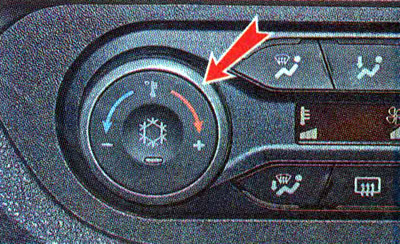
Note: If the temperature does not increase, the control unit or damper drive is faulty.
7. While the heater is running, make sure that the windows do not fog up and that the humidity in the car does not increase.
Note: Increased humidity indicates that the heater core is leaking and needs to be replaced. A clogged filter can also cause fogging of the glass (for air conditioning system with filter) and a malfunction of the electric drive of the air recirculation damper.
8. By pressing button 1 of the recirculation mode switch, we make sure that this mode is working properly by the indicator lamp 2 lighting up.
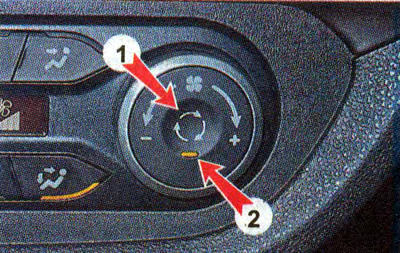
9. In a car with air conditioning, press the button to turn on the air conditioning.

10. After opening the hood, we make sure that the electric fan has started working. If the electric fan does not work, we fix the problem (see "Electric cooling fan - check and replacement").
11. We make sure that the temperature of the air coming out of the instrument panel deflectors begins to decrease.
Recommendation. If the temperature does not decrease, check the condition of the accessory drive belt (see "Accessory Drive Belt - Checking and Replacing"). If the air conditioning system is faulty, it is advisable to contact a specialized workshop for diagnostics and repair of the air conditioning system. To replace the air conditioning fan, you need to remove the instrument panel from the car. You can replace the climate control unit yourself.