



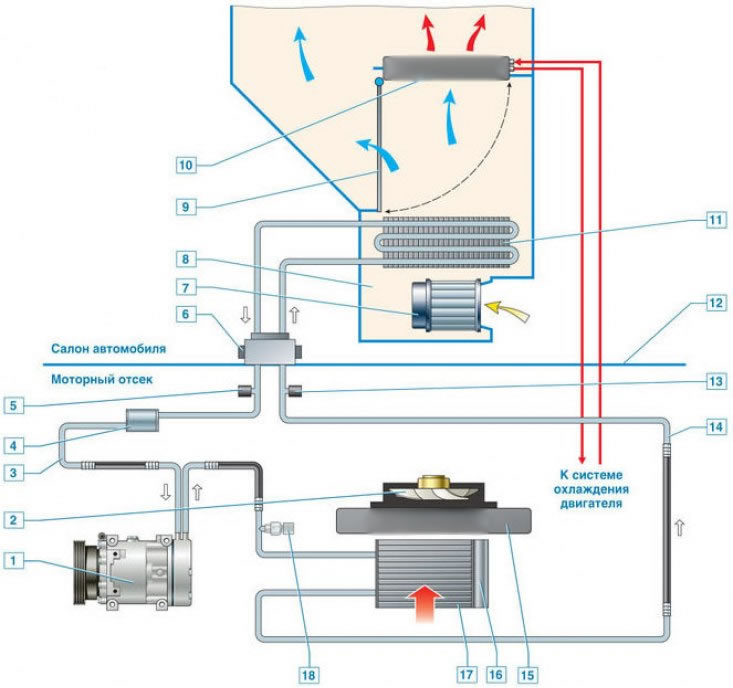
General diagram of the ventilation, heating and air conditioning system: 1 – air conditioning compressor; 2 – radiator fan; 3 – low pressure pipeline (LPP); 4 – damper; 5 – valve designed for filling / releasing refrigerant into the low pressure fuel pump; 6 – gearbox; 7 – heater fan; 8 – stove body; 9 – temperature regulating valve; 10 – heater radiator; 11 – evaporator; 12 – body shield separating the passenger compartment and engine compartment; 13 – valve for filling and releasing refrigerant into the turbojet engine; 14 – TVD; 15 – engine radiator; 16 – receiver-dryer; 17 – capacitor; 18 – refrigerant pressure sensor
The air conditioner device is shown here.
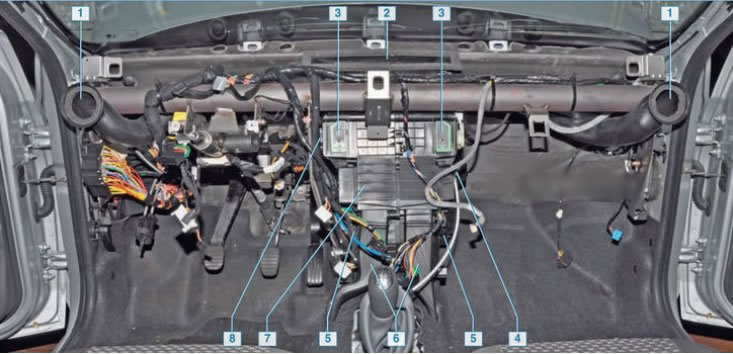
Location of heating, ventilation and air conditioning ducts (the instrument panel has been removed for clarity): 1 – side air ducts; 2 – windshield blower air duct; 3 – central air ducts; 4 – electric motor of the heater fan; 5 – air ducts to the driver's and front passenger's feet; 6 – air ducts going to the feet of rear seat passengers; 7 – heater (stove); 8 – additional heater fan resistor
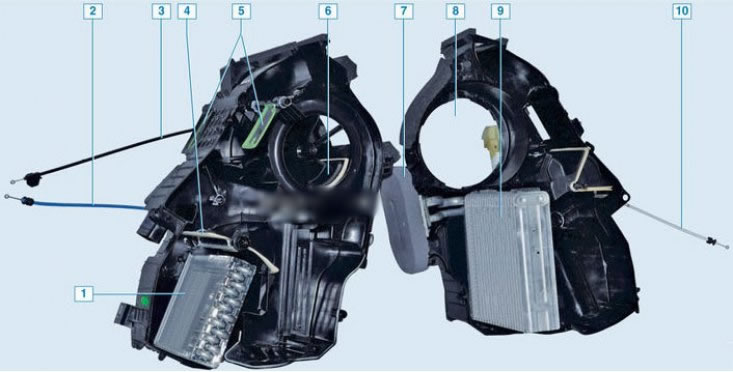
Heater - stove (the body is disassembled): 1 – heater radiator; 2 – temperature control flap cable; 3 – air recirculation flap cable; 4 – temperature regulator flap; 5 – air distribution flap; 6 – air recirculation flap; 7 – seal; 8 – fan socket; 9 – air conditioner evaporator; 10 – air distribution flap cable
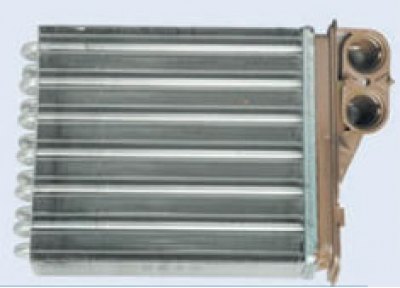
Heater radiator. Coolant circulates through it. The air passes either through the radiator or bypasses it, depending on what air temperature is set on the regulator.
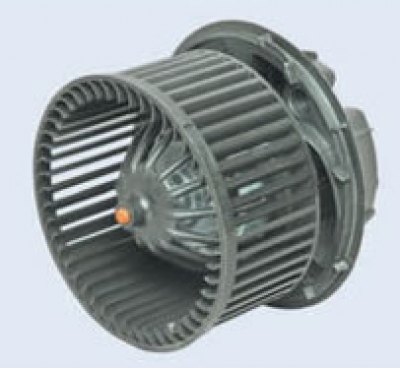
The heater fan is used to supply outside air to the passenger compartment.
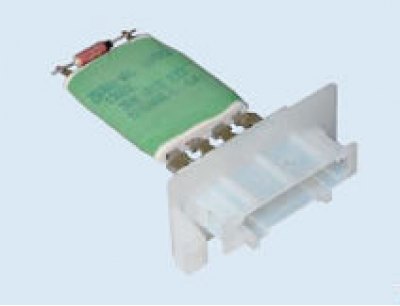
Additional heater fan resistor - with its help the fan can rotate at 4 different speeds.