



First, check the pressure in the fuel supply system by connecting a pressure gauge to the fitting on the fuel rail in the engine compartment (see "Checking the fuel pressure in the engine fuel system").
If the pressure in the fuel system is higher than 400 kPa (4.0 kgf/cm²), then the pressure regulator installed in the fuel pump module is faulty and must be replaced (see "Fuel pump repair").
If the pressure in the fuel system is below 380 kPa (3.8 kgf/cm²), replace the fuel filter (see "Replacing the fuel filter").
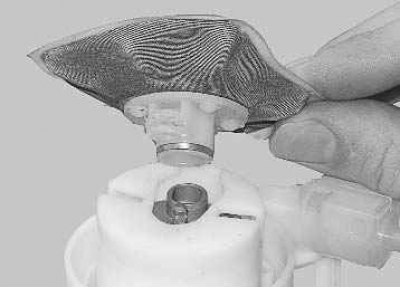
If this does not help, try removing the pump and cleaning the filter in its receiver.
If the pressure still does not increase, the fuel pump must be replaced.
Main material on the website: LADAMAN
You will need a 13 mm wrench.
1. Reduce the pressure in the fuel system (see "Loss of fuel pressure in the engine fuel system").
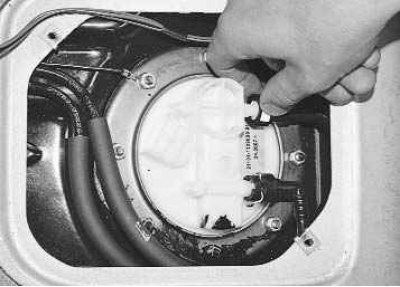
2. Squeeze the plastic retainer…
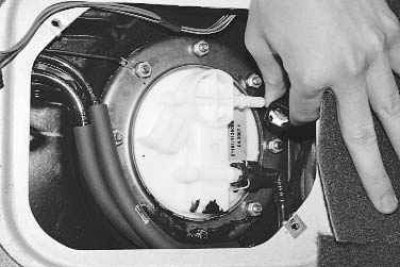
3. …and disconnect the fuel line from the pump fitting.
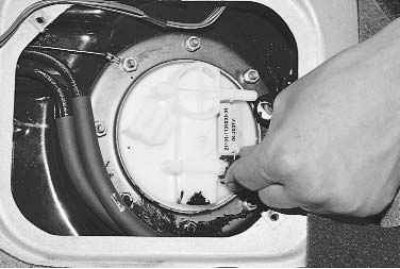
4. Press the spring lock…
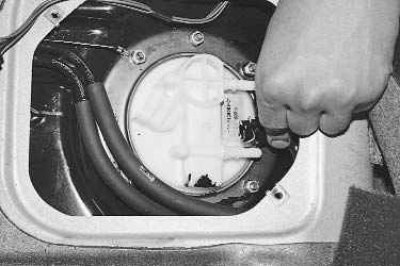
5. …and disconnect the fuel line from the second pump fitting.
Caution! Disconnect the hoses from the fuel pump fittings carefully, avoiding lateral forces so as not to break the fittings.
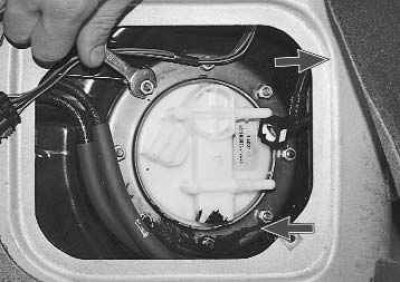
6. Unscrew the ground fastening nut…
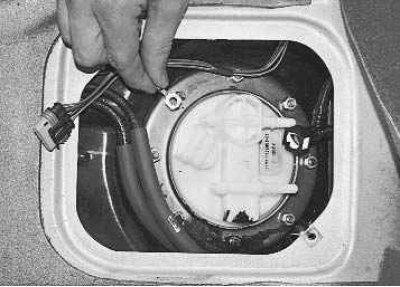
7. …and remove the wire contact from the stud.
8. Unscrew the remaining seven nuts securing the pressure ring along the entire perimeter…
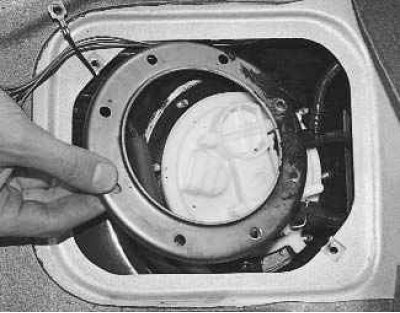
9. …and remove the ring.
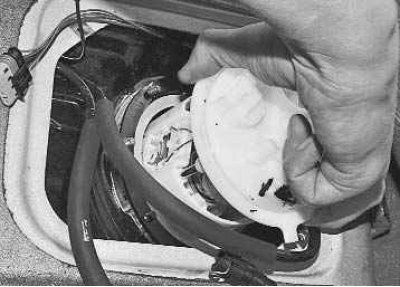
10. Remove the pump from the tank, tilting it to the side so as not to bend the fuel gauge sensor lever, otherwise the fuel gauge readings in the instrument cluster will be incorrect.
11. Remove the rubber sealing ring of the fuel pump from the tank flange. A cracked ring that has lost its elasticity must be replaced with a new one.
12. Install the fuel pump and all removed parts in the reverse order of removal.
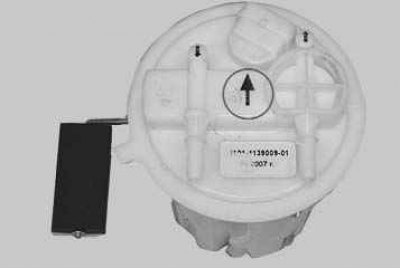
Note: When installing the electric fuel pump module into the fuel tank, the alignment arrow on the fuel pump cover must point toward the rear of the vehicle.
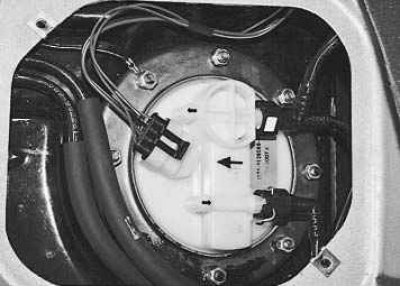
When connecting the fuel lines, follow the arrows on the fittings, indicating the direction of fuel supply.