



1. Loosen the front wheel bolts on the corresponding side.
2. Raise and support the front of the vehicle. Unscrew the wheel mounting bolts and remove the wheel.
3. Clean any dirt from the front strut mount nut.
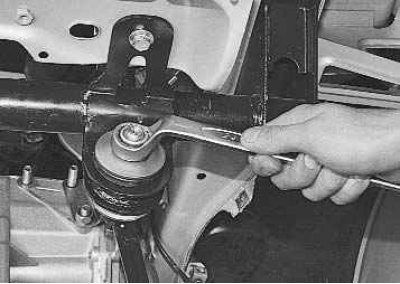
4. Unscrew the nut securing the strut to its front hinge and remove the front washer of the strut hinge.
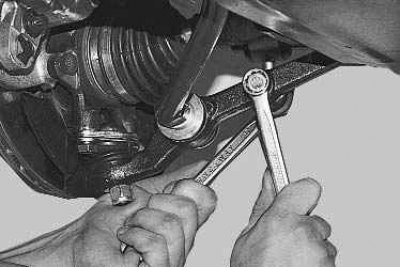
5. Loosen the nut securing the stabilizer bar to the arm, holding the bolt from turning, and remove the bolt.
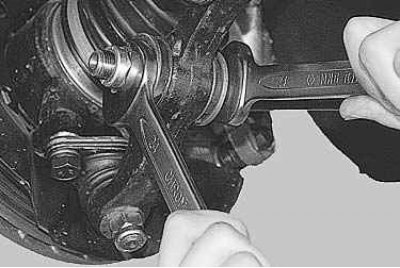
6. Unscrew the nut securing the tensioner to the lever, holding the tensioner with a wrench so that it does not turn in the rubber-metal hinges..
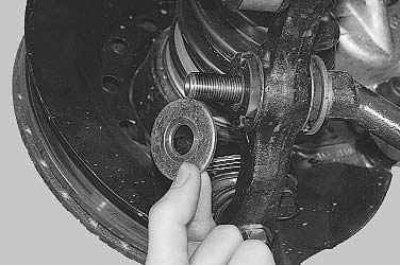
7. …and remove the special washer.
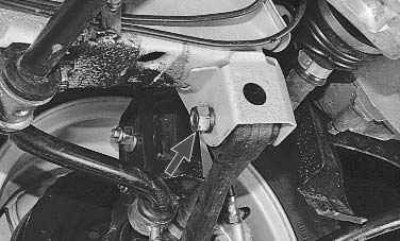
8. Loosen the lever mounting nut, holding the bolt from turning; remove the spring washer and take out the bolt.
9. Remove the end of the lever from the bracket on the body and, turning the lever on the ball joint, remove the strut from the front strut joint..
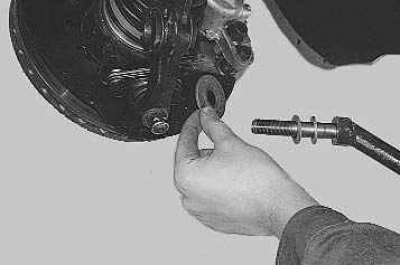
10. ...and then from the front suspension arm, removing the remaining adjusting washers from the tension rod.
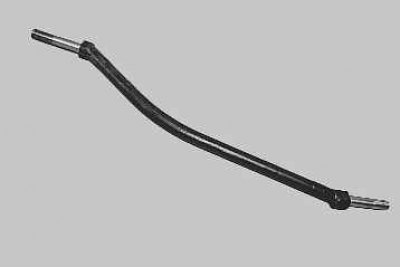
11. Carefully inspect the stretch. If it is bent or there is damage to the rubber-metal hinges or aging, swelling, loss of elasticity of the rubber of the stretch bracket, replace the damaged parts.
12. Install the new tensioner in the reverse order of removal. Adjusting washers are installed in the same quantity and on the same ends of the stretch. The chamfers on their internal diameters must be directed towards the thrust collar of the stretcher.
13. After lowering the car to the ground, rock it vigorously several times and tighten the nuts securing the tie rod to the lever and to the bracket to a torque of 160–180 N·m (16.0–18.0 kgf·m), and the nuts securing the bracket to the body to a torque of 43–53 N·m (4.3–5.3 kgf·m). After driving 100 km, tighten these threaded connections again to the specified torques.