



Catalog numbers of rear pads and other brake mechanism components see here.
Caution: Brake pads have slightly uneven lining wear or wear that varies between pads. Pads may also have significantly different wear at opposite ends of the pad. If everything else is in good condition, these features do not indicate any problems.
Note: It is not recommended to disassemble the rear brake mechanism or remove the brake drum unless absolutely necessary. Use the inspection holes to check the wear of the rear pads. (see below)
Checking the wear (thickness) of the rear pads without removing the brake drum
The rear pad, located closer to the front of the car, wears out faster than the rear one. Therefore, to control...
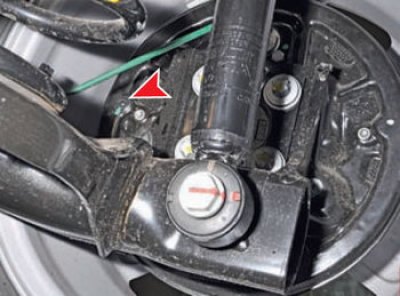
…there is an inspection hole in the rear brake shield.
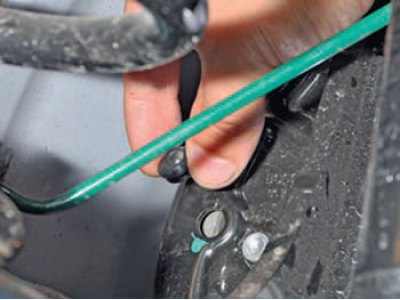
We take out the rubber plug.
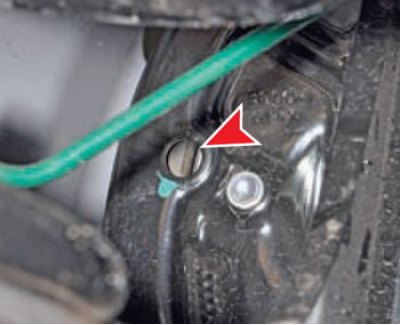
The minimum permissible thickness of the rear brake pads (linings) is 1.5 mm.
For more complete control, you need to remove the brake drum (see below).
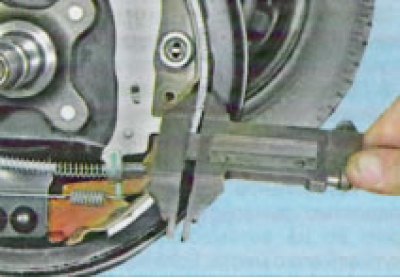
When measuring the thickness together with the base of the overlay, the minimum permissible thickness is 5 mm.
Replacement
The brake should be disassembled from one wheel first. While this job can be done with regular hand tools, there are several specialized brake repair tools that will make the repair much easier. It is recommended to have a tool to remove the brake springs.
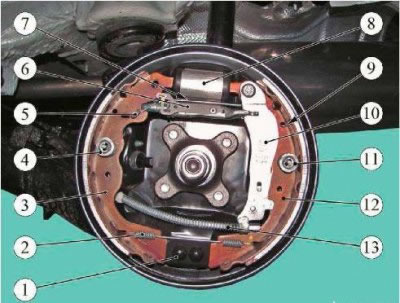
Figure 14-1 - Replacing the brake pads: 1 - stop; 2 - lower tension spring; 3, 12 - brake pads; 4, 11 - guide springs; 5, 9 - springs for fastening the automatic clearance adjustment mechanism; 6 - spacer bar with automatic gap adjustment mechanism; 7 - upper tension spring; 8 - brake cylinder; 10 - manual brake pad drive lever; 13 - hand brake cable
Removal
Apply the parking brake and turn off the ignition. Jack up the vehicle on one side and install safety stands, or place the vehicle on a two-post lift.
Remove the rear wheel.
Release the handbrake lever.
If you are working on a lift, raise the car to a height convenient for performing the work.
To make it easier to remove the brake drum, you need to move the brake shoes together. To do this, use a flat-head screwdriver to turn the gear nut of the gap adjustment mechanism between the pads and the drum through the hole in the brake drum, which reduces the length of the spacer bar and the pads converge. Direction of rotation: top to bottom.
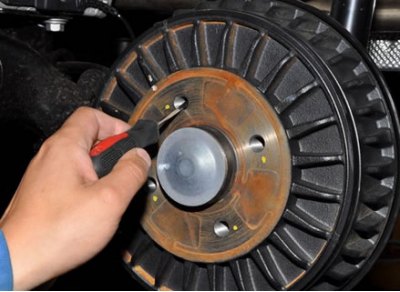
what it looks like with the drum removed:
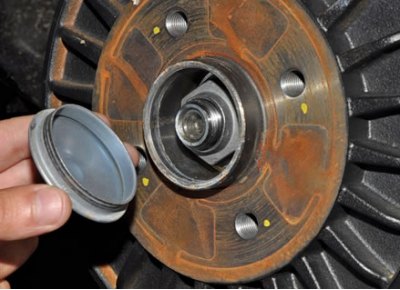
Using suitable tools, pry and knock off the hub bearing cap.
And take it off.
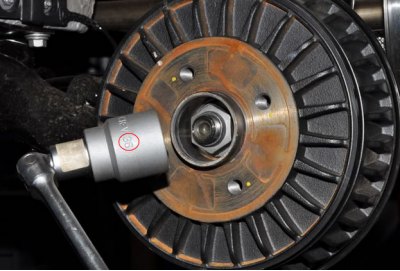
Using a 36 mm wrench (head), unscrew the hub nut.
And remove the brake drum.
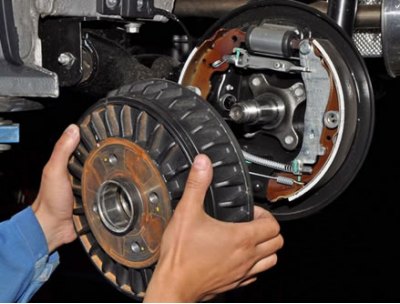
Note: Do not press the brake pedal after removing the brake drum.
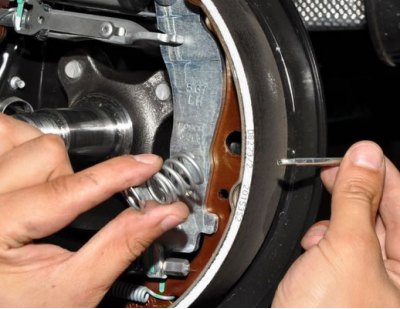
Remove springs 4 and 11 of the guide shoes (pliers). To do this:
Using pliers, turn the spring cup until the groove in the cup aligns with the tail of the rack.
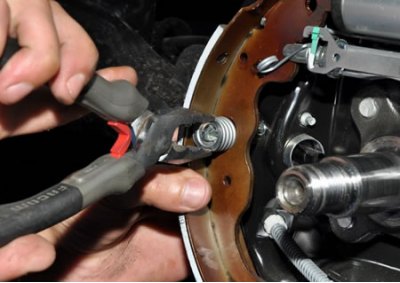
Then remove the spring with the cup, and also take out the support stand (guide).
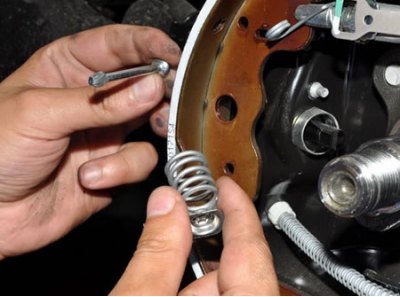
Do the same on the other side of the mechanism.
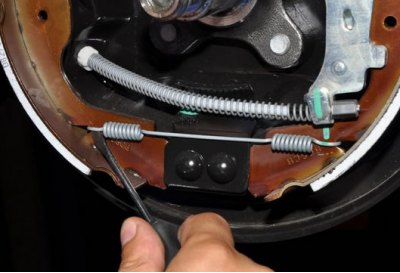
Remove the lower tension spring 2 (figure 14-1).
To do this, use a suitable tool to pry up its hook and remove it from the hook.
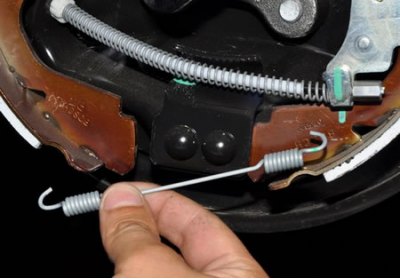
Remove the spring completely.
Taking hold of the pads with your hands, carefully move them away from the shield along with the adjustment mechanism.
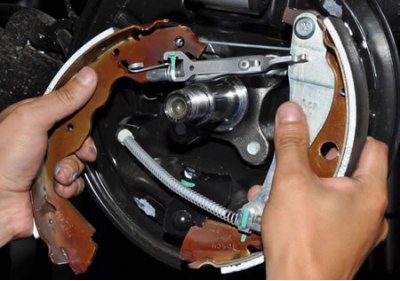
And disconnecting the handbrake cable tip (13, Figure 14-1), remove the pads completely from the shield.
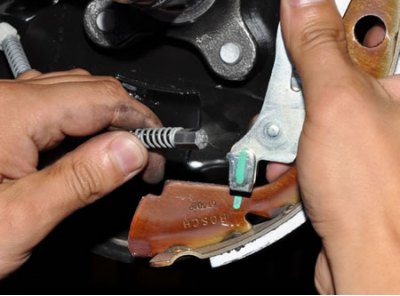
After removing the pads, it is advisable to somehow secure the pistons of the working cylinder, for example, tie them with wire or rope. This is necessary in case the pistons are squeezed out and brake fluid can leak out.
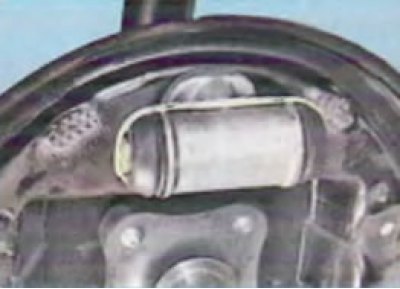
Remove the upper tension spring from the brake shoe assembly (7, Figure 14-1).
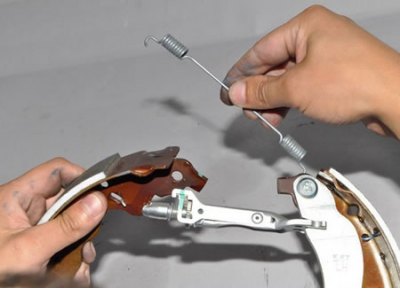
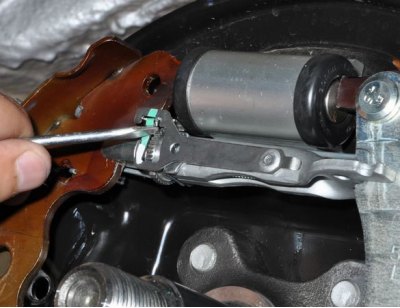
Having disconnected the spring of the adjustment mechanism from the front shoe...
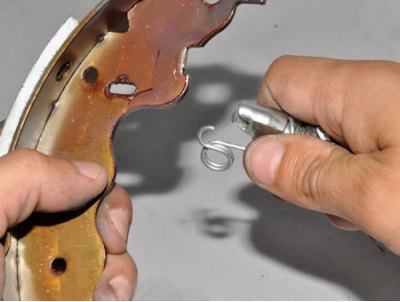
And having disconnected the spacer bar from the rear shoe...
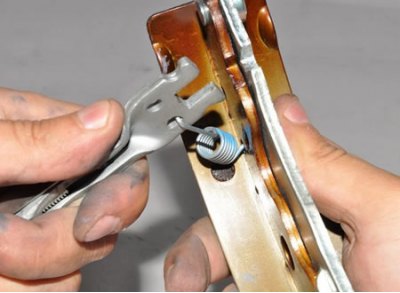
Remove the spacer bar with the automatic adjustment mechanism assembly.
Automatic adjustment mechanism for the gap between the pads and the drum:
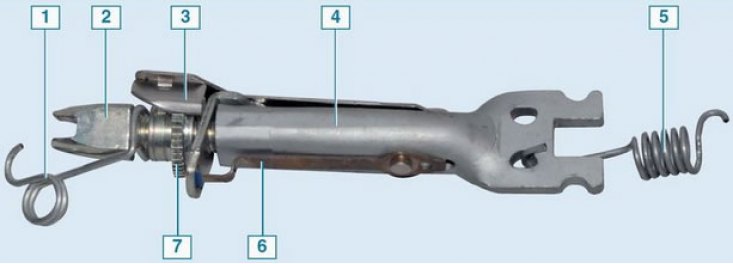
1 - threaded tip spring; 2 - threaded end of the spacer bar (left hand thread); 3 - spring regulator lever; 4 - spacer bar; 5 - leaf spring; 7 - Ratchet gear nut (left hand thread)
General view of the rear brake mechanism elements in a disassembled state
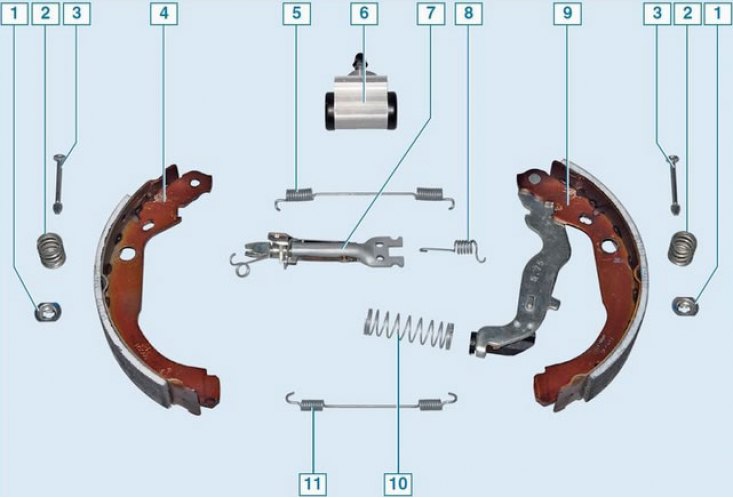
Elements of the brake mechanism: 1 - spring cup; 2 - brake shoe pressure spring; 3 - support stand; 4 - front shoe; 5 - upper tension spring; 6 - wheel cylinder; 7 - spacer bar; 8 - regulator spring; 9 - rear shoe with parking brake drive lever; 10 - lower tension spring
Installation
Clean the rear brake components (metal brush).
Apply "Litol 24" grease to the threaded surface of the spacer bar.
Before installing the pads on the brake shield, connect the pads together using a spacer bar with an automatic clearance adjustment mechanism and fastening springs, connect the manual brake drive cable to the drive lever (flat head screwdriver, pliers).
Install the pads on the brake shield.
Install the upper and lower tension springs (brake spring pliers).
Install the guide shoe springs (flat head screwdriver, pliers).
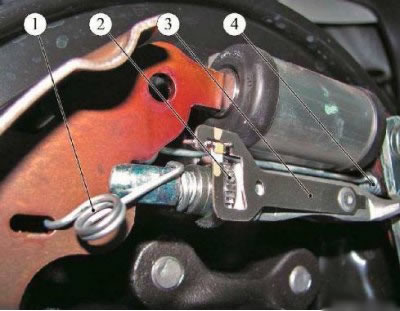
Figure 14-2 - Rear brake components: 1 - spacer bar fastening spring; 2 - ratchet of the automatic clearance adjustment mechanism; 3 - spacer bar with automatic gap adjustment mechanism; 4 - upper tension spring
Adjust the outer diameter of the pads by turning the ratchet 2, Figure 14-2, of the automatic clearance adjustment mechanism with a screwdriver. The outer diameter of the pads should be 227.5 ±0.1 mm (flat screwdriver, caliper).
Install the brake drum. Tightening torque of the hub bearing nut is 175 Nm.
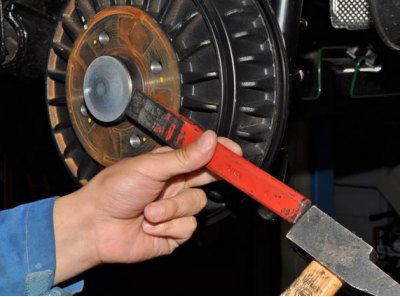
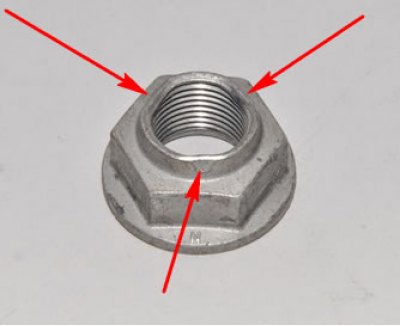
It is advisable to use a new nut (nut article: 7703034275), but you can also use a restored old one, by hammering down its flange in three places, as shown in the photo:
Install the rear wheel.
Press the brake pedal 2-3 times, check and, if necessary, top up the brake fluid level in the brake hydraulic reservoir.
Check the functionality of the automatic clearance adjustment mechanism between the pads and the drum (when you press the brake pedal several times in a row, you should hear a characteristic click).
Adjust the parking brake.
Check the efficiency of the service brake system.