



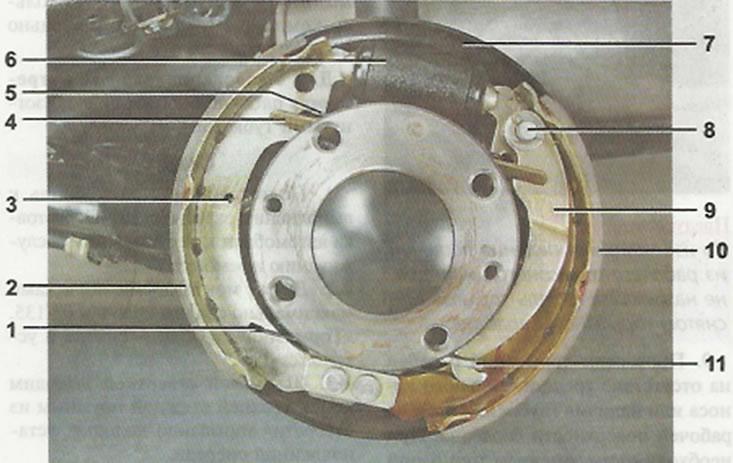
Rear wheel brake mechanism: 1 - lower brake shoe tension spring; 2 - brake shoe; 3 - brake shoe pressure spring; 4 - spacer bar; 5 - upper tension spring; 6 - working brake cylinder; 7 - brake mechanism shield; 8 - axial pin of the spacer lever; 9 - spacer lever; 10 - brake shoe (complete with spacer lever); 11 - parking brake cable tip.
The rear brake mechanism is of drum type. When you press the brake pedal, fluid from the master cylinder flows into the wheel cylinders. Under the action of brake fluid pressure, the pistons of the working brake cylinders come out of them and press the brake shoes against the working surface of the brake drum. After releasing the brake pedal, under the influence of the tension springs, the brake shoes press the pistons into the cylinder and move away from the brake drum. The rear working brake cylinders are equipped with a device for automatic adjustment of the gap between the brake shoes and the drum, which limits the recession of the pistons into the cylinder. This ensures that the optimum clearance between the pads and the drum is maintained.
Rear brakes (except for the slave cylinder) are also part of the parking brake system.