



Note: Removing the gearshift drive may be necessary when replacing faulty parts (for example, to replace a torn drive rod cover).
To complete the work you will need an assistant, as well as an inspection pit or overpass.
Removal in assembly
1. Prepare the car for work ("Preparing the car for maintenance and repair").
2. Clean the thread of the clamp tie bolt with a wire brush. We treat the place where the rod connects to the hinge and the bolt with penetrating lubricant.
3. Using a 13 mm wrench, loosen the tightening of the clamp bolt nut.
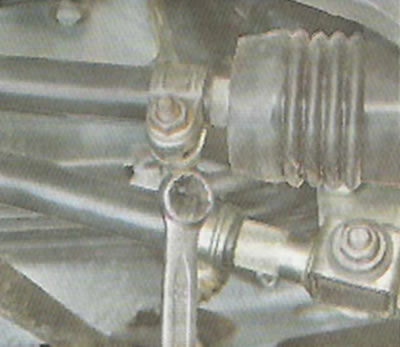
4. Use a screwdriver to loosen the clamp and move it along the rod. We loosen the rod with a screwdriver.
5. After wiping the place where the rod connects to the hinge with a rag, mark the relative position of the drive rod and hinge.
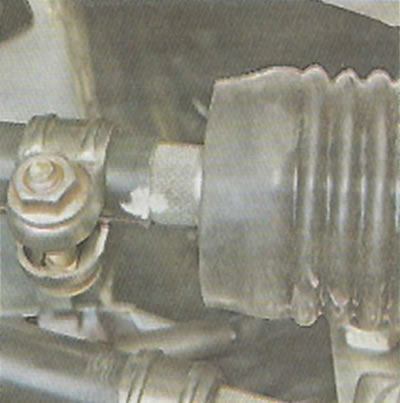
6. Disconnect the rod from the hinge.
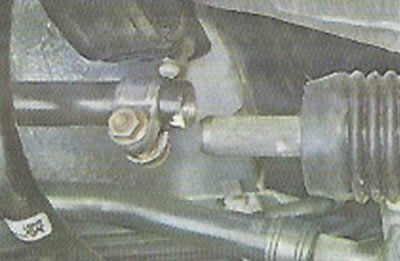
7. Disconnect the reaction rod from the base of the ball joint of the gear shift lever ("Jet thrust - removal and installation").
8. In the car interior, remove the floor tunnel trim ("Floor Tunnel Lining - Removal and Installation").
9. Using a 13 mm wrench, unscrew the four bolts securing the gear shift lever support to the body.
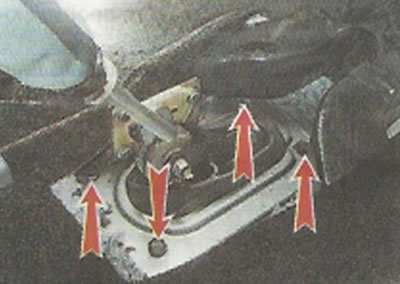
10. Remove the drive downwards, removing the gear shift lever through the hole in the floor tunnel.
11. To replace the cover, unscrew the limiter mounting nut and remove the rod (see below).
12. Remove the bracket and the drive rod cover. We replace the torn cover.
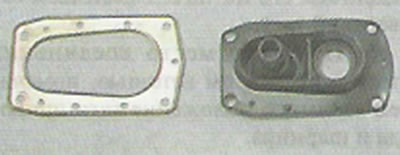
13. Install the drive in reverse order.
Replacing the drive rod
Note: To replace some parts (for example, traction) you can partially disassemble the drive, but remove it from the car. The drive rod may need to be replaced if it is deformed and if, due to corrosion or other damage, it is not possible to securely connect the rod to the joint on the gearbox.
1. Disconnect the drive rod from the gearbox (see above) and remove the steel clamp from the rod.
2. Using a 13 mm wrench, unscrew the limiter mounting nut.
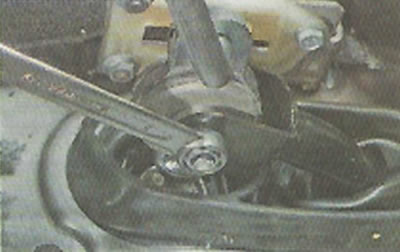
3. Remove the limiter from the lever.
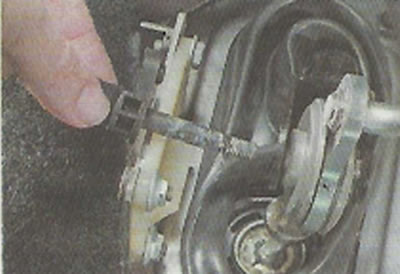
4. Remove the lever from the traction fork.
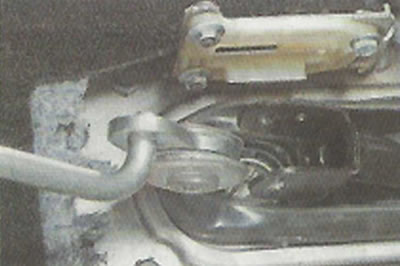
5. To remove the drive rod, lubricate it with soapy water and remove it from the hole in the cover.
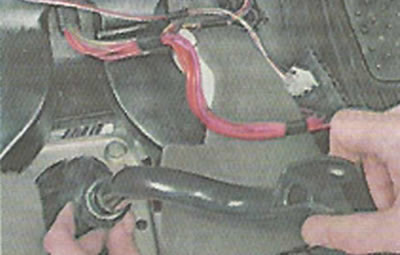
6. Install the rod in the reverse order. Before final tightening of the gearshift drive rod clamp, adjust the drive (see below).
Disassembling the lever support
Note: The work can be done by removing the gearshift mechanism drive from the vehicle (see above) or by disassembling the support directly on the vehicle.
1. Disconnect the drive rod from the gear shift lever (see above).
2. Remove the metal...
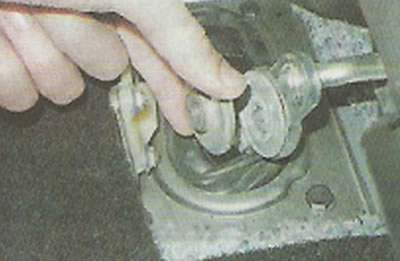
...and a plastic washer.
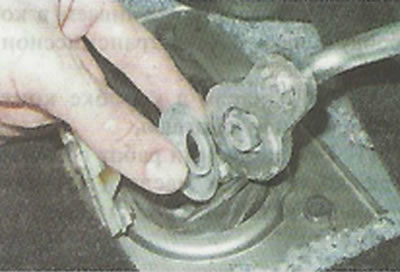
3. Remove the metal spacer sleeve.
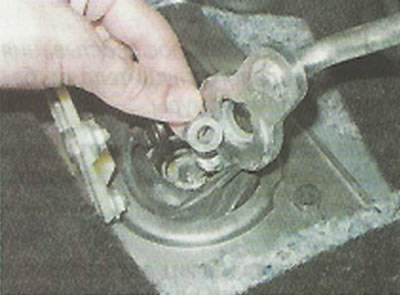
4. Remove the washers from the other side of the lever.
5. Using a slotted screwdriver, pry up and remove the locking ring of the ball joint of the lever.
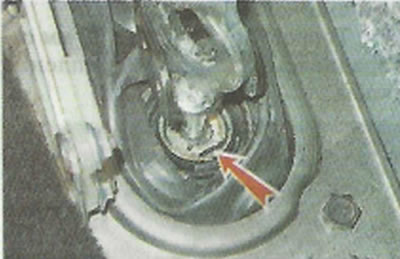
6. Remove the lever from the support base.
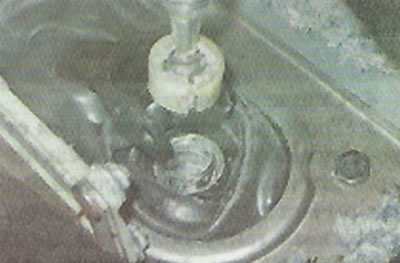
7. Remove the spring from the support.
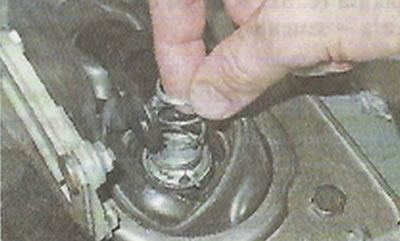
8. If necessary, remove the support from the lever and replace the damaged parts.
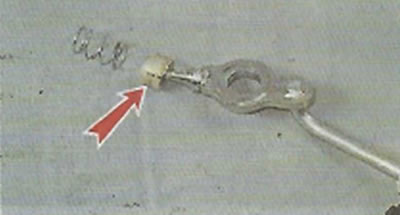
9. Assemble the lever support in the reverse order, lubricating the parts with technical petroleum jelly VTV-1 or other plastic lubricant. During assembly, we also lubricate the washers and the lever bushing.
Adjustment
Note: The drive has a device that blocks the erroneous engagement of reverse gear instead of first gear. To adjust the drive, a special template is required, but if you don't have one, the drive can be adjusted with the help of an assistant. The gearbox must be in first gear. If the plastic cover on the bracket prevents the gear from being engaged, it should be removed (unscrewing two nuts and a bolt).
1. Loosen the clamp of the gear shift mechanism drive rod (see above).
2. Move the gear shift lever so that its limiter touches the plastic cover of bracket A, and then move the lever forward, but so that the limiter does not move beyond the slot of cover B.
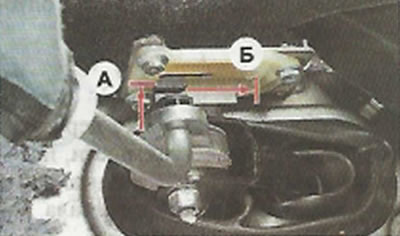
3. Hold the lever in this position. at the same time, the assistant tightens the metal clamp of the rod at a distance of 2-3 mm from the end.
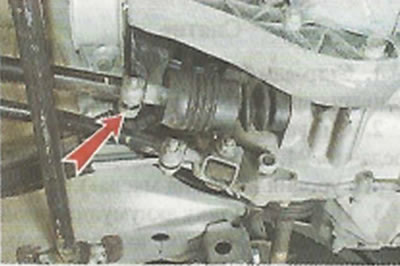
4. By engaging reverse gear, we make sure that the gear shift mechanism drive is working properly.
Note: After pressing the lever from above, its limiter should be opposite the wide part of the slot in the plastic bracket cover, and when moving the lever to the left, the limiter should enter the slot without catching on its edges. The freedom of movement of the limiter inside the slot should be sufficient to engage reverse gear. If the limiter catches on the edges of the slot or the limiter rests against the slot at the end of the stroke, and the reverse gear is not yet engaged, it is necessary to repeat the adjustment, slightly changing the position of the rod on the hinge rod.
5. After completing the adjustment, install the removed parts.