



1. Remove the oil pump from the vehicle (see "Removing and installing the oil pump").
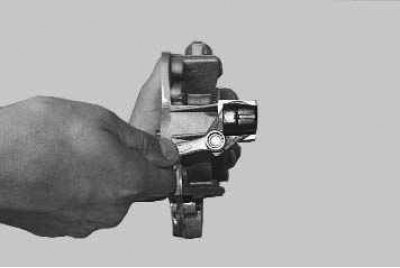
2. Using a 10 mm spanner, unscrew the crankshaft position sensor mounting bolt…
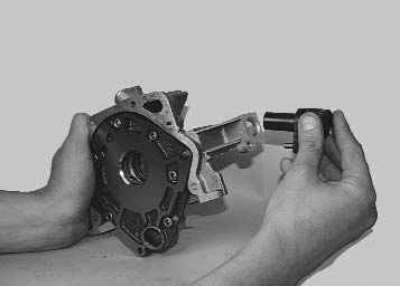
3. …and remove the sensor.
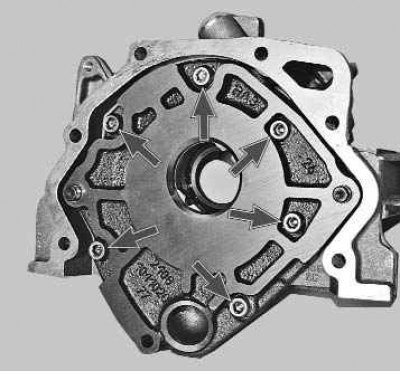
4. Using a 5 mm Allen key, unscrew the six bolts securing the pump cover.
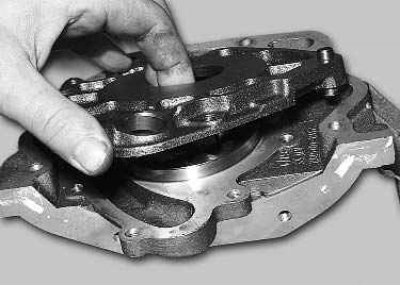
5. Using two screwdrivers, lift the pump body until the locating pins on the cover come out of the holes in the body and remove the pump body from the cover.
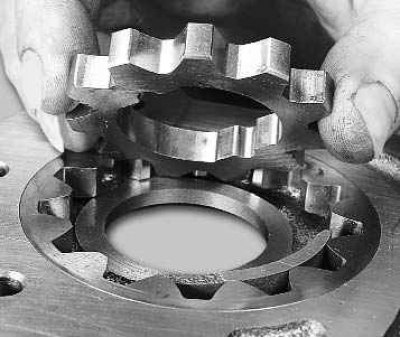
6. Remove the leading... from the housing.
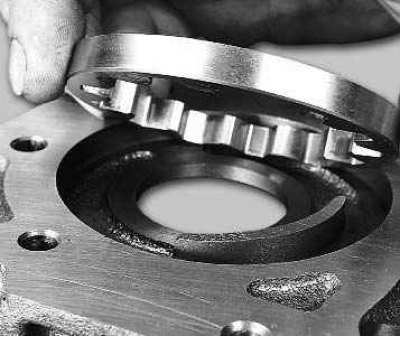
7. ...and the driven gear of the pump.
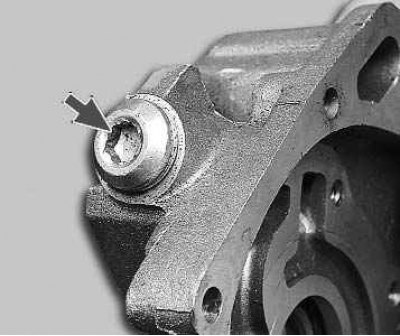
8. Using an 8 mm Allen key, unscrew the plug of the pressure reducing valve. Please note that there is an aluminum sealing ring installed under the plug. Replace the ring that is too tightly compressed.
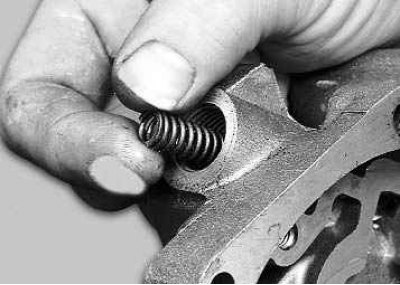
9. Remove the pressure reducing valve spring.
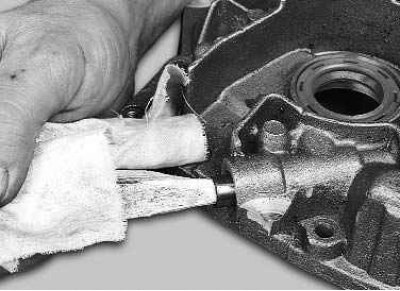
10. Remove the pressure reducing valve by gently tapping the lid on a clean wooden board. If the valve does not come out, remove it with a pointed wooden stick.
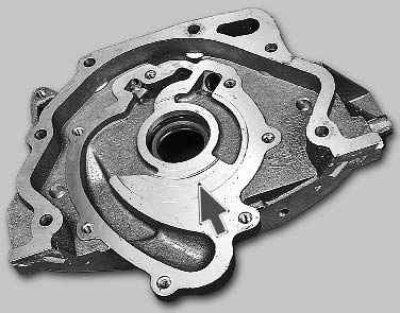
11. Inspect the lid. In the area where the gears are mated, there should be no noticeable signs of wear, scoring or deep scratches. Otherwise, replace the cover.
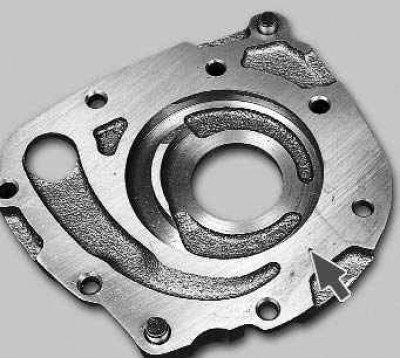
12. Inspect the pump body. There should be no visible signs of wear, burrs or deep scratches on its working surfaces. Otherwise, replace the housing.
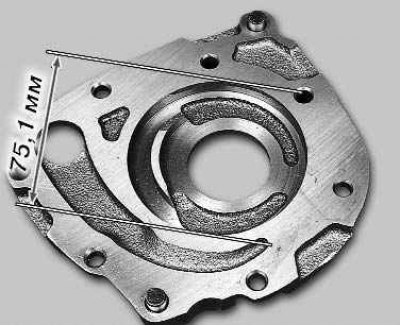
13. Measure the diameter of the driven gear socket in the pump body. The maximum allowable diameter is 75.1 mm. If the size exceeds the specified one, replace the housing.
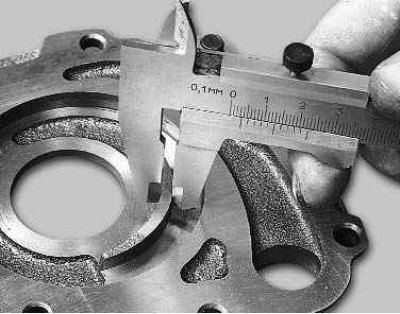
14. Measure the width of the pump body segment in the middle. If the width is less than 3.4 mm, replace the housing.
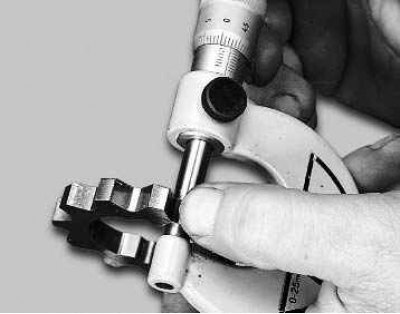
15. Measure the thickness of the drive gear. If it is less than 7.42 mm, replace the gear.
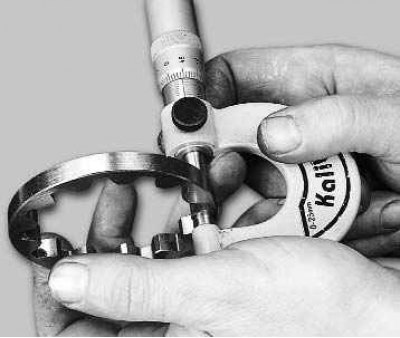
16. Measure the thickness of the driven gear. If it is less than 7.35 mm, replace the gear.
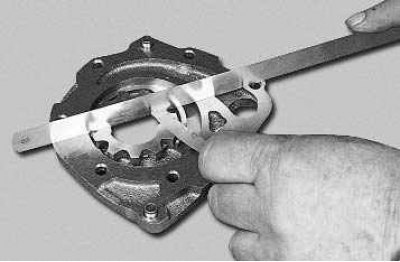
17. Check the axial clearances of the gears. To do this, install the drive gear into the cover, place a metal ruler on the cover and measure the gap between the ruler and the gear with a feeler gauge.
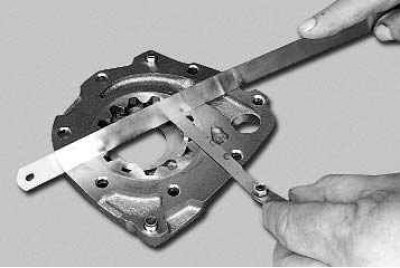
18. Measure the axial clearance of the driven gear in the same way. The maximum permissible axial clearance of the driving gear is 0.12 mm, and of the driven gear – 0.15 mm. If the clearances exceed the specified ones, replace the gears.
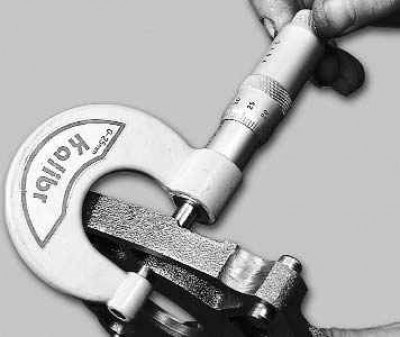
19. More accurate axial clearances of gears can be obtained by calculation. To do this, measure the thickness of the housing on the outer surfaces with a micrometer...
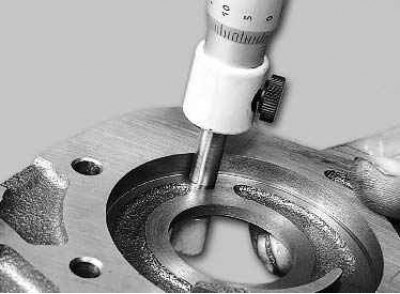
20. ...and the thickness of the cover in the area of the gear socket in several places (on milled surfaces). Calculate the axial clearance as the difference between the arithmetic mean of the nest depth and the thickness of the gears.
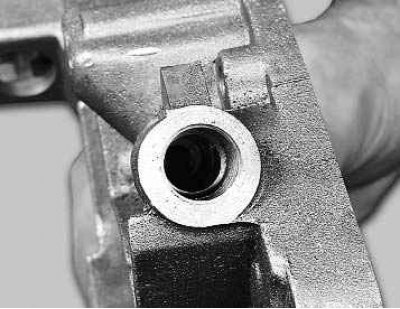
21. Inspect the relief valve seat. There should be no burrs or deep scratches on its inner surface. Otherwise, replace the housing.
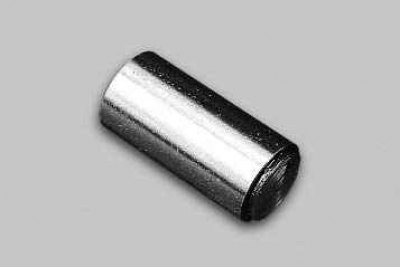
22. Replace the pressure relief valve if it has burrs or deep scratches.
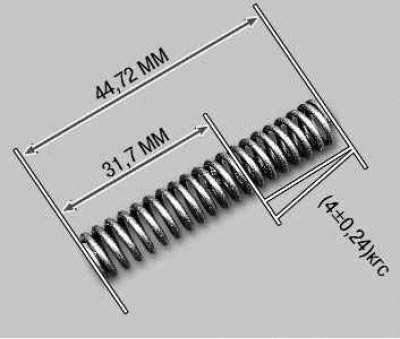
23. Replace a bent, broken or cracked pressure relief valve spring. The height of the spring in a free state should be 44.72 mm, under a load of (4±0.24) kgf – 31.7 mm. Otherwise, replace the spring.
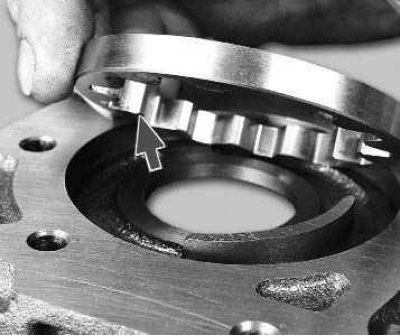
24. Install the driven gear into the pump housing. The chamfers on the gear teeth must face the housing.
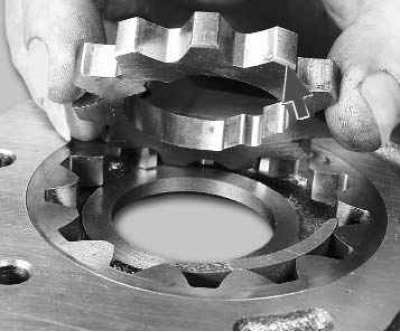
25. Install the drive gear into the pump housing. The chamfers on the gear teeth must face the housing.
26. Install the housing on the cover and screw in the mounting bolts.
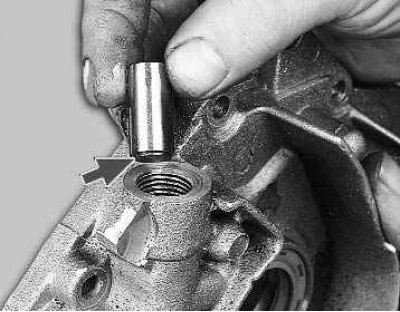
27. Lubricate the pressure relief valve with engine oil and install it in the socket with the bottom down. Then install the spring and screw on the plug with the sealing ring.
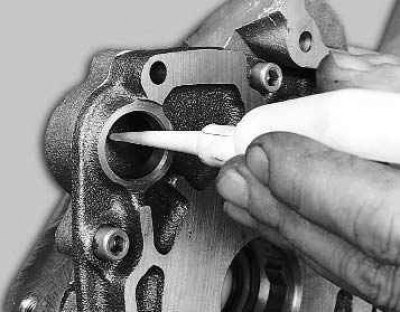
28. Fill the pump with engine oil through the hole under the oil receiver.
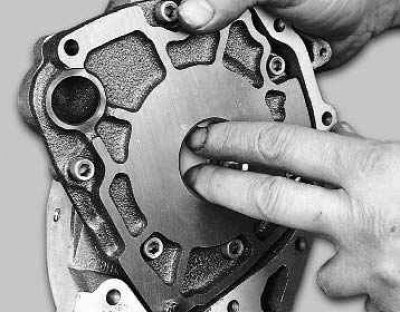
29. Turn the pump gears a few revolutions to lubricate their working surfaces.