



Before performing inspection and maintenance, wash the car body (see "Car care").
To carry out the work, you will need an inspection pit or overpass.
Sequence of execution
1. Prepare the car for work (see "Preparing the car for maintenance and repair").
2. Inspect the car from the outside for paint chips and corrosion on the car body.
Note: Paint chips most often appear on the front of the car and are the result of stones flying out from under the wheels of nearby cars hitting the body. The chipped area can be painted over with a special marker available on the market, matching it to the color of the car.
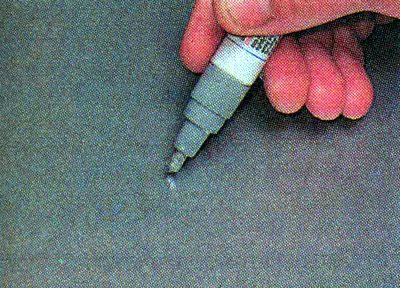
If no measures are taken to restore the coating, the areas where the paint has chipped will subsequently become sources of corrosion. Rust can be temporarily stopped using converters that turn rust into primer and create a protective, waterproof coating. But a more reliable way is to remove the corrosion mechanically, for example with sandpaper, then prime the corrosion site and paint over it.
Traces of corrosion should also be looked for on the car's sills, on the lower edges of the doors, around the windshield and rear window and along the perimeter of the roof.
3. Opening the hood and doors one by one, check the operation of their locks.
4. Make sure that the window lifts and rear-view mirror drives are in good working order (see "Adjusting the rear view mirrors").
5. In the car interior, we check the operation of the front seat adjustment mechanisms, the ability to fold and the reliability of the rear seats. We make sure that there is no mechanical damage to the seat belts and check the clear operation of their locks and reels.
6. Lift the carpet in the driver's and front passenger's footwell area and check the condition of the car's underbody from the inside for moisture and corrosion. If they are found, we completely remove the carpet and check the entire underbody.
7. Having placed the car on an inspection ditch or overpass, we visually check the condition of the bottom and lower power elements of the body for the integrity of the anti-gravel coating and the absence of corrosion. If necessary, we restore damaged areas of anti-corrosion and anti-gravel coatings using special compounds from aerosol cans.