



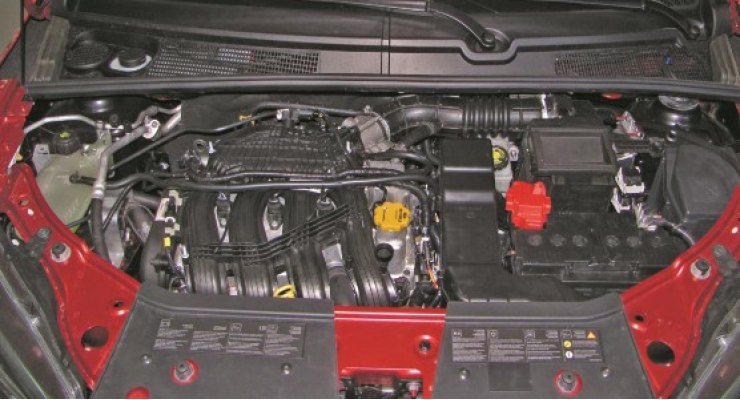
Figure 5 - Engine compartment
Check the condition of the wires, the reliability of the connections of the tips and connectors of the wires and the clamps that secure them, and, if necessary, secure the connections. Check the fixation of the high-voltage wire tips of the ignition system. Terminal lugs, plugs and sockets must be well secured, have good insulation and a reliable connection.
Check the condition and fastening of the hoses of the cooling, fuel, and air conditioning systems. Hoses must not have any twists, deformations, cracks, breaks or other damage. The clamps must be tightened securely.
Electrical wires and hoses must be routed in such a way as to prevent them from coming into contact with heating and rotating parts.
Checking the tightness of units, systems, hose connections, fittings
Check the organoleptic tightness of the seals of the cooling, power supply, lubrication, and exhaust systems. Ensure that there is no transport damage to components and assemblies. The following are not permitted: leakage and dripping of operating fluids, fuel and oil in places of gland seals and breathers of lubrication, cooling and power supply systems, and gas leakage in connections of the exhaust system.
Checking operating fluid levels
Check the coolant level (Figure 6). If necessary, top it up to normal.
The coolant level in the expansion tank on a cold engine should be between the "min" and "max" marks.
ATTENTION: It is not recommended to mix coolants of different brands! The expansion tank must have a label with the name of the liquid added.
Check the brake fluid level in the brake hydraulic reservoir (Figure 7). If necessary, top it up to the norm.
The brake fluid level should be at the "max" mark.
The "Brake failure" indicator (!) should light up when the brake fluid level in the reservoir drops below the "min" mark, which indicates a loss of tightness in the system and a fluid leak.
Visually check for the presence of fluid in the windshield washer reservoir (Figure 8). The volume of fluid should be at least 1.5 liters. If there is none, add fluid.
Check the oil level in the engine crankcase and top it up to normal if necessary.
The oil level on a cold engine should be between the "min" and "max" marks on the level indicator or between the upper and lower edges of the grooved surface of the level indicator (Figure 8). If necessary, oil is added through the filler neck closed with a plug in accordance with the current "Codifier of the main and auxiliary materials used in the maintenance and repair of LADA cars" K 3100.25100.00018.
Check the oil level in the gearbox and top it up to normal if necessary.
The oil level in the manual transmission should be at the lower edge of the filler hole (figure 10). Add oil in small portions through the filler hole in accordance with the current "Codifier of main and auxiliary materials used in maintenance and repair of LADA vehicles" K3100.25100.00018.
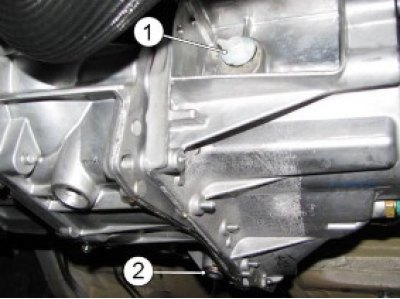
Figure 10 - Checking the oil level in a manual transmission: 1 - filler plug; 2 - drain plug