



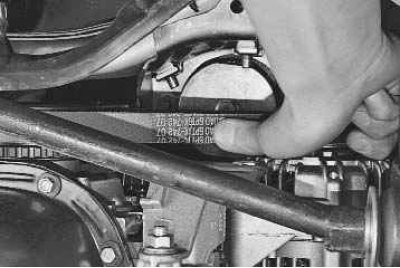
1. Check if the alternator drive belt is broken. If the belt breaks, replace it and adjust its tension (see "Replacing the alternator drive belt").
2. If the belt is intact, check and, if necessary, adjust its tension (see "Checking the alternator drive belt tension").
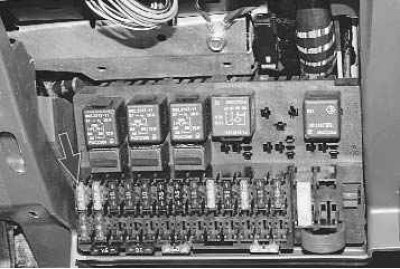
3. If the belt tension is correct, check to see if fuse F1 in the fuse/relay box has blown. The location of the fuses and their ratings are indicated in this manual (see "Electrical equipment malfunctions"), in the vehicle repair manual, electrical diagram, on the fuse box body and on the fuses themselves. If the fuse is blown, replace it, start the engine and check if the battery discharge lamp goes out. If the light goes out, you can continue driving.
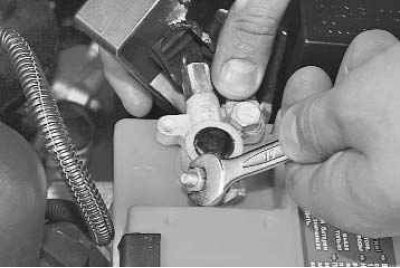
4. If the battery discharge lamp does not go out, check the wires connected to the positive terminal of the battery…
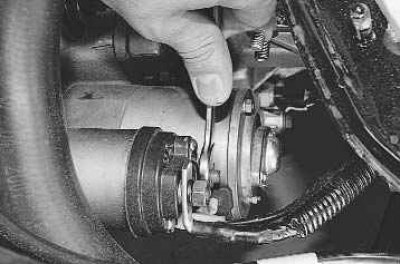
5. …to the starter…
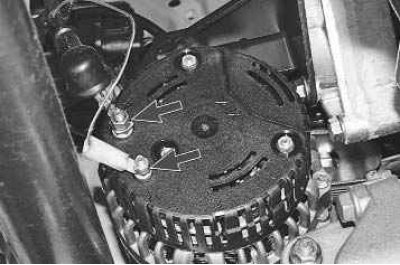
6. …and to the generator. Wires may be broken, have insulation broken off, or have oxidized or loose contacts. Correct the problem and start the engine. If charging current appears, you can continue driving.
If, after the measures taken, the charging lamp continues to light while the engine is running, then the possible cause of the malfunction lies in the generator itself. There may be several reasons, and it is better to eliminate them in a car service center or garage, and you can only hope that the energy reserve in the battery is enough to get to them.
Note: To reduce current consumption when driving a vehicle with a faulty alternator, if possible, turn off the radio, unnecessary lighting devices, heater fan, windshield heater, etc.
Check on the car
You will need: flat- and Phillips-head screwdrivers, a 12 mm wrench (two), a DC voltmeter, and a megohmmeter.
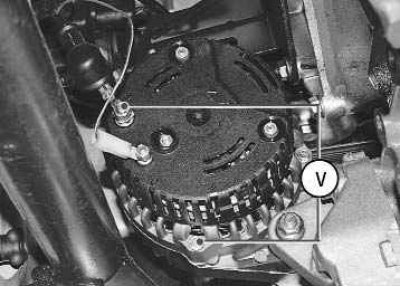
1. Remove the rubber boot and connect the "+" wire to the "B+" terminal of the generator, and the "-" wire to the generator body.
2. Start the engine and turn on the car headlights.
3. After 15 minutes of engine operation at medium speed, measure the voltage; it should be within 14.4–15.1 V. If undercharging or overcharging is observed, (voltage is not within specified limits), replace the voltage regulator.