



Note: For part numbers for this unit, see here and here.
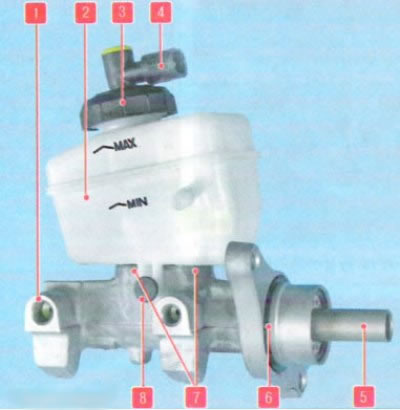
Master brake cylinder assembly with reservoir: 1 - master brake cylinder; 2 - master cylinder reservoir; 3 - tank lid; 4 - brake fluid level sensor; 5 - piston pusher; 6 - sealing ring; 7 - connecting bushings (they are not visible in the photo because they are covered by the tank); 8 - tank mounting pin
The master cylinder is located under the hood and is mounted on the brake booster. The brake fluid reservoir is mounted directly on the cylinder (see photo 2-2).
Removal
Note: The brake master cylinder can be removed either as a unit with the reservoir or sequentially (i.e. you can replace the tank without removing the cylinder). This section describes the sequential removal. If you need to remove the cylinder assembly, you can skip the procedure for removing the brake master cylinder reservoir.
Place the vehicle in the work area, apply the parking brake and turn off the ignition.
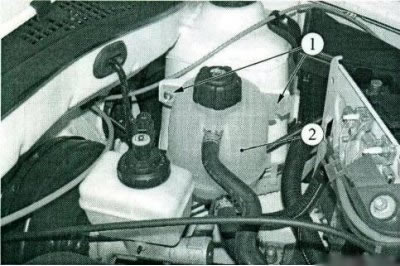
Figure 2-1 - Fastening the expansion tank: 1 - expansion tank mounting nuts; 2 - expansion tank
Unscrew the two nuts 1, Figure 2-1, securing the expansion tank 2 and move the tank to the side without draining the liquid from it (replacement head 10, extension and ratchet).
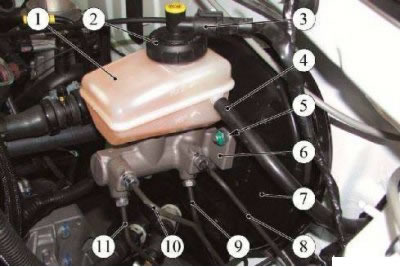
Figure 2-2 - Brake master cylinder for vehicles not equipped with ABS: 1 - brake master cylinder reservoir; 2 - plug assembly with brake fluid level sensor; 3 - wiring harness block to the brake fluid level sensor; 4 - hose to the clutch master cylinder; 5 - brake master cylinder mounting nut; 6 - brake master cylinder; 7 - brake booster; 8 - brake pipe to the left front brake mechanism; 9 - brake pipe to the right rear brake mechanism; 10 - brake pipe to the right front brake mechanism; 11 - brake pipe to the left rear brake mechanism
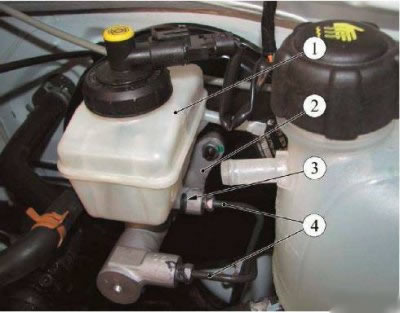
Figure 2-3 - Brake master cylinder for vehicles equipped with ABS: 1 - brake master cylinder reservoir; 2 - brake master cylinder; 3 - retainer for fastening the reservoir to the brake master cylinder; 4 - brake pipes to the ABS hydraulic unit
Disconnect connector 3, Figure 2-2, of the wiring harness from the brake fluid level sensor.
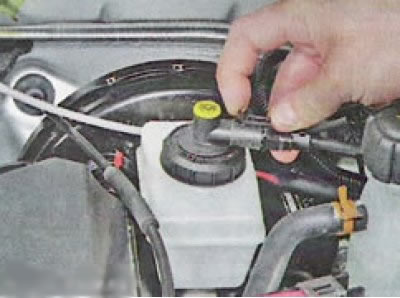
Unscrew and remove plug 2 together with the brake fluid level sensor.
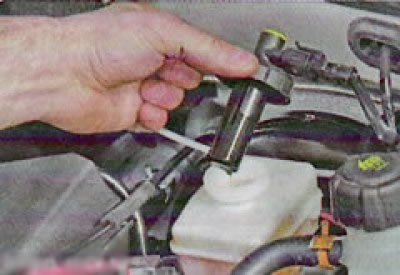
Pump out the brake fluid from reservoir 1, Figure 2-2 or 2-3.
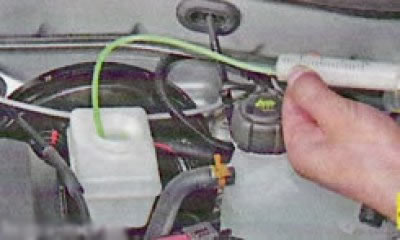
Remove the hose from the tank fitting. (do not lower the hose down, it contains brake fluid. Secure it in any way in the upper position)
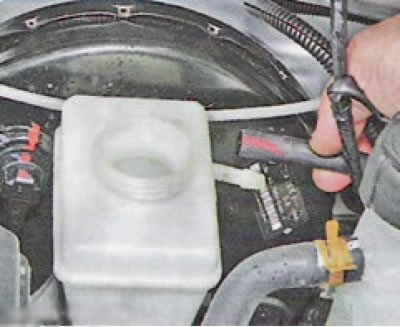
Using a thin tool, pry up and remove the retainer 3, Figure 2-3, securing the reservoir to the brake master cylinder.
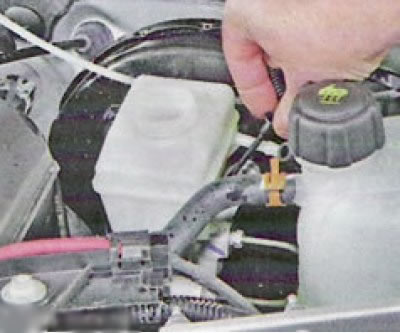
Remove the reservoir by extracting its pipes from the connecting bushings of the brake cylinder.
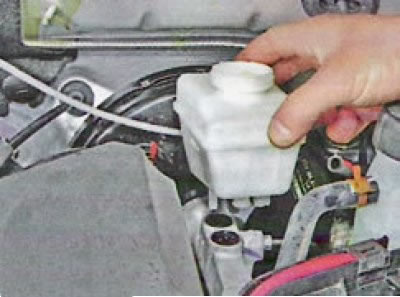
If during the operation of the vehicle a leak of brake fluid was observed from the connection of the reservoir with the master brake cylinder, then remove the connecting bushings from the holes and...
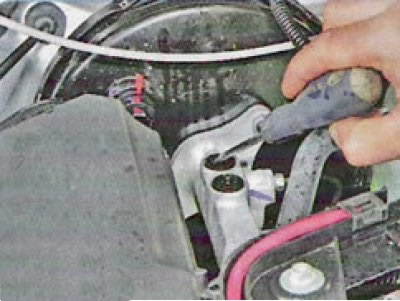
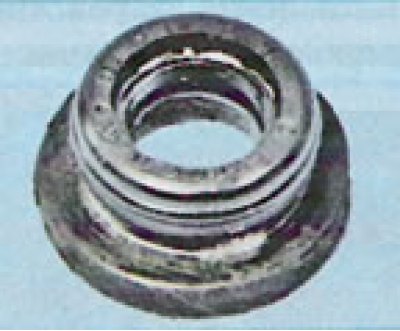
... replace them with new ones.
Install plugs into the open holes of the master cylinder.
Loosen the nuts securing the two pipes to the master brake cylinder (brake pipe wrench type 41 08 11 13 f. "Stahlwille")
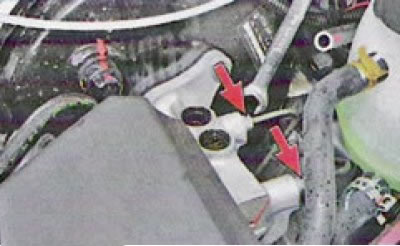
Disconnect the brake pipe fittings 4 from the brake master cylinder 2 and move the pipes to the side.
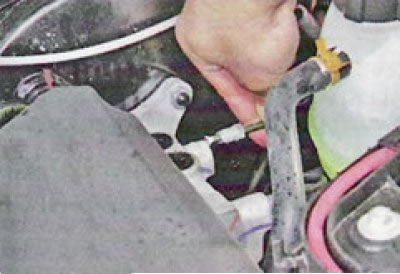
Install technological plugs into the holes of the master cylinder and onto the brake pipes.
Unscrew the two nuts 5, Figure 2-2, securing the brake master cylinder to the vacuum booster (replaceable head 13, extension, ratchet wrench).
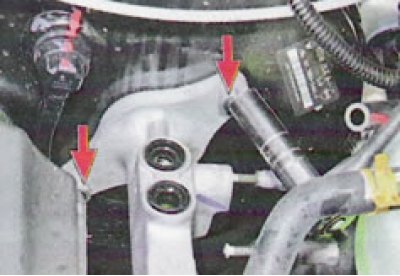
And remove the master brake cylinder.
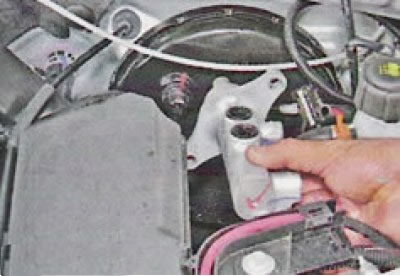
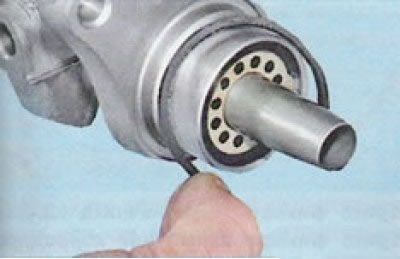
Remove the rubber sealing ring from the master cylinder body.
Installation
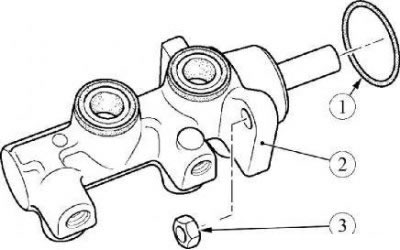
Figure 2-4 - Installing the brake master cylinder: 1 - sealing ring; 2 - brake master cylinder; 3 - nut for fastening the brake master cylinder to the vacuum booster
Attention: Before installation, be sure to replace the sealing ring 1, Figure 2-4, of the brake master cylinder 2.
Attention. In case of leakage of working fluid from the brake master cylinder into the vacuum booster, it is necessary to replace the brake master cylinder - vacuum booster unit.
A brake booster with a rubber diaphragm that has been contaminated with brake fluid becomes unusable.
Install the brake master cylinder in place and align it with the vacuum booster so that the booster pushrod fits into the socket in the master cylinder body.
Secure the brake master cylinder to the brake booster housing with two nuts. Tightening torque of nuts 21 Nm (2.1 kgf·m) (replaceable head 13, extension, ratchet wrench, torque wrench).
Remove the plugs from the brake pipes and the holes in the brake master cylinder, connect the brake pipes to the master cylinder and tighten the fittings. Tightening torque of the fittings 14 Nm (1.4 kgf·m) (brake pipe wrench type 41 08 11 13 f. "Stahlwille", replaceable insert 11 type 58 23 10 11 f. "Stahlwille", torque wrench type 50 18 00 04 f. "Stahlwille").
Remove the plugs from the holes of the brake master cylinder, install the hydraulic reservoir on the cylinder and secure it with a clamp.
Install expansion tank 2, Figure 2-1, in place and secure with two nuts 1. Tightening torque of nuts 8 N·m (0.8 kgf·m) (replaceable head 10, extension and ratchet, torque wrench).
Bleed the brake system and clutch hydraulic drive. (see here).
Tighten the brake cylinder reservoir cap and connect the wiring harness connector to the brake fluid level indicator sensor.
Check the efficiency of the service brake system.