



Special tools (specialized keys, pullers, measuring tools and other devices) are required only when performing certain rib work and are therefore not used often. You can purchase them as needed. At the same time, it is advisable to have a hydrometer, a multimeter, and a caliper (in the middle two can be useful not only when repairing a car, but in everyday life). It should be taken into account that a number of operations are difficult, and sometimes impossible, to perform without a special tool.
Some types of work are performed using personal protective equipment (for more details, see. "Safety precautions when servicing and repairing a car"). Therefore, along with a set of tools, prepare gloves or mittens, protective glasses or a mask (a transparent shield that completely covers the face).
Universal tool
1. A set of socket wrenches with replaceable heads. The kit must include a set of replaceable heads with dimensions from 10 to 32 mm, for a connecting square of 1/2" (0.5 inches). It is desirable that this kit contain a full range of working profiles of metric size, a special "candle" head of 16 or 21 mm (a deep head with a rubber ring inserted into it to hold the spark plug when it is removed). It is also desirable to have a second set of heads measuring from 6 to 14 mm for a smaller landing size (1/4") and an additional set of deep heads of 8, 10, 12 and 13 mm for unscrewing nuts from long studs. It is very convenient to work if the set includes collars with a ratchet mechanism (ratchets). They allow you to quickly unscrew and wrap fasteners.
Warning: To avoid damaging the ratchet mechanism, do not use ratchets to loosen and finally tighten bolts and nuts.
Since the car uses TORX bolts, as well as Allen bolts, the kit should include sets of corresponding heads and bits, as well as bits with a working profile for Phillips and slotted screwdrivers.
2. A ratchet with a hinge and a long handle. It is necessary for loosening large diameter threaded connections when significant effort must be applied (for example, when loosening the front wheel hub nut).
3. Set of combination wrenches (open-end and box-end wrenches) dimensions from 6 to 32 mm. It is desirable to have a full range of metric size keys available (through 1 mm). Warning!
Open-end wrenches are not designed to apply significant force to fasteners, as this will crush the edges of bolts and nuts. Tightening or loosening with such keys should only be done in cases where it is impossible to do so using socket or open-end wrenches.
4. Set of open-end wrenches. It is useful to supplement the set of combination wrenches with open-end curved wrenches of the most common sizes: 10, 12, 13, 15, 17, 19, 22 and 24 mm.
5. A set of Allen keys ranging in size from 2 to 12 mm.
6. Torque wrench. Designed for final tightening of threaded connections with a specified torque.
7. A set of Phillips and slotted screwdrivers, varying in size and length. It is very convenient if you have a large selection of screwdrivers with blades of different lengths and widths available when performing repairs.
8. Hammers. It is advisable to have several hammers with a steel striker weighing 200, 500, 1000 g, and, in addition, with a plastic or rubber striker.
9. Nippers (side cutters), combination pliers, flat-nose pliers.
10. Awl.
11. Soft metal punches (brass, copper, aluminum rods) for knocking out axles and shafts.
12. A set of steel punches and drifts for knocking out pins, cotter pins, etc.
13. Chisel. It is better to buy two or three chisels with different blade widths. It is also advisable to have a long chisel for working in hard-to-reach places.
14. Hacksaw for metal, set of needle files and rasps.
15. Mounting blade. You should have a set of two or three blades of different lengths that can be used as levers.
16. Sliding pliers.
17. Metal brushes.
18. Electric drill with a set of metal drill bits (diameter up to 13 mm).
19. Bench vice. The vice must be securely fastened to the workbench.
Special tools and devices
1. Hydraulic trolley jack. The standard jack is often either inconvenient or simply useless when performing certain jobs.
2. Car stands, adjustable in height and with a permissible load of at least 1 ton. It is advisable to have four such stands.
3. Wheel chocks (at least 2 pcs.).
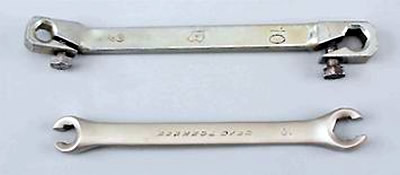
4. Double-ended wrenches for 8 and 10 mm brake system nipples. The two most common types of such wrenches are a clamp wrench and a slotted open-end wrench. The clamping key allows you to unscrew fittings with worn edges. In order to put the key on the brake pipe nipple, it is necessary to unscrew the clamping bolt. A slotted open-end wrench allows you to perform work more quickly, but such a wrench must be made of high-quality steel with appropriate heat treatment.
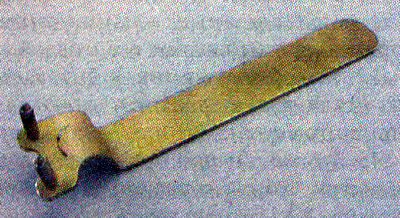
5. Special key for adjusting the timing belt tension.
6. A 24mm octagonal head wrench for disassembling the steering gear.
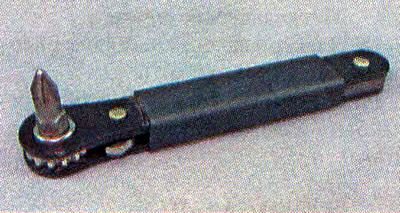
7. Flat ratchet with removable tips. Can be used in hard to reach places as a flat reversible screwdriver.
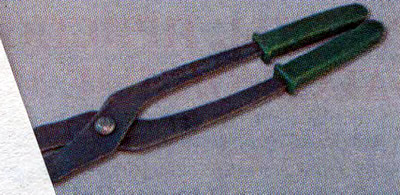
8. Snap ring removers. There are two types of such pullers: for extracting retaining rings from holes and for removing retaining rings from shafts, axles, rods. Such pullers come with straight and curved jaws.

9. Special pliers for installing clamps for CV joint protective covers.
10. Puller for pressing out ball joint pins and steering rod ends.
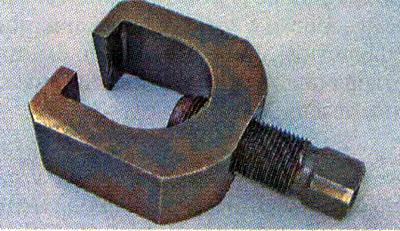
11. Oil filter remover.
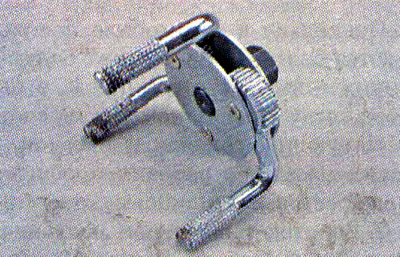
12. Universal three-jaw pullers for removing pulleys, hubs, gears.
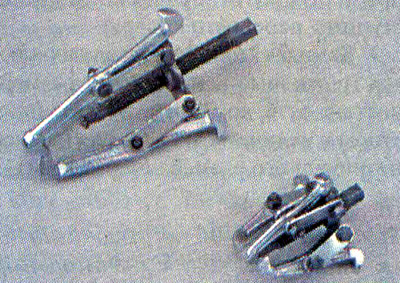
13. Universal puller with narrow jaws for removing couplings, gears, bearing rings. The design of the puller allows for combination by installing two or three grips.
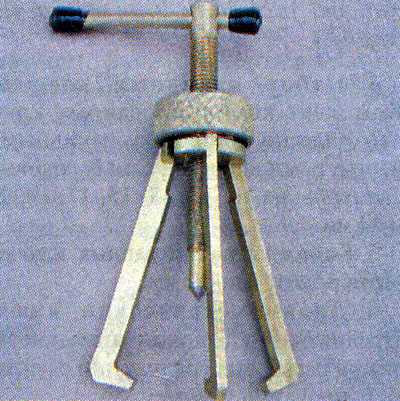
14. Set of tools for replacing hub bearings. The kit includes a puller for removing the inner bearing ring and a device for extracting and pressing in hub bearings.
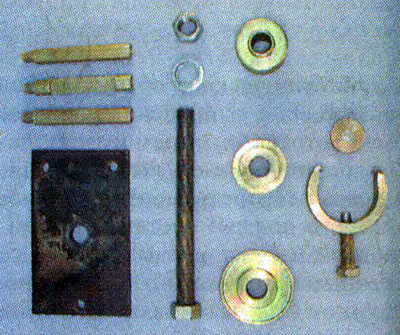
15. Universal cup puller for extracting and pressing in hub bearings and rubber-metal hinges (silent blocks) levers.
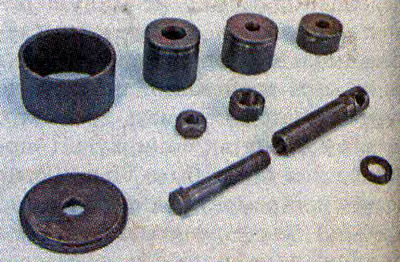
16. Puller and mandrel for replacing oil scraper caps.
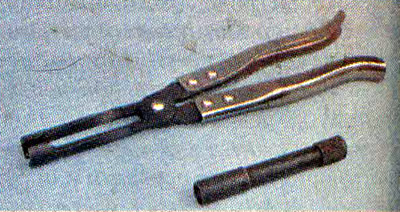
17. Set for compressing springs and de-drying valves of the gas distribution mechanism.
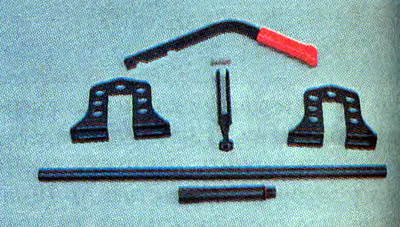
18. Device for grinding valves.
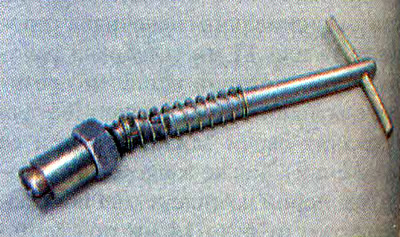
19. Special 22 mm open-end or socket wrenches for unscrewing the oxygen concentration sensor.
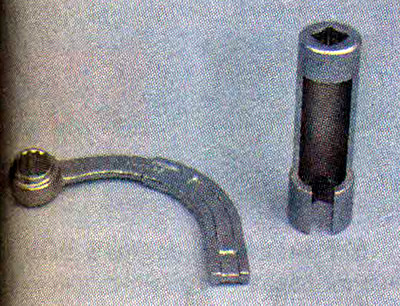
20. Tweezers.
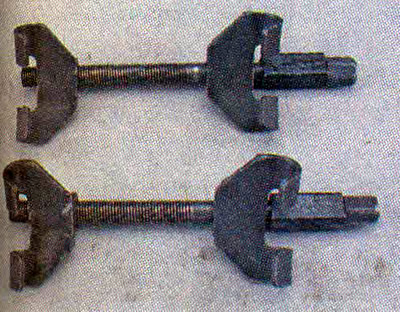
21. Suspension spring clamps.
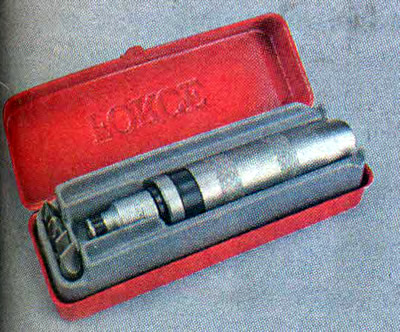
22. Impact screwdriver with a set of attachments.
23. Digital multimeter (tester) for checking sensors and electrical circuits.
24. A special 12V probe or test lamp for checking the electrical circuits of the vehicle that are under voltage.
25. Tire pressure gauge (if there is no pressure gauge on the tire pump).
26. Pressure gauge for measuring pressure in the engine fuel rail.
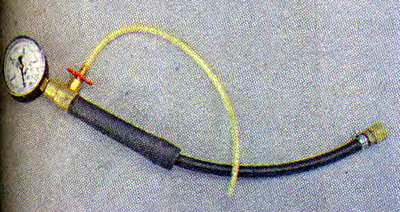
27. Pressure gauge for checking the pressure in the engine lubrication system.
28. Compression gauge for checking the pressure in the engine cylinders.
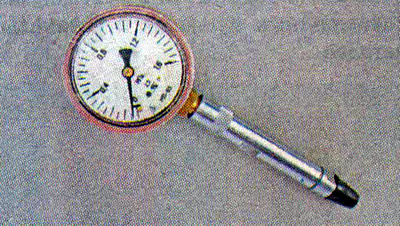
29. Bore gauge for measuring the diameter of cylinders.
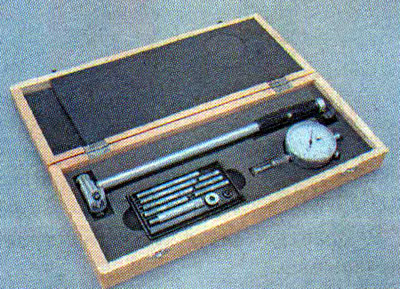
30. Caliper with depth gauge.
31. Micrometers with measurement limits of 0-25, 25-50 and 50-75 mm.
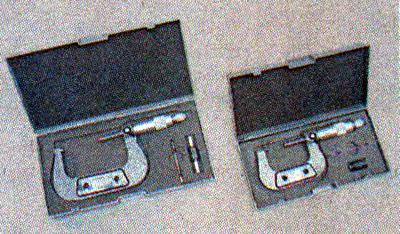
32. A set of round feeler gauges for checking the gap between spark plug electrodes.
33. A set of flat feeler gauges for measuring gaps when assessing the technical condition of units.
34. Mandrel for centering the driven clutch disc.
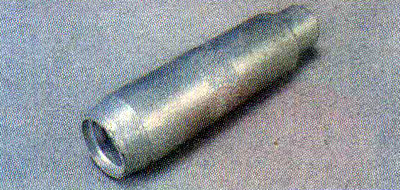
35. Technological mandrel for fixing the differential axle gear. The mandrel is installed in the gearbox hole after both drives have been removed to prevent the axle gears from falling out of the differential.
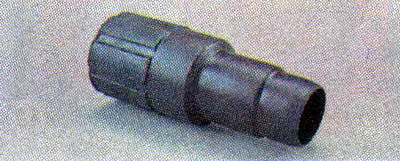
36. Mandrel for compressing piston rings.
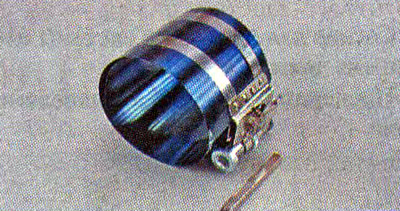
37. Hydrometer for measuring liquid density (electrolyte in the battery or antifreeze in the expansion tank).
38. A special device with metal brushes for cleaning wire terminals and battery terminals.
39. Magnet on a telescopic pointer for extracting small metal objects from hard-to-reach places.
40. Oil syringe for filling oil into the gearbox housing.
Note: Since the gearbox oil is rarely changed and is poured in from above through the level indicator hole, a funnel with a 50-60 cm long plastic tube attached to it can be used instead of an oil syringe.
41. Hose with a bulb for pumping fuel. Hoses can be used to drain fuel from the tank before removing it.
42. Wide and narrow locksmith (metal) rulers for checking planes.
43. Device for disassembling suspension struts. The device consists of two elements: the inner element is designed to hold the shock absorber rod (by 6 and 10 mm), and the outer one is for unscrewing its nut (17 and 22 mm).
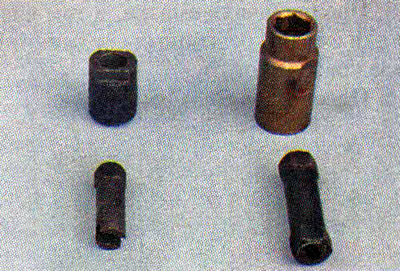
44. Technical hair dryer (heat gun). Necessary for heating parts during assembly and disassembly (for example, heat shrink tubing when repairing electrical wiring).
45. When performing work, you may also need: a clamp, tape measure, household spring balance, a wide container for draining oil and coolant with a capacity of at least 100 l, a medical syringe or a bulb for collecting liquid.