



Gearbox JH3
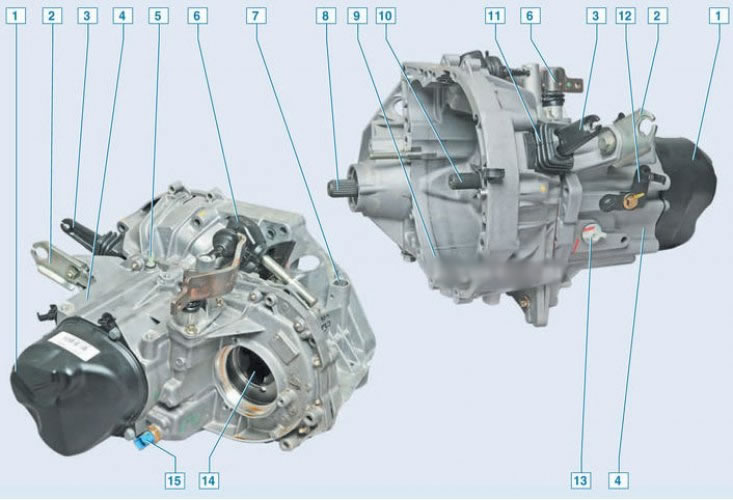
Gearbox JH3: 1 - rear cover of gearbox; 2 - clutch cable bracket; 3 - clutch fork; 4 - gearbox housing; 5 - breather nipple; 6 - gear shift mechanism; 7 - cavity for speed sensor; 8 - shaft of the right differential axle gear; 9 - clutch housing; 10 - primary shaft; 11 - anther; 12 - holder for electrical wires; 13 - oil filler cap; 14 - housing of the inner joint of the drive mechanism of the left wheel; 15 - Reverse light switch
A car engine, like all internal combustion engines, develops power and torque in a relatively narrow range of revolutions. As the engine speed decreases, the power decreases.
The power transmission allows the number of revolutions of the drive axle to be reduced in relation to the number of revolutions of the engine crankshaft, increasing the traction force. The higher the traction force, the lower the travel speed.
When driving a car, there is a need to apply different driving speeds and different traction forces. For example, when driving on deep sand, the speed is insignificant, and to overcome the resistance of the road, a fairly large traction force is required. A large traction force is also required when starting the car from a standstill and when overcoming steep climbs. On the contrary, when driving on a hard-surface road, little traction is required, but the driving speed can be high.
To increase or decrease the traction force on the drive axle with a constant torque value on the engine shaft, a gearbox is used in the vehicle's power transmission.
Since the engines of different car models have different power, then, of course, the gear ratios of individual gears, and, consequently, the number of teeth of gear wheels are different. However, the principle of operation of gearboxes is the same, and the operations of disassembly, assembly and repair are generally similar.
The purpose of the gearbox is to ensure further transformation of torque in magnitude and direction in accordance with the load on the vehicle, as well as to create the ability for the engine to operate at idle speed.
The basic principle of operation of the gearbox is the same everywhere, the essence of which lies in the paired connection of gears that have a different number of teeth. In this case, the torque transmitted by the gears changes proportionally to the gear ratio, i.e. the ratio of the number of teeth on the driven gear to the number of teeth on the driving gear.
The gearbox is, in principle, a very simple device.
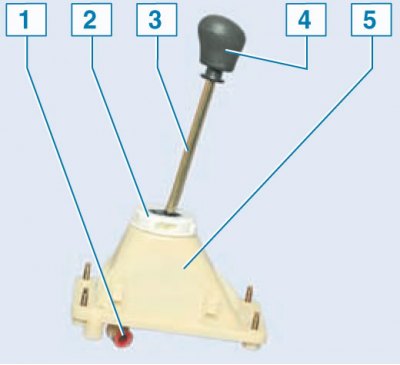
Gearbox control mechanism: 1 – bushing (the gearbox control rod is connected to it); 2 – gearshift lever lock; 3 – gear shift lever (has a ball joint that is inserted into the body); 4 – lever handle; 5 – plastic case
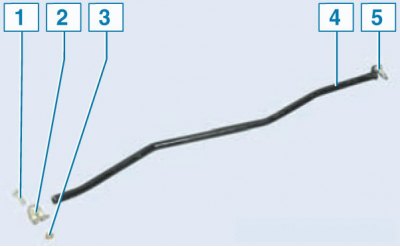
Gearbox control rod: 1 – tension bolt; 2 – clamp; 3 – nut; 4 – traction; 5 – traction finger
The rod is attached at one end to the bushing of the gearbox control mechanism, and at the other end to the shift mechanism installed on the gearbox.
Gearbox JR5
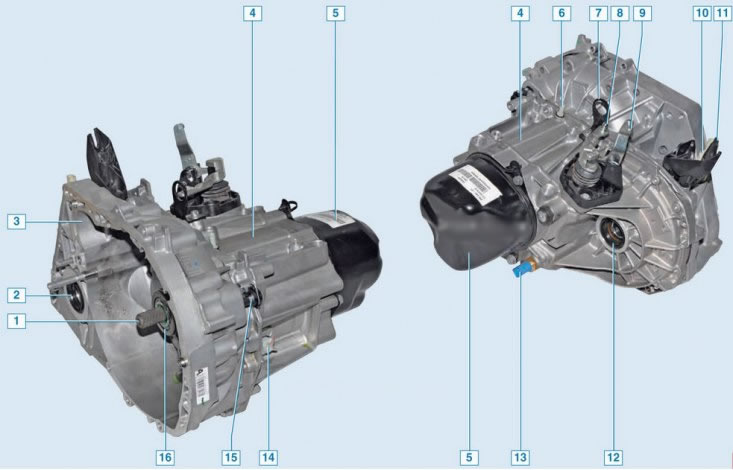
Gearbox JR5: 1 - primary shaft; 2 - right wheel drive oil seal; 3 - clutch housing; 4 - gearbox housing; 5 - back cover; 6 - breather nipple; 7 - eye bracket; 8 - gear shift lever; 9 - gear selection lever; 10 - speed sensor or plug; 11 - gearbox control cable mounting bracket; 12 - left wheel drive oil seal; 13 - Reverse light switch; 14 - oil filler cap; 15 - fluid supply pipe to the clutch hydraulic drive working cylinder; 16 - clutch release bearing
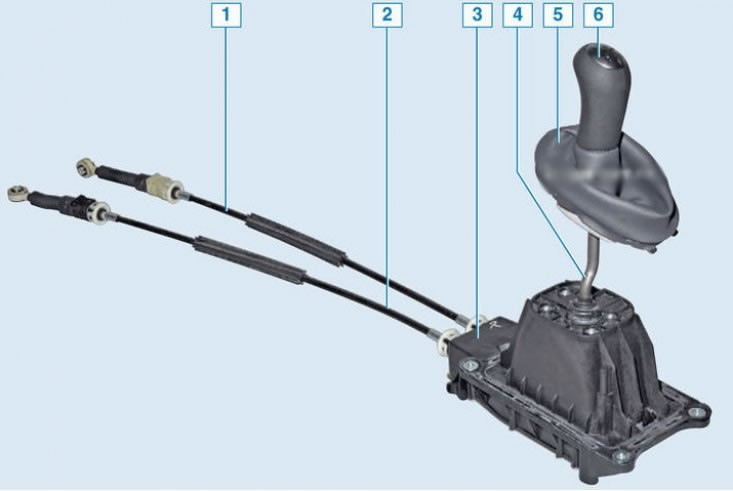
Gearbox control mechanism: 1 - gear selection cable; 2 - gear shift cable; 3 - control mechanism; 4 - gear shift lever; 5 - gear shift lever cover; 6 - gear shift lever handle
Gearbox VAZ-21809
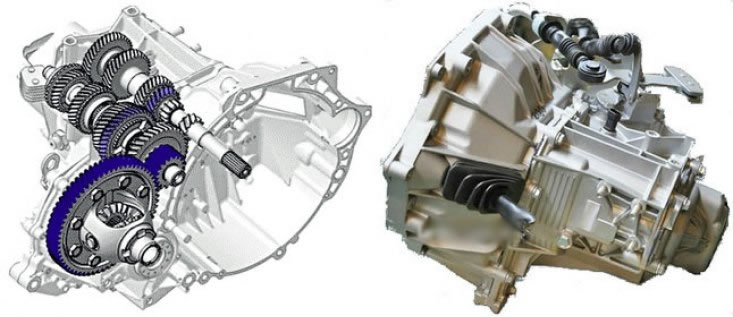
Redesigned VAZ gearbox with cable shift drive. It has been installed on Lada Largus instead of the JR5 gearbox since 2018, paired with a 16-valve VAZ-21129 engine. Together with foreign engineers, a number of improvements were made to the gearbox in order to reduce noise and vibration, including the gear tooth profile was changed. The clarity and balance of gear shifting has been improved.
Gear ratio tables for LADA Largus gearboxes
Note: gear ratios on cars with AvtoVAZ engines differ from those shown.
| 5 seats with K7M | 7 seats with K7M | 5 and 7 seats with K4M | Van with K7M and K4M | |
| Transmission | JH3 540 | JR5 551 | JR5 549 | JR5 517 |
| 1st gear | 3,727 | 3,727 | 3,727 | 3,727 |
| 2nd gear | 2,048 | 2,048 | 2,048 | 2,048 |
| Zya transmission | 1,393 | 1,321 | 1,393 | 1,321 |
| 4th gear | 1,029 | 0,971 | 1,097 | 0,971 |
| baya transmission | 0,82 | 0,795 | 0,892 | 0,738 |
| Reverse gear | 3,545 | 3,545 | 3,545 | 3,545 |
| The main couple | 4,214 | 4,5 | 4,214 | 4,928 |
Gear ratios of the VAZ-21809 gearbox
| l | 3,636 |
| II | 1,952 |
| III | 1,357 |
| IV | 0,941 |
| V | 0,784 |
| Reverse | 3,500 |
| Main gear | 3,944 |
Factory designations and parameters of the fifth gear
| Gear ratio | Primary shaft gear | Secondary shaft gear | ||
| Number of teeth | Part designation | Number of teeth | Part designation | |
| 0,892 | 37 | 8200611295 | 33 | 8200608035 |
| 0,820 | 39 | 8200611299 | 32 | 8200607980 |
| 0,795 | 39 | 8200611297 | 31 | 8200607978 |
| 0,756 | 41 | 8200611301 | 31 | 8200607981 |
| 0,738 | 42 | 8200611303 | 31 | 8200607983 |
Weight of gearboxes (gearbox weight in kilograms)
- JH3 - 33.0 kg
- JR5 - 34.0 kg
- 21809 - 31.8 kg
Checkpoint identification
Determination of the installed gearbox by configuration and engine (only for engines. Renault).
| Body and engine | Station wagon 5 seats with K7M | Station wagon 7 seats with K7M | Station wagon 5 and 7 seats with K4M | Van with K7M and K4M |
| Installed Checkpoint | JH3 540 | JR5 551 | JR5 549 | JR5 517 |
The ratio of engines and gearboxes is indicated in more detail here.
Note: For precise identification of the installed gearbox, see its marking (see below).
The material was taken from a website ladaman.ru
Plate 1, Figure 2-1, stamped on the gearbox housing using impact method, provides information about the gearbox, Figure 2-2.
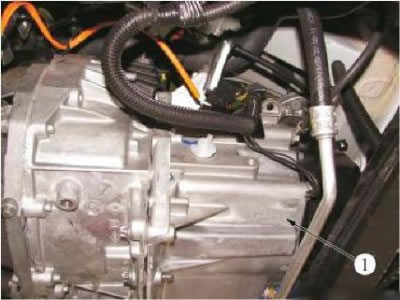
Figure 2-1 - Location of the identification plate on the gearbox: 1 - identification plate
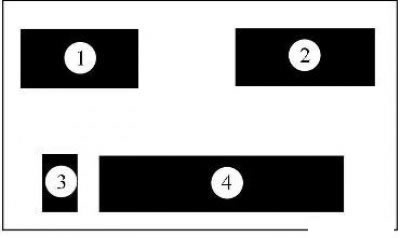
Figure 2-2 - Location of information fields on the gearbox plate: 1 - gearbox type; 2 - gearbox index; 3 - manufacturer; 4 - serial number
Markings on gearboxes are located at the bottom, on the crankcase.
The gearbox code is on a sticker located on the rear, black cover of the gearbox (on the left in the direction of travel). Although it is difficult to see it on the car, it is possible:
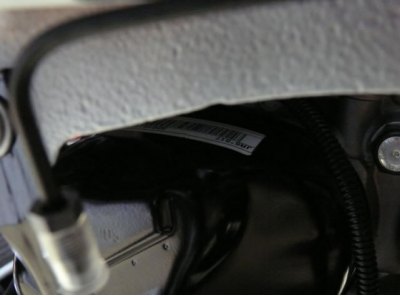
Differences in the designation of the CP
Production of AVTOVAZ
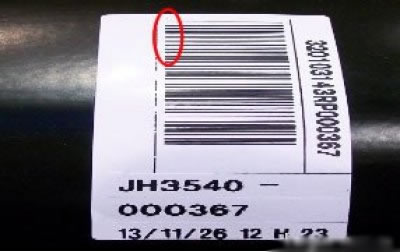
Marking of JH3 and JR5 units of AVTOVAZ assembly with the letter "P"
External supply
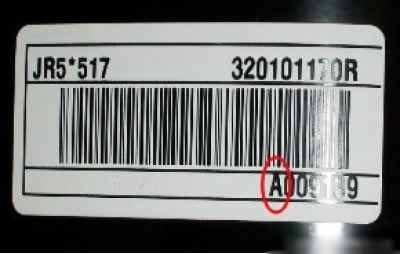
Marking of externally supplied JH3 and JR5 units (eg "A")