



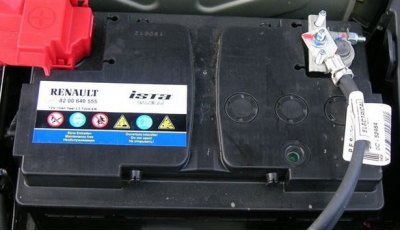
Filling a jar with electricity is an expression from V. I. Dahl's dictionary: this is how he explained the meaning of the word "charge". It is ideal for modern six-cell car batteries. However, upon closer inspection, the banks turn out to be different - both in design and in condition. How do you fill them with electricity?
All AKB can be conditionally divided into low-maintenance, maintenance-free and completely maintenance-free. The oldest of them are low-maintenance, with grates made of lead-antimony alloy, the coolest ones are completely maintenance-free, with grates made of the purest lead. It should be noted that "maintenance-free" means increased intervals for adding water or the complete absence of this procedure throughout the entire service life. But any maintenance-free battery requires periodic monitoring just like other components of the car. Contrary to popular belief, there is no significant difference in charging these three types of batteries.
Should I charge it or not?
There is a simple, objective way to assess the health of a battery. You need to measure the voltage at the battery terminals with a voltmeter, but you don't need to disconnect it from the vehicle's electrical system. The open circuit voltage (OCV) should be 12.6-12.7 V. It is important that several hours pass between stopping the engine and measuring the voltage (ideally - at least ten), otherwise the readings may be too high.
In low-maintenance and maintenance-free batteries with plugs or a block of plugs in the lid, you can also check the density of the electrolyte - you will need a hydrometer (it's also a densimeter). This will allow you to evaluate the battery charge "cell by cell". The density of the electrolyte in a fully charged battery should be 1.27 g/cm³. This value is ideal from the point of view of the efficiency of the active materials and the internal resistance of the battery. Density less than 1.25 g/cm³ is used in hot countries where short discharge characteristics are not so important. By the way, with such density the corrosion rate decreases, which extends the service life. Density above 1.29-1.30 g/cm³ is used in the Far North, where an undercharged battery is at risk of freezing.
Is it possible to charge in cold weather?
The lower the ambient air temperature, the worse the battery accepts charge. The normal temperature range for charging is 0...+ 25°C. Therefore, in winter, the probability that the batteries will have time to recover during the trip depends on the rate of heating of the electrolyte. And it is greatly influenced by the location of the battery on the car - under the hood, in the trunk or even outside. From this point of view, delivery trucks with external battery placement are in the worst position.
How to charge if you travel infrequently?
Many cars are parked more often than they are driven. Their owners often use so-called trickle chargers - chargers that constantly supply batteries with small currents to maintain a 100 percent charge. This mode cannot be called useful: it increases the rate of corrosion of the plate grids and reduces the battery life. Therefore, if the car is not moving for more than three weeks, it is better to recharge the battery in the usual way - from a charger or from a generator after starting the engine. And before the next time you put it "in storage," the battery should be fully charged, otherwise there is a high probability of encountering a deep discharge, the car refusing to start normally, and the need to buy a new battery.
Charger or generator - which charges better?
Under normal operating conditions, a charger is not required. The battery must be charged by the generator. And charging at constant voltage of a working car is the most correct and useful for the battery. The task of a stationary charger is to restore the battery, if not completely, but enough for the generator to recharge it to 100%. When charging with constant current, in order to avoid overcharging and "boiling", that is, the consumption of water from the electrolyte, the stationary charger interrupts operation at 14.4 V, switching to the recharging mode with a minimum current during storage. This usually does not allow the battery to be fully charged. And the generator charges it in constant voltage mode.
Depending on the settings of the vehicle's electrical system, the voltage regulation range is 13.8-14.5 V. The charging current is determined by the internal resistance of the battery, which characterizes its condition at the moment, and decreases as the voltage value at the battery terminals approaches the generator voltage. That is, a stationary charger produces a specific current in accordance with its algorithm, and the battery takes the current it needs from the generator. This is why a charger cannot charge as well as a generator.
What should be the charging mode?
If the open circuit voltage is less than 12.3 V, the battery has the right to be capricious when starting the engine, especially in winter. And if it has been in this state for a long time, then it can be fully restored by charging at a constant voltage, but with a small current - about 1 A. After the battery can accept higher values, the current will increase. In any case, it is advisable to carry out such "resuscitation" in a specialized service. Don't let the situation get out of hand and monitor the battery charge, especially before long-term storage - for example, if you're going on vacation.
When the NRC drops below 10.5 V, it is already an ultra-deep discharge. If the battery is discharged in a short time, it can be quickly charged with a high current of 10-20 A (10% of the nominal capacity value) from a stationary device within a few hours. If the battery has been chronically undercharged and is dying slowly, charging must begin with a minimum current at a constant voltage. To do this, you will have to contact a specialized service.
Should I remove the battery from the car to charge it?
No, this is over-insurance. Although theoretically, gas emission could indeed cause a battery to explode. The rules of conduct are very simple: do not smoke near the battery while charging and do not short-circuit the terminals.
Can I jump start a car from another car?
Opinions on this matter often differ, but the disputes are only about the safety of the vehicle's electrical equipment and its compliance with the operating instructions. One thing is certain: the battery will definitely not be damaged!
In our opinion, "lighting" is safe if a simple scheme is followed: the positive terminals of the donor and acceptor are connected to each other, and the negative terminal of the donor is placed on the body of the car being "lighted".