



Features of the device
Closed-circuit cooling system under pressure. There is a safety valve in the expansion tank cap. The engine cooling system includes a passenger compartment heating radiator, which is located under the instrument panel.
Engine cooling system filling volume:
- K4M and K7M (complete with air conditioning) - 5.45 l;
- K4M and K7M (complete set without air conditioning) - 4.5 l.
The temperature at which the thermostat valve begins to open is 89°C.
The temperature of full opening of the thermostat valve is 99 ±2°C.
The calibration value of the valve in the expansion tank cap is 1.4 bar.
Engine 1.6 (16V)
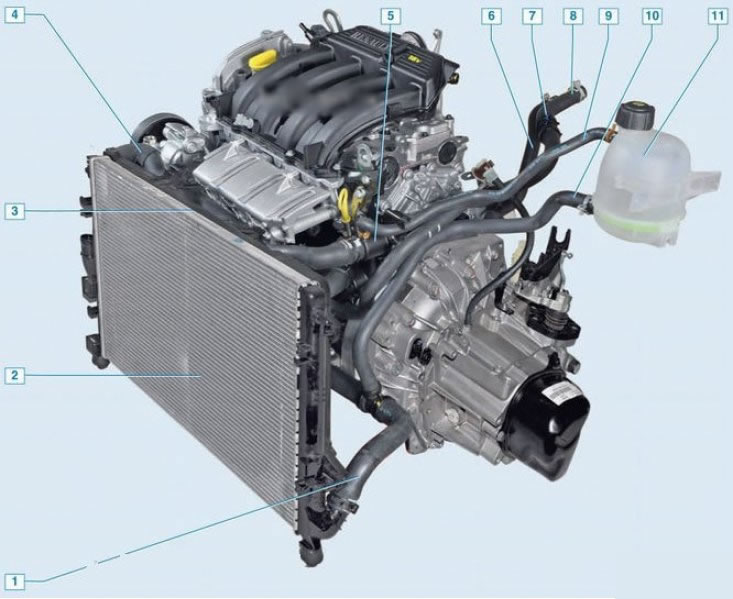
Engine 1.6 (8v)
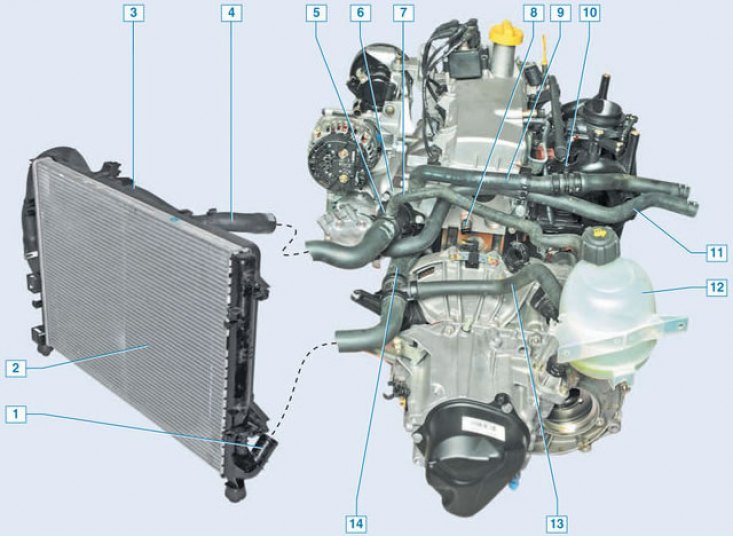

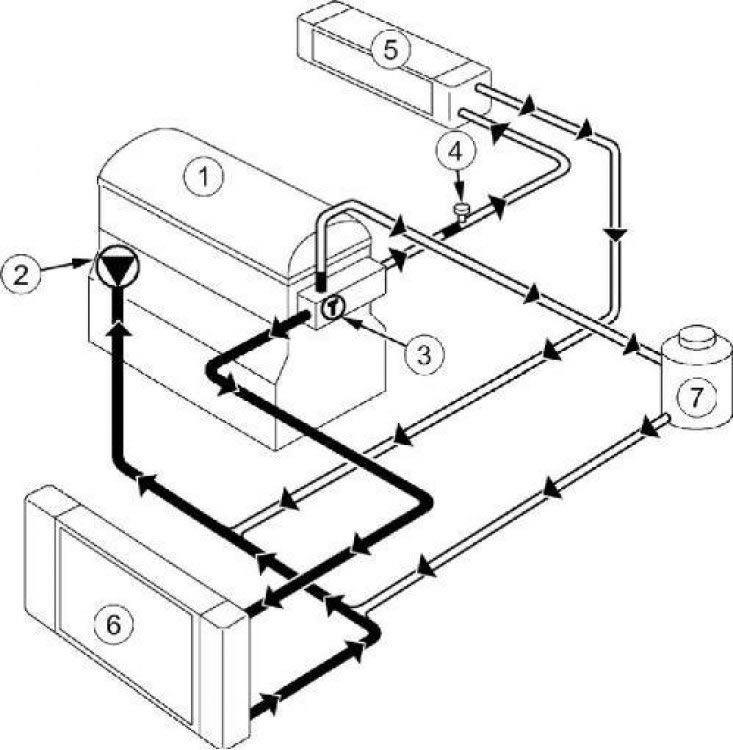
Figure 13-1 - Engine cooling system diagram: 1 - engine; 2 - water pump; 3 - thermostat; 4 - air bleed nipple; 5 - heater radiator; 6 - engine cooling system radiator; 7 - expansion tank
Purpose and operating principle of the cooling system
The efficiency of the cooling system depends on its design and operating conditions. The design of the cooling system is determined by the engine power, the size of the cooling radiator, the type of coolant used and the power of the water pump (coolant circulation pump), type of fan, thermostat and system pressure. Unfortunately, the cooling system is often overlooked until problems arise. Proper scheduled maintenance can help prevent such problems from occurring.
(Data taken from the specified website: LadaMan)
The cooling system must allow the engine to warm up to the required operating temperature as quickly as possible and then maintain that temperature. It must operate effectively in an ambient temperature range of -30°F (-35°C) to 110°F (45°C).
The maximum combustion temperature of the engine periodically soars to levels between 4000°F and 6000°F (2200°C and 3000°C). The average combustion chamber temperature is between 1200°F and 1700°F (650°C and 925°C). Continuous heating to such high temperatures would cause a decrease in the strength of engine components, so it is necessary to remove the heat from the engine. The cooling system maintains the temperature of the combustion chamber walls in a temperature range that ensures maximum engine efficiency (figure 7.1).
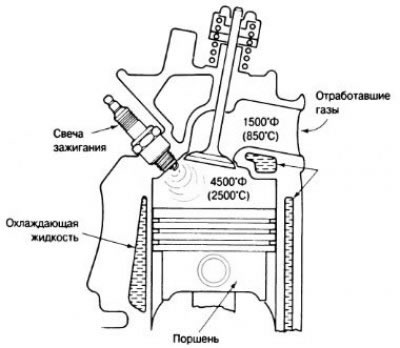
Figure 7.1. Typical combustion temperature of the working mixture and typical exhaust gas temperature at the outlet port
Problems that occur in the engine at low operating temperatures
For the engine to operate normally, its operating temperature must be above a certain minimum acceptable level. If the operating temperature is too low, there is not enough heat for normal evaporation of the fuel required to obtain the required composition of the fuel-air mixture. As a result, it is necessary to increase the fuel consumption in order to create a concentration of its vapors that ensures the flammability of the working mixture. The heavier, less volatile components of gasoline do not evaporate and remain as unburned liquid fuel. In addition to this, part of the working mixture, in contact with the cold walls of the engine, cools down, which leads to incomplete combustion of fuel and the formation of carbon deposits.
Gasoline combustion is a violent oxidation process, which is a chemical reaction of the combination of hydrocarbon fuel with oxygen contained in the air. This reaction occurs with the release of heat. When five liters of fuel are burned, one liter of water is produced in the form of vapor. Some of this moisture condenses and ends up in the oil pan along with unburned fuel and soot, causing sludge deposits to form. Condensed moisture reacts with unburned hydrocarbons and additives, resulting in the formation of acids: carbonic, sulfuric, nitric, hydrobromic and hydrochloric. These acids are responsible for engine wear caused by internal corrosion and rust. When the coolant temperature drops below 130°F (55°C), rust immediately appears. At temperatures below 110°F (45°C), water produced during fuel combustion collects in the oil. When coolant temperatures fall below 165°F (65°C), rapid wear of the cylinder walls occurs.
To reduce the negative processes in the engine associated with low temperatures and to facilitate engine starting in cold weather, most manufacturers offer cylinder block heaters as additional engine equipment. These heaters are connected to a regular electrical network (110V AC networks) and the heating element heats the coolant (figure 7.2).
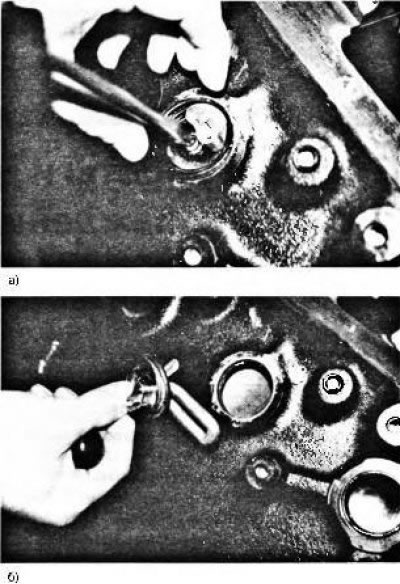
Figure 7.2. To remove the heating element, unscrew the screw that secures it in the process hole in the cylinder block wall (a). The heating element is removed from the cylinder block. The coolant, heated by the heating element immersed in it, expands and, rising upward, displaces the cold coolant. Due to convective heat exchange, the coolant is heated throughout the entire engine (b)
Problems that occur in the engine at high operating temperatures
To protect the engine from overheating, its operating temperature must not exceed the maximum permissible temperature. High temperatures cause oil oxidation. Under their influence, the oil dissociates, forming coke and drying oils. With prolonged overheating, coke is deposited on the piston rings, clogging them. Varnish-like carbon deposits cause the plungers of hydraulic valve lifters to seize. When heated at high temperatures, the viscosity of the oil inevitably decreases and the thickness of the lubricant layer decreases. If the lubricant layer becomes too thin, dry contact of the surfaces of moving parts occurs. At the same time, the friction coefficient increases, which causes a decrease in engine power and accelerated wear of its components.
Engine overheating is expensive
Failure of the cooling system is the main cause of engine failure. Auto mechanics often have nightmares about how a service center installs an engine they have just repaired into a car whose radiator is clogged. After overhauling or repairing the engine, as a rule, the water pump and all hoses must be replaced. Whenever an engine is repaired or replaced, the radiator should also be checked for leaks and blockages. Overheating is the most common cause of engine failure.
Cooling system design
The coolant passes through the engine, absorbing the heat generated within it. It then flows into the radiator, which dissipates the heat into the environment. The coolant continuously circulates through the cooling system as shown in the figure 7.3 and 7.4. As the coolant passes through the engine, it heats up by as much as 15°F (8°C). As it then passes through the radiator, it cools down. The coolant flow rate can reach 4 liters per minute per horsepower of engine power.
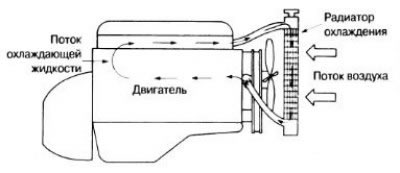
Figure 7.3. Schematic diagram of the coolant flow through the engine
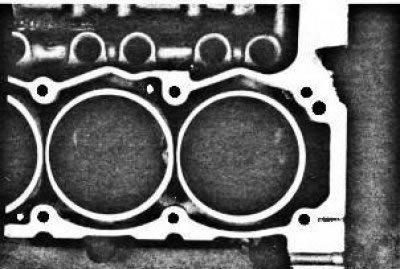
Figure 7.4 This photograph of a cylinder block with the plate cut away shows the cooling system passages surrounding the cylinders. Note that the coolant washes the cylinders from all sides and also flows through the gaps between them
Engine temperature and exhaust toxicity
Many areas have vehicle exhaust emission controls. Hydrocarbon emissions (HC) are simply unburned fuel. To reduce unburned hydrocarbon emissions and pass the emissions test, make sure the engine is warmed up to normal operating temperature before the test. Car manufacturers define "normal operating temperature" as:
- 1. The upper radiator hose becomes hot and under increased pressure.
- 2. The electric fan turns on and off twice (fans) cooling systems.
Before performing an emissions test, make sure the engine has reached normal operating temperature. It is best to drive the vehicle for 20 miles (32 km) to ensure that the catalytic converter, oil, and coolant are warmed up to normal operating temperature. It is especially important to take care of this in cold weather. Most drivers believe that to warm up the engine, it is enough to let it idle until warm air comes out of the cabin heater. The interior heater takes heat from the coolant. Car manufacturers recommend not to let the engine idle for more than 5 minutes, and to warm up the engine, let it idle for one to two minutes, after which, to warm up further, you need to drive the car slowly to increase the oil pressure in the lubrication system.
Hot coolant flows through the thermostat valve, which is installed at the highest point of the engine, into the radiator. The outlet pipe of the cooling system is connected to the upper inlet pipe of the radiator by a hose, which is secured with clamps. The coolant is cooled in the radiator by the flow of air blowing over it. As it cools down, it descends down the radiator and through the lower outlet pipe enters the water pump, which provides forced circulation of the coolant in the engine.
Note
In a number of new engine designs, the thermostat is installed on the water pump inlet. When cooled liquid enters the thermostat, it closes and remains closed until the coolant temperature reaches its opening temperature. Thus, placing the thermostat on the water pump inlet reduces the range of coolant temperature fluctuations, reducing sudden temperature changes that could cause thermal stress in the engine, especially in engines with aluminum cylinder heads and cast iron blocks.
The efficiency of heat dissipation by the cooling system is determined mainly by the efficiency of the radiator. The radiator designs are designed to ensure maximum heat exchange efficiency with minimum dimensions. The air flow over the radiator is increased by a cooling fan with a belt or electric drive.