



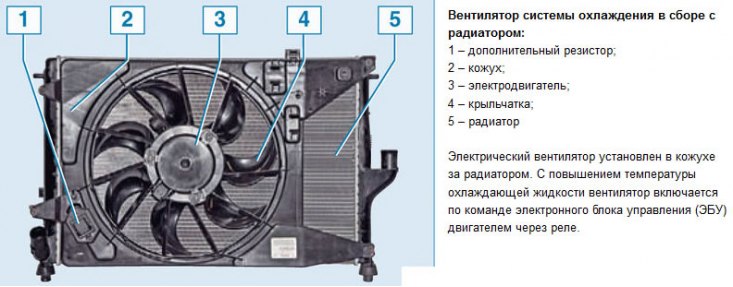
The radiator fan is electric and is controlled by the electrical engine control system. When the coolant temperature or engine compartment temperature reaches the appropriate level, the system turns on automatically.
After the engine stops, the engine fan continues to run for some time (about 10 minutes) to completely cool the engine. Only when the engine has cooled down does the fan stop working. But the temperature in the engine compartment can rise above the ambient temperature (under the sun or through elevated temperatures). Then the fan can start working again. Therefore, when working with the engine, you must be very careful to avoid injury or damage!
If the coolant has reached the temperature at which the radiator fan should operate, but this has not happened, the fuse should be checked and replaced if necessary. If replacing the fuse does not help, contact an authorized service station.
The fan speed is independent of the engine speed. Shifting down does not improve the cooling effect of the fan; so as long as the engine is running properly and the top speed does not cause a significant reduction, there is no need to downshift. Replacing the radiator fan is described here.