



This article is descriptive in nature and may be relevant for any brand of car.
To reduce nitrogen oxide (NOx) emissions, engines are equipped with exhaust gas recirculation valves (EGR valves) (figure 6.32). From 1973 until recently, EGR valves were used in almost all vehicles. In the latest engines, the high efficiency of computer-controlled fuel injection systems allows you to ensure compliance with regulated standards for the emission of pollutants without using an exhaust gas recirculation system. In some engine designs, a certain portion of the exhaust gases are intercepted and directed back into the cylinders by overlapping the intake and exhaust valves.

Figure 6.32. Example of a typical pneumatically controlled EGR valve
The operation of this valve is controlled by the on-board computer via a valve control solenoid, which is triggered by a pulse signal from the computer.
The exhaust gas recirculation valve opens after the engine warms up, when its speed increases above idle speed. Through the open recirculation valve, 5% to 10% of the exhaust gases return to the intake manifold, where they are mixed with the sucked-in portion of the working mixture. As a result, the amount of fuel-air mixture entering the combustion chamber is reduced. Recirculated exhaust gases are inert (chemically passive) and do not enter into a combustion reaction. This leads to a decrease in the temperature in the combustion chamber, and as a result, to a decrease in the concentration of nitrogen oxides formed during the combustion of the working mixture.
The exhaust gas recirculation system includes means to ensure controlled connection of the intake and exhaust manifolds (figure 6.33). The flow capacity of the connecting channels is controlled by the exhaust gas recirculation valve. In V-shaped engines, exhaust gases are collected into the recirculation system from the transition of the exhaust manifold. The exhaust manifold transition is connected to the exhaust gas recirculation valve via a channel provided in the engine casting. Through the recirculation valve, the exhaust gases are directed into the channels leading to the intake manifold. In-line engines typically use an external pipe to feed exhaust gases to the EGR valve. It is often made long enough to allow the gases to cool on their way to the recirculation valve.
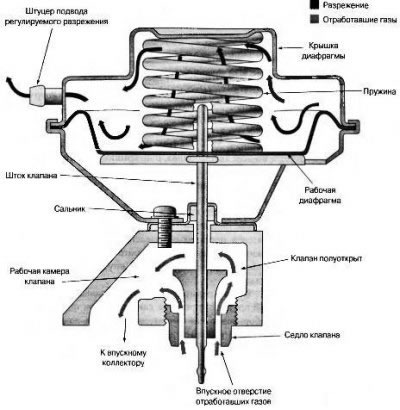
Figure 6.33. When the EGR valve is open, exhaust gases pass through it into the passages leading to the intake manifold
EGR valves with low and high pressure converters for exhaust gases
Many recirculation valve designs use a small internal valve that, by releasing the vacuum acting on the valve, prevents the valve from opening. In such cases, the EGR valve opens only when the pressure in the exhaust system increases. A valve of this design is called a recirculation valve with a high pressure converter. At low speeds and low engine loads, there is no need for the exhaust gas recirculation system to operate and the back pressure in it is also low. Until the pressure in the exhaust system becomes high enough, the recirculation valve remains closed, even when subject to a vacuum.
In each exhaust stroke, a portion of exhaust gases is ejected from the engine, accompanied by an increase in pressure in the exhaust manifold. The high pressure zone is followed by a small low pressure zone. Some designs of valves respond to this reduced pressure by causing a small internal valve to close, allowing the recirculation valve to open under the action of the vacuum created above its diaphragm. This type of recirculation valve is called a low pressure converter recirculation valve. For the valve to operate, the following conditions must be met:
1. A vacuum must be created in the exhaust gas recirculation valve itself. In older, carburetor engines and a number of engine designs with a central fuel injection system into the throttle chamber, this reduced pressure is usually created by vacuum in the intake manifold and is regulated by the on-board computer using an electromagnetic valve.
2. The valve must be subjected to exhaust back pressure sufficient to close the internal valve installed in the recirculation valve and thus allow the valve diaphragm to move under the action of the vacuum maintained in the recirculation valve.
Electronic exhaust gas recirculation system
Since the mid-1990s, many engines have used solenoid valves or stepper motors to control the flow of exhaust gases from the exhaust manifold to the intake manifold (called linear electric motors). Figure 6.34 shows an example of an EGR assembly that uses three solenoid valves, as used in a General Motors V6 engine. The onboard computer controls all three solenoid valves and can turn on one or two of them, or all three at the same time, to precisely control the amount of exhaust gas sent to the intake manifold. Many engines use a linear recirculation valve controlled by a stepper motor. Step-by-step adjustment of this valve based on the signal from the on-board computer ensures precise dosing of the exhaust gas flow in any engine operating mode. The feedback circuit allows the computer to accurately adjust the valve position and generates an error code if the actual valve position is outside the acceptable control range. You can check how the recirculation valve works using the testing program provided in the computer.
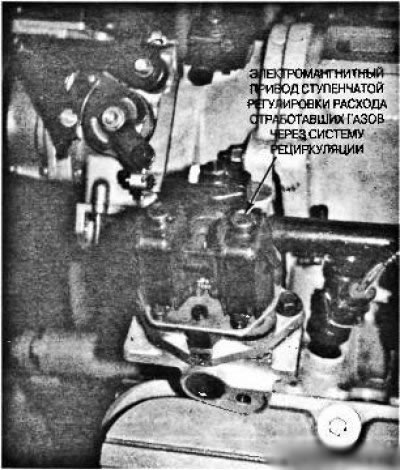
Figure 6.34. The EGR actuator used in this General Motors 3800cc V6 engine uses three solenoid valves. Using the test program, it is possible to activate each solenoids individually to check the valve functionality and whether the exhaust manifold passages have sufficient flow capacity to pass such a quantity of exhaust gases that they have an effect on the engine operating mode when the system operates in the cycling mode
Exchange of experience
The owner of a Chevrolet Blazer with a 4.3L V6 engine complained that the engine would occasionally "jerk" and run rough. Everything seemed to be working fine except for one thing: the service technician found that the EGR valve was creating a slight vacuum at idle. The car was equipped with a solenoid-controlled recirculation valve, the so-called electronic vacuum regulator valve (EVRV) from General Motors Corporation. Using an electromagnetic valve controlled by an on-board computer, the vacuum created in the recirculation valve is regulated, which controls its operation. The technician, using the service manual, examined the details of the recirculation system and found out that the vacuum in the recirculation valve should only be created when the gear shifter is in one of the working gears (drive, low, reverse). Since the technician found vacuum with the transmission not in gear, it was apparently caused by a leaking solenoid valve. After replacing the solenoid valve, the engine malfunctions disappeared.
(Original is available on this resource: LADAMAN.ru)
Note: The technician also learned from the service manual that the EGR system operation test should not be performed with the positive exhaust filtration system connected to the engine exhaust pipe, since the vacuum created by the positive exhaust filtration system may cause the EGR valve to operate falsely.
I just wanted to help!
It happened at the end of the work week. An experienced auto mechanic determined that the malfunction of the Buick's V6 engine was caused by wear of the exhaust gas recirculation valve. When a low pressure was created in the valve, it remained completely motionless. When the vacuum was increased using a hand vacuum pump, the valve opened and remained in that position the entire time. A new valve of the same type was not available until Monday, but the owner wanted to pick up his car that day so he could drive it over the weekend.
To somehow get the engine to run more or less normally, the technician used a hammer to deform the top valve cover to limit the stroke of the recirculation valve stem. He warned the customer to be sure to return the car on Monday to have the valve replaced. The client, of course, returned on Monday, but not alone, but with his lawyer. As it turned out, one of the engine pistons was punctured. The lawyer reminded the technician and the service station manager that the emission control device had been "modified." As a result, the company paid for a new engine to be replaced, and the technician learned a lesson in always having a car repaired properly or not at all.