



This article is descriptive in nature and may be relevant for any brand of car.
Through the exhaust pipe, connected to the outlet of the exhaust manifold or manifold head, the exhaust gases are directed to the catalytic converter and then to the muffler. If the V-engine is equipped with a single exhaust system, the collection of exhaust gases from two exhaust manifolds into a common exhaust pipe is carried out through a Y-shaped transition provided in it. In vehicles with a dual exhaust system, each exhaust manifold has its own separate, independent exhaust system. In most cases, the exhaust pipe consists of several parts so that it can be mounted in the space available under the vehicle. A catalytic converter is installed between the exhaust manifold and the muffler (afterburner) in order to reduce the toxicity of exhaust gases. The neutralizer is a casing made of heat-resistant metal (figure 6.35), which contains a bed of granules coated with a layer of catalyst, or a monolithic honeycomb grid coated with a layer of catalyst.
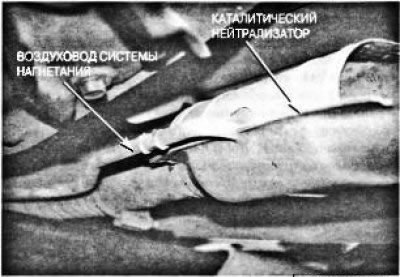
Figure 6.35. Typical catalytic converter
The thin pipe connected to the side of its body is the air duct coming from the air injection system pump. Additional air, pumped in by an air pump, is needed to oxidize toxic compounds and convert them into harmless H20 (water) and CO (carbon dioxide).
How a catalytic converter works
The neutralizer uses small amounts of rhodium, palladium and platinum. These chemical elements act as a catalyst (a substance that stimulates a chemical reaction but does not itself enter into it). When exhaust gases pass through the catalytic converter, the chemical decomposition of nitrogen oxides (NOx) into oxygen and nitrogen occurs in its first chamber. The second chamber of the catalytic converter oxidizes most of the hydrocarbons and carbon monoxide remaining in the exhaust gases, producing harmless carbon dioxide (CO2) and water vapor (H2O). Some engine designs include a continuous or pulsed air injection system to provide additional air that may be required during the oxidation process (figure 6.36). Since the early 1960s, many neutralizers have also used cerium, an element that can accumulate oxygen. The purpose of cerium is to provide oxygen to the catalyst in the event that the exhaust gas mixture is rich and there is insufficient oxygen for the complete oxidation of chemical compounds. When the exhaust gas mixture is lean, cerium absorbs excess oxygen
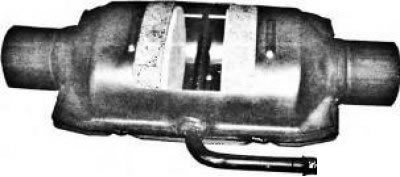
Figure 6.36. Sectional view of a three-way catalytic converter
The air injection pipe is visible, installed in the center between the reduction and oxidation chambers of the neutralizer. Note the small holes in this pipe, designed to evenly distribute the air pumped in by the air pump over the end of the rear, oxidation chamber of the neutralizer.
For the catalytic converter to function properly, it is necessary to ensure that the composition of the exhaust gas mixture changes as it passes through the catalytic converter - from enriched to lean:
- To restore oxygen (O) from nitrogen oxides (NOx), the mixture must be enriched.
- In order to have enough oxygen for the oxidation of hydrocarbons (HC) and carbon monoxide (CO) (the reaction of combining oxygen with hydrocarbons and carbon monoxide, which results in the formation of water H2O and carbon dioxideCO₂, the mixture must be depleted.
If the catalytic converter is not functioning properly, it is necessary to check the correct composition of the fuel-air mixture entering the engine and the serviceability of the ignition system.
Tapping test
This simple way to check is as follows: tap (lightly!) on the catalytic converter housing with a light hammer with a rubber striker. If the catalyst substrate is damaged, it will make a rattling sound when tapped. If the neutralizer rattles, it must be replaced (figure 6.37). Chapter 8 provides a detailed description of the methodology for testing the exhaust system for flow capacity
Can a catalytic converter fail without being clogged with carbon?
Yes, it can. Catalytic converters fail not only due to mechanical clogging, but also due to chemical damage or poisoning. Therefore, the catalytic converter must be checked not only for physical damage (clogging) by measuring backpressure or vacuum and by tapping, but also for temperature increase. This test, usually performed with an IR pyrometer or a propane test, allows you to evaluate the efficiency of the neutralizer.
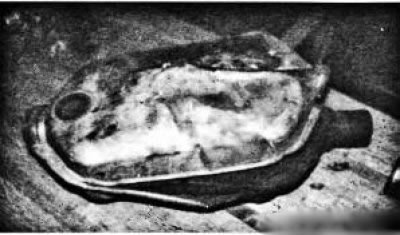
Figure 6.37. This catalytic converter was ruptured by an explosion of gasoline contained in the over-rich exhaust gas mixture. Apparently, pure gasoline got into the catalytic converter and all it took was a spark to cause it to explode. There is no longer any need to diagnose this neutralizer.
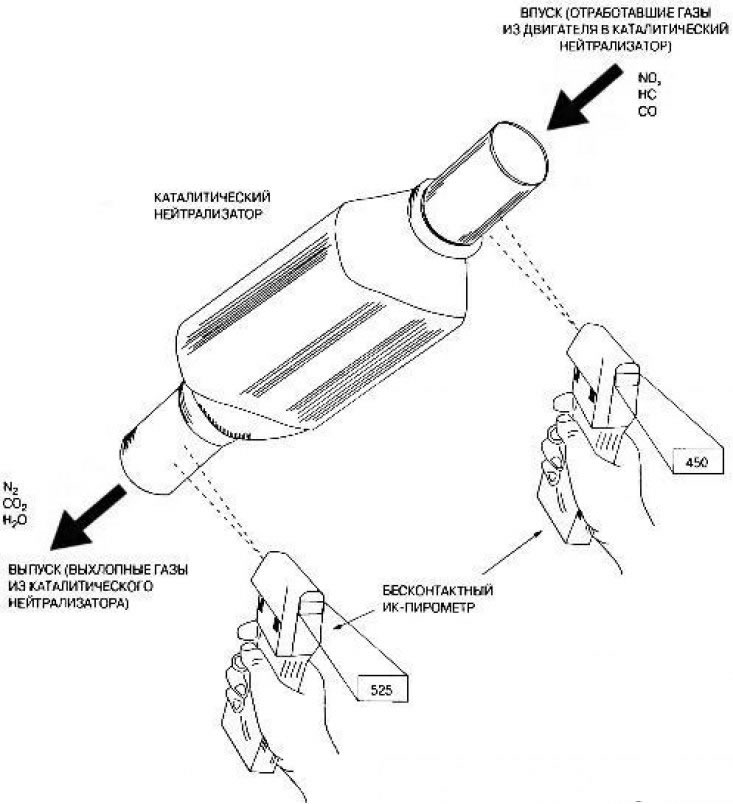
Figure 6.38. The temperature at the outlet of the neutralizer must exceed the temperature at the inlet by at least 10%
This neutralizer is characterized by extremely high operating efficiency. The temperature at the inlet to it is 450°F (232°C). Ten percent of 450°F is 45°F (450°F + 45°F = 495°F (257°C)). In other words, in order for the converter to be considered normally functioning, the temperature at its outlet must be at least 495°F. In this case, it is 525°F (274°C), which is more than 10% higher than the temperature at the inlet to the converter. If the converter is not functioning at all, then the temperature at its outlet will be lower than the temperature at its inlet.
Catalytic converters do not "die" on their own.
Catalytic converters stimulate chemical reactions but do not participate in them themselves. Thus. they are not subject to wear and tear or aging. If it is determined that the catalytic converter has failed (has lost its functionality or is completely clogged), look for the reason why this happened. Remember the following:
"Catalytic converters do not die on their own - their death is always caused by some external factor."
If a catalytic converter failure is detected, the components to be checked must include all components of the ignition and fuel systems. Excessive amounts of unburned fuel in the exhaust gases can cause overheating and failure of the catalytic converter. To ensure maximum efficiency of the catalytic converter, the required composition of the fuel-air mixture must be maintained, and for this, the oxygen sensor must be operational and measure the oxygen content with a frequency of 0.5 to 5 Hz.